

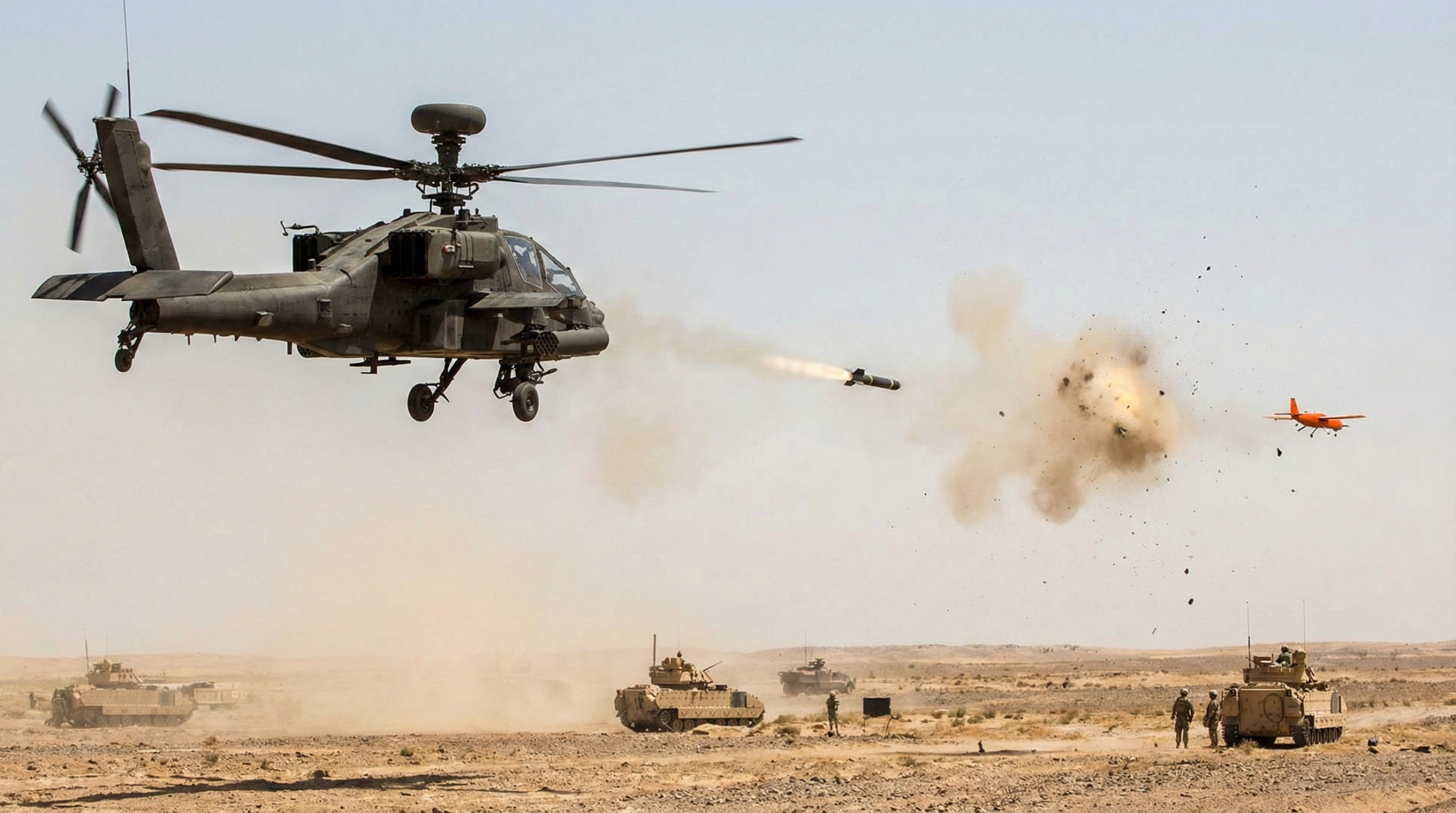
Unveiling Apache Proximity Fuse Technology
Introduction
The modern battlefield environment is increasingly complex, and attack helicopters like the Apache face multiple threats during missions, especially challenges from unmanned aerial vehicles. To significantly enhance the Apache’s air-to-air strike capability, advanced Apache proximity fuse technology has become crucial. This article will delve into the principles, advantages, and future military application potential of the Apache proximity fuse, demonstrating how this technology is changing the landscape of helicopter operations.
How Proximity Fuses Work
A proximity fuse is a precisely engineered device that does not rely on direct impact with a target to detonate the warhead. Instead, it automatically detonates when the munition approaches the target within a certain distance. Its core mechanism involves using built-in sensors, such as radar, laser, or infrared sensors, to continuously detect the target. When the sensor detects that the target has entered a preset effective kill radius, it triggers the warhead to explode, generating fragments or a shaped charge jet to destroy the target. This non-contact detonation method significantly increases the hit probability against fast-moving targets, making it particularly suitable for engaging UAVs or low-altitude aircraft.
Applications and Advantages of Apache Proximity Fuse
For the Apache helicopter, missiles or rockets integrated with proximity fuses bring significant tactical advantages. Firstly, it greatly enhances the Apache helicopter’s ability to counter unmanned aerial vehicles in complex airspace. Traditional point-detonation munitions require precise direct hits, which is very difficult in high-speed engagements. The Apache proximity fuse, by expanding the kill zone, causes effective damage even if the missile does not directly impact the target. Secondly, this fuse improves the efficiency of striking light armored targets or clustered infantry in ground attacks. Lastly, the introduction of proximity fuses allows the Apache to react more quickly and effectively to sudden aerial threats, enhancing the helicopter’s survivability and multi-mission capability.
Conclusion
Apache proximity fuse technology represents a major advancement in modern helicopter weapon systems. By improving the detonation mechanism, it significantly enhances the Apache helicopter’s strike accuracy and kill range against aerial targets, playing a critical role especially in countering UAV threats. In the future, with the continuous development of sensor technology and fuse control algorithms, proximity fuses will continue to expand their application boundaries, providing attack helicopters with more powerful combat capabilities.
FAQ
Question 1: What is the difference between a proximity fuse and a traditional impact fuse?
Answer 1: A proximity fuse detonates when the munition approaches a target, not on direct impact, increasing hit probability by expanding the kill radius. A traditional impact fuse requires direct physical contact with the target to detonates.
Question 2: What types of proximity fuses does the Apache helicopter primarily use?
Answer 2: Apache helicopters typically integrate proximity fuses with radar or laser ranging capabilities for their air-to-air missiles or rockets, to address aerial threats.
References
- The Defense Post (https://thedefensepost.com/2026/02/16/apache-proximity-fused-munition/)
