
Countering North Korean Drone Threats: Advancing Counter-UAV Technology
Introduction
In recent years, the escalating drone threat from Pyongyang has posed a direct challenge to the national security of Seoul and Tokyo. These drones could be used not only for reconnaissance and surveillance but also possess potential attack capabilities, intensifying regional tensions. In this context, the development and deployment of advanced counter-UAV technology have become an urgent necessity for South Korea and Japan to effectively protect their critical infrastructure and public safety.
Escalation and Challenges of North Korean Drone Threats
Drone activities on the Korean Peninsula have increased significantly in recent years, particularly in military reconnaissance. North Korea utilizes various types of drones, from small commercially modified aircraft to more specialized military reconnaissance platforms, frequently violating South Korean airspace. These drones fly at low altitudes with small radar cross-sections, posing significant challenges to traditional air defense systems. Their potential to carry chemical, biological, or small explosive payloads further amplifies their threat. Seoul and Tokyo must recognize that traditional defensive strategies are insufficient to counter this asymmetric threat, necessitating a rapid enhancement of their counter-UAV technology capabilities.
Building a Multi-layered Counter-UAV Technology Defense System
To effectively counter North Koreas drone threat, South Korea and Japan need to establish a multi-layered, integrated counter-UAV technology defense system. This includes:
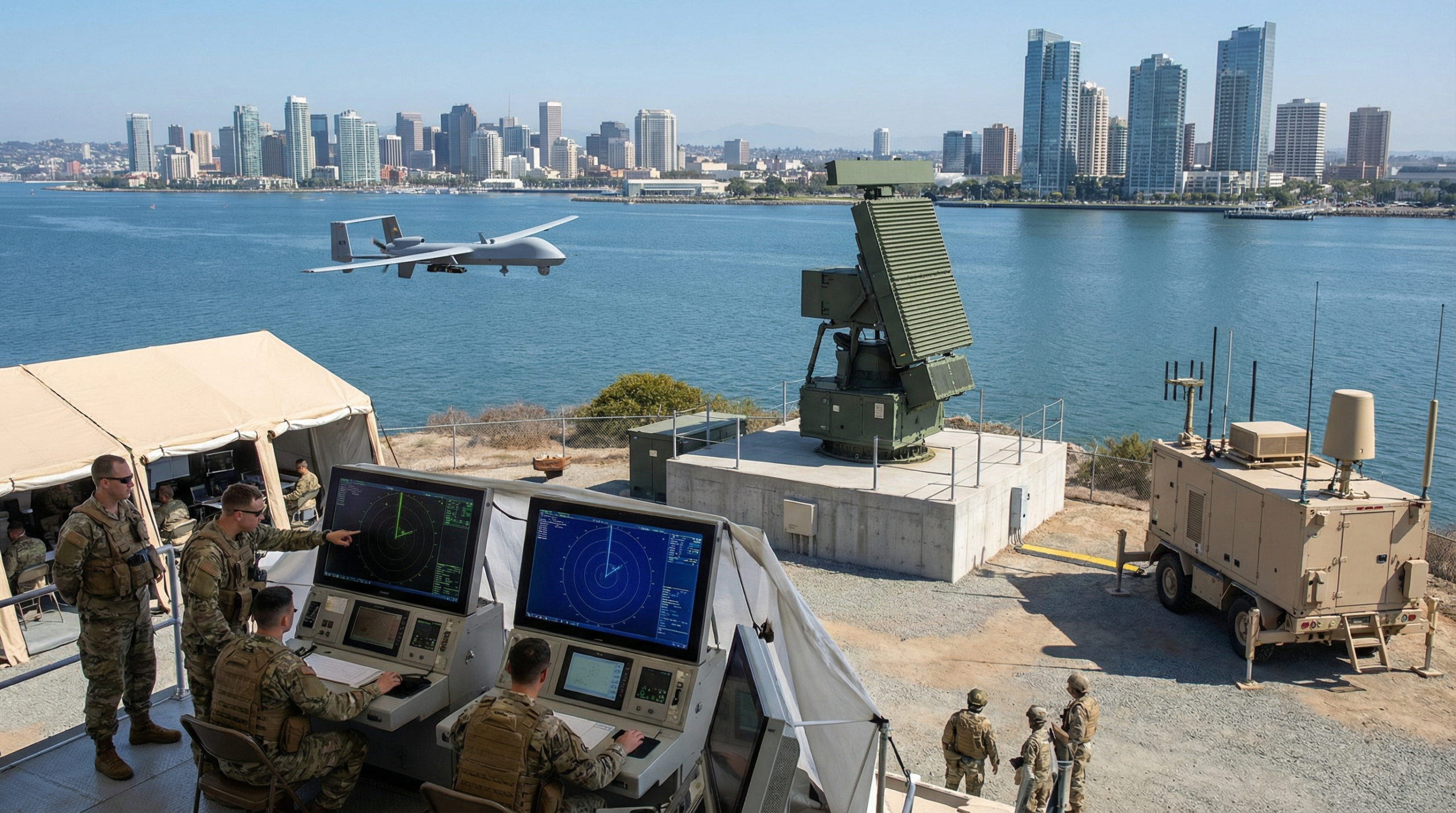
- Detection and Identification Systems: Combining high-precision radar, electro-optical sensors, and acoustic sensors to achieve early warning and precise identification of small, low-altitude, slow-moving targets.
- Jamming and Spoofing Technologies: Utilizing radio frequency jammers to block communication links between drones and operators, forcing them to crash or return. GPS spoofing technology can also be used to misguide drone navigation.
- Hard-kill Interception Solutions: Deploying kinetic interception solutions such as laser weapons, high-energy microwave systems, or drone interception nets for drones that cannot be neutralized by soft-kill methods.
- Information Sharing and Joint Defense: Strengthening intelligence sharing and technical cooperation between Seoul and Tokyo to jointly research, develop, and deploy cutting-edge counter-UAV technology, forming a regional joint defense network.
This integrated defense strategy can minimize the risks posed by drone intrusions and provide flexible response options.
Conclusion
Facing Pyongyangs growing drone threat, Seoul and Tokyo must accelerate the pace of counter-UAV technology research, development, and deployment. This is not only a matter of national security but also a crucial contribution to regional stability. By investing in advanced technology and strengthening international cooperation, South Korea and Japan can build an impenetrable aerial defense line, effectively countering various potential airborne threats.
FAQ
Question 1: What are the main aspects of North Koreas drone threat?
*Answer 1: Mainly includes reconnaissance surveillance, potential attack capabilities, and psychological warfare propaganda. These drones may carry various payloads, posing risks to critical infrastructure and border security.
Question 2: How can counter-UAV technology effectively deal with small drones?
*Answer 2: Effective counter-UAV technology typically combines radar detection, optical identification, radio frequency jamming, spoofing, and kinetic interception, forming an integrated defense network to counter various types and altitudes of small drones.
References
- Asia Times (https://asiatimes.com/2026/01/seoul-and-tokyo-need-to-counter-pyongyangs-growing-drone-threat/)
Related Content
- Regional Security Challenge Analysis (https://example.com/regional-security-analysis)
- Emerging Military Technology Insights (https://example.com/emerging-military-tech)
