

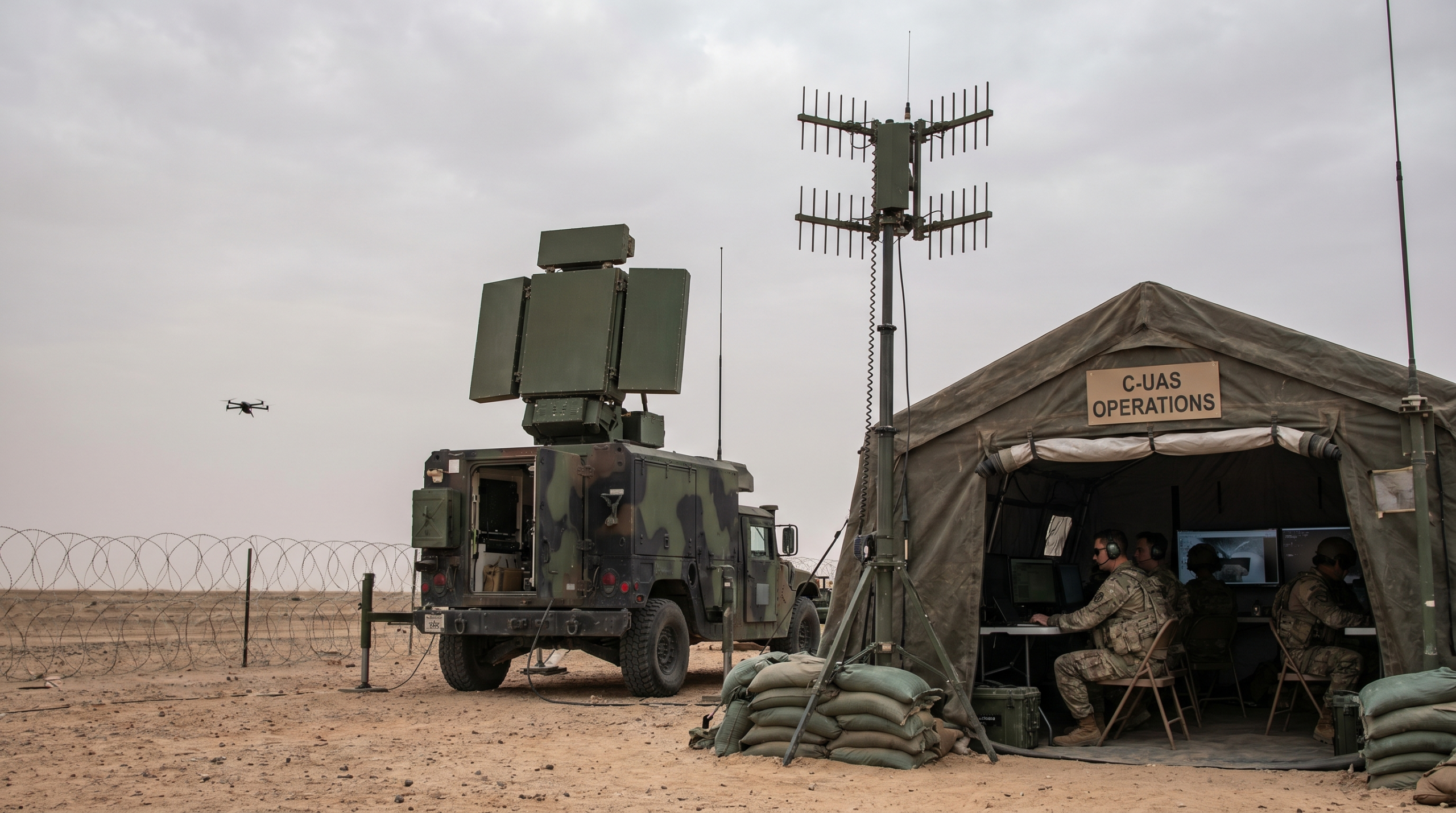
Introduction
With the rapid development of military drone technology, its role in modern warfare is increasingly prominent, prompting nations to attach great importance to Drone Countermeasures capabilities. This countermeasure technology not only concerns national security but also has become a new hot spot in the global defense export market. This article will delve into the core elements of Drone Countermeasures technology, global market trends, and the challenges it faces.
Core Elements of Drone Countermeasures Technology
Drone Countermeasures systems aim to detect, identify, track, and ultimately neutralize enemy drone threats. Their core elements include:
- Detection and Identification: Utilizing radar, infrared sensors, acoustic sensors, and optical systems to monitor airspace in real time and differentiate drones from other aerial targets.
- Tracking and Positioning: Once a target is identified, the system uses multi-source data fusion technology for precise tracking, determining the drone’s heading, speed, and position.
- Neutralization and Interception: This is a critical stage of counteraction, with various methods such as:
- Soft Kill: Electronic warfare (GPS spoofing, radio jamming), cyberattacks, aimed at disrupting drone control signals or mission systems.
- Hard Kill: Kinetic interception (net launchers, laser weapons, anti-aircraft guns, interceptor drones), physically destroying the drone. The combination of these technologies provides Drone Countermeasures systems with multi-layered defense capabilities.
Global Market Trends and Export Challenges
Global demand for Drone Countermeasures technology continues to grow, driving a rapidly developing export market. Governments and military organizations worldwide are seeking advanced solutions to address increasingly complex drone threats. However, this field also faces numerous challenges:
- Technology Transfer Restrictions: Many advanced countermeasure technologies are considered sensitive military assets, and their export is subject to strict international and national regulations.
- Ethical and Legal Considerations: The use of drone countermeasure systems, especially in civilian airspace or where collateral damage might occur, raises ethical and legal discussions.
- Rapid Technological Iteration: Drone technology itself is evolving rapidly, and countermeasure systems must constantly upgrade to adapt to new threat patterns, posing higher demands on research and development and production.
- Geopolitical Impact: International relations and regional conflicts directly influence procurement and deployment decisions for countermeasure systems.
Conclusion
Drone Countermeasures has become an indispensable part of modern defense strategy. While the global export market holds vast prospects, technological, regulatory, and ethical challenges remain significant. In the future, with deepening technological innovation and international cooperation, drone countermeasure capabilities will continue to evolve to better ensure global security.
FAQ
Question 1: What are the main technologies for Drone Countermeasures?
Answer 1: The main technologies involve radar detection, optical recognition, radio jamming, GPS spoofing, and kinetic interception, among other methods.
Question 2: What challenges does the global export of Drone Countermeasures face?
Answer 2: Challenges include strict export controls, technology transfer restrictions, ethical considerations, and the need for rapid technological iteration.
References
- DroneLife (https://dronelife.com/2026/03/18/drone-warfare-expertise-global-export-industry/)
