

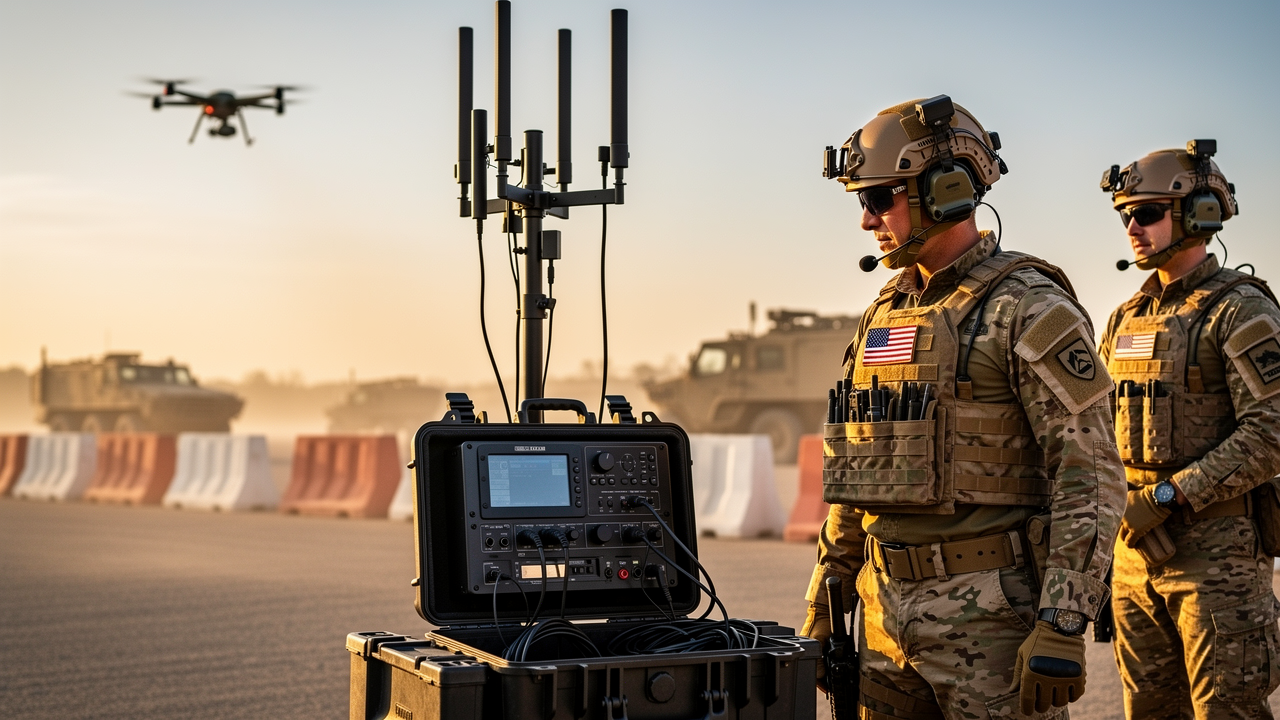
Countering Drone Threats: How the 400M Instantaneous Bandwidth Signal Generator Changes the Game
Introduction
Keyoptions Australia recently concluded its Counter-UAS (C-UAS) sandbox event, successfully testing various mature counter-drone capabilities at Puckapunyal, Victoria. This event not only showcased the collective efforts of industry and government in addressing the growing drone threat but also highlighted the urgency of developing efficient, integrated counter-drone solutions for military operations and critical infrastructure protection. As drone technology becomes increasingly prevalent and sophisticated, unauthorized drones pose a significant challenge to national security, prompting defense forces and security agencies worldwide to actively seek advanced countermeasure strategies.
Industry Challenges & Pain Points
Currently, drone threats are characterized by their diversity and rapid evolution. From reconnaissance and interference by small commercial drones to larger platforms potentially carrying dangerous payloads, and the potential risks of swarm drones operating collaboratively, all pose severe challenges to traditional defense systems. Conventional countermeasure methods are often limited by fixed frequencies or narrowband jamming, making it difficult to effectively counter the increasingly complex communication protocols and wide-spectrum frequency hopping technologies employed by drones. These limitations lead to inefficient countermeasures, slow response times, and an inability to cover all threat frequency bands, leaving critical areas vulnerable to drone intrusion.
The Core Countermeasure: Signal Interference
In building an effective counter-drone system, the signal interference source plays a crucial role. It suppresses or disrupts the communication link between a drone and its operator, or interferes with its Global Positioning System (GPS) signals, by emitting wideband or high-power RF signals, thereby causing the drone to lose control, return to base, or land forcibly. For effective countermeasures, the interference source must possess a wide frequency coverage range and high instantaneous bandwidth to cope with drones operating on different frequencies and to simultaneously suppress multiple signal channels. Only with frequency agility and powerful jamming capabilities can countermeasure effectiveness be ensured in complex electromagnetic environments.
Advanced Solution: 400M Instantaneous Bandwidth Signal Generator
Addressing the aforementioned challenges, we recommend the YS-WBG400M 400M Instantaneous Bandwidth Signal Generator as an ideal core component for counter-drone systems. This high-performance wideband RF signal source covers a frequency range of 70MHz to 6000MHz, comprehensively covering the commonly used control, video transmission, and navigation frequency bands for drones. Its instantaneous bandwidth of up to 400MHz allows it to generate and emit wideband interference signals in an extremely short time, effectively suppressing various communication modes and frequency hopping strategies that drones might employ. Furthermore, the device supports software programmable control, enabling users to flexibly adjust interference frequencies, bandwidths, and waveforms according to real-time threat environments, achieving precise and efficient drone countermeasures.
Conclusion
The Keyoptions counter-drone sandbox once again underscored the global urgency of addressing drone threats. To effectively tackle this challenge, it is essential to move beyond traditional thinking and adopt advanced technologies such as the 400M Instantaneous Bandwidth Signal Generator. Its wide frequency coverage, large instantaneous bandwidth, and software programmable features make it a critical component for building future efficient and adaptive counter-drone systems.
Explore our 400M Instantaneous Bandwidth Signal Generator today and upgrade your counter-drone defense capabilities!
FAQ
Question 1: What types of drones can the 400M Instantaneous Bandwidth Signal Generator counteract?
Answer 1: Its wide frequency band covering 70MHz to 6000MHz, combined with 400MHz instantaneous bandwidth and software programmable features, enables it to effectively interfere with the communication, navigation, and remote control signals of various drones, including commercial consumer drones and certain military reconnaissance drones.
Question 2: Why are wideband and instantaneous bandwidth important for counter-drone systems?
Answer 2: Modern drones may operate on multiple frequencies, use frequency hopping technology, or even transmit multiple signals simultaneously. Wideband interference can cover a broader frequency range, ensuring no threats are missed. Instantaneous bandwidth allows the device to suppress or interfere with multiple active drone signal channels simultaneously, significantly improving countermeasure efficiency and success rate.
