

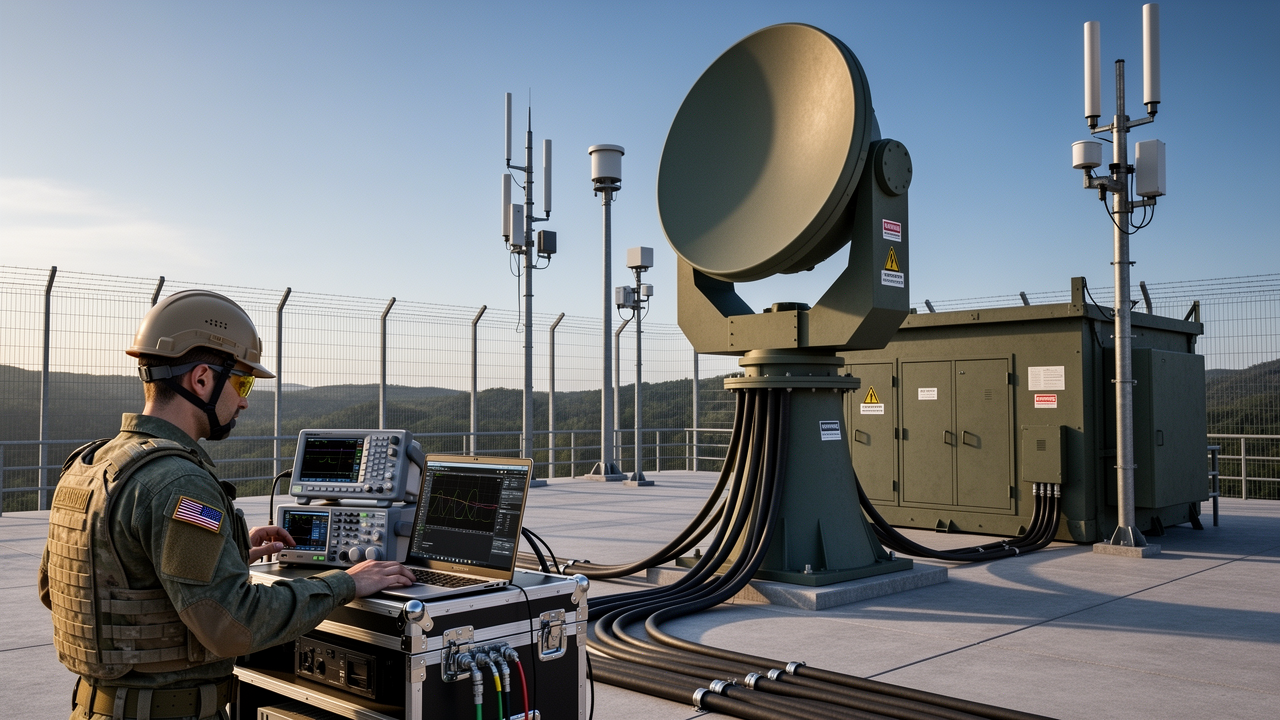
Countering Drone Threats: How Wideband Signal Generators Strengthen Counter-UAV Systems
Introduction
According to news reports, Spain plans to deploy advanced counter-drone systems to Lithuania by 2026 to address the growing threat of drone activity in border regions. This move underscores NATO members urgent need to strengthen defense capabilities in the face of evolving aerial threats from areas such as Russia and Belarus. Such deployments are not only a manifestation of military cooperation but also signify the high importance modern defense systems place on effectively countering drone technology.
Industry Challenges & Pain Points
Currently, drone technology is increasingly prevalent, with its application scope continuously expanding from civilian commercial drones to military-grade reconnaissance and attack platforms. These unauthorized drones are used for reconnaissance, smuggling, sabotage, and even direct attacks, posing serious threats to national security and critical infrastructure. Traditional fixed-frequency defense systems face severe challenges in responding to such threats. Many modern drones employ frequency hopping, spread spectrum techniques, or operate in crowded ISM bands like 2.4GHz, 5.8GHz, as well as custom frequencies, making it difficult for traditional countermeasures to interfere effectively. Frequency rigidity and slow response are the main pain points where traditional defense systems fail to adapt to complex and dynamic drone threats.
The Core Countermeasure: Why Signal Interference Sources Are Key
In counter-UAV system strategies, the signal interference source is at the core of its effectiveness. Effective counter-UAV defense is not just about detection but about reliably disrupting the drones communication, navigation, and control links. This requires the interference source to possess wideband coverage capability and rapid frequency hopping ability. Only by emitting wideband interference signals covering the drones potential operating frequency range can it effectively suppress them and force them to lose control or return to base. Having software-defined frequency agility, which can adjust interference frequencies and modes in real-time, is crucial for addressing the evolution of future drone technology.
Advanced Solution: 400M Instantaneous Bandwidth Signal Generator
Addressing the aforementioned challenges, the 400M Instantaneous Bandwidth Signal Generator offers an ideal solution. This advanced equipment is specifically designed to meet the demands of modern counter-UAV systems for high-performance signal interference sources. It features an ultra-wide frequency range of 70-6000MHz, capable of covering almost all common drone frequency bands, from low-frequency control channels to high-frequency video transmission and navigation signals. Its instantaneous bandwidth of up to 400MHz allows for simultaneous interference of multiple frequencies or effective suppression of wideband targets. More importantly, the device supports software tunable frequency modulation, enabling rapid and flexible adjustment of frequency and modulation modes based on the threat environment and drone type, with an output power range of 0dBm to +20dBm, phase noise better than -100dBc/Hz at 1GHz 10kHz offset, and spurious suppression greater than -60dBc. This makes it a core component for building next-generation adaptive and efficient counter-UAV systems.
Conclusion
Spains deployment of counter-drone systems to Lithuania reflects the urgency of addressing drone threats. Faced with complex drone threats, traditional fixed-frequency defense methods are proving insufficient. High-performance wideband signal generators, especially devices with large instantaneous bandwidth and software tunable frequency modulation capabilities, are key to building modern counter-UAV systems.
Learn more about our advanced 400M Instantaneous Bandwidth Signal Generator today and upgrade your counter-UAV defense capabilities!
FAQ
Question 1: In which fields is the 400M Instantaneous Bandwidth Signal Generator primarily used?
Answer 1: It is primarily used in counter-UAV systems, electronic warfare simulation, radar system testing, wireless communication testing, and scientific research and education, all areas requiring wideband, high-precision RF signal sources.
Question 2: What is software tunable frequency modulation, and why is it important?
Answer 2: Software tunable frequency modulation means that the signal generators output frequency, bandwidth, and modulation method can be quickly changed via software commands. This is crucial in counter-UAV applications because drones may use evasion techniques like frequency hopping. Software tunable capability allows the interference system to adapt in real-time, improving countermeasure efficiency.
