

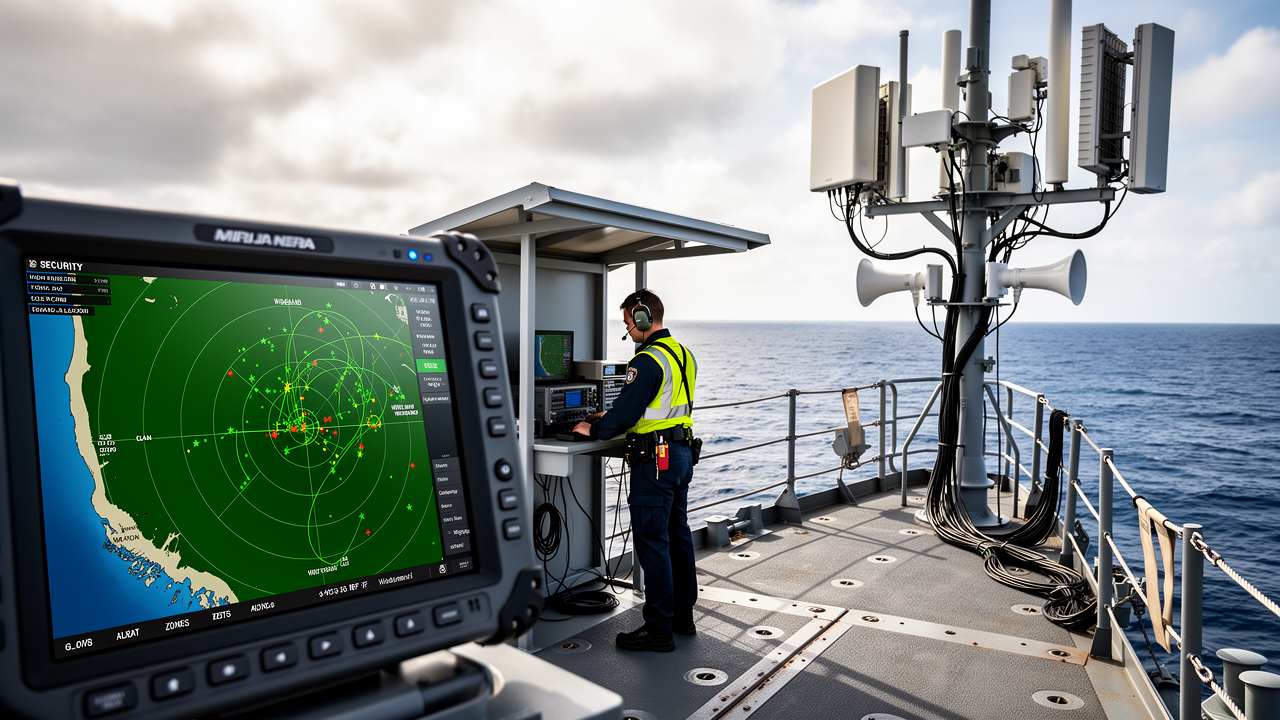
New Era in Maritime Counter-Drone Defense: How Wideband Signal Generators Strengthen C-UAS Systems
Introduction
Recently, Babcock and Frankenburg Technologies announced a strategic partnership aimed at enhancing maritime counter-drone air defense capabilities. This collaboration highlights the urgent need globally, especially in maritime environments, to combat increasingly sophisticated drone threats. With the rapid development of drone technology, from reconnaissance to potential attacks, unauthorized drones pose significant risks to critical infrastructure and maritime assets. The context of this partnership is that defense agencies worldwide are seeking more advanced and reliable C-UAS counter-drone systems to address these evolving challenges. This marks an important trend in maritime defense: integrating innovative technologies to ensure security.
Industry Challenges & Pain Points
Currently, drone threats are becoming more diverse and complex, including small, hard-to-detect drones and advanced systems capable of swarm attacks. Traditional defense methods face numerous limitations in responding to these threats. For example, many older jamming systems have fixed frequencies, making them unable to effectively cover the wide operating frequencies of drones, and they lack adaptability to new wideband or frequency-hopping drones. Furthermore, insufficient rapid deployment and immediate response capabilities make it difficult for traditional systems to effectively counter sudden or multi-directional drone incursions, leading to defense gaps and potential security risks.
The Core Countermeasure: Why Signal Interference Source is Key
In counter-drone C-UAS systems, the signal interference source plays a crucial role; it is the core component that causes drones to lose control or disrupts communication. An efficient signal interference source must possess a wide frequency coverage range and excellent frequency agility. Wideband jamming capability can effectively suppress various types and models of drones, regardless of their operating frequency. Frequency agility, on the other hand, allows the system to rapidly switch jamming frequencies, thereby countering advanced drones that employ frequency hopping or adaptive frequency technologies, ensuring the continuous and effective nature of the jamming.
Advanced Solution: 400M Instantaneous Bandwidth Signal Generator
Facing these challenges, a high-performance signal generator is an ideal choice for building modern C-UAS systems. The 400M Instantaneous Bandwidth Signal Generator is precisely such a device, capable of meeting stringent requirements. Its ultra-wide frequency range of 70-6000MHz ensures comprehensive coverage of almost all commercial and military drone operating frequencies. An instantaneous bandwidth of up to 400MHz enables it to perform wideband jamming across multiple frequency bands simultaneously, effectively suppressing drone swarms or drones employing complex communication modes. More importantly, this signal generator supports software-defined frequency modulation, meaning users can flexibly and rapidly adjust jamming strategies and frequencies according to the real-time threat environment, thereby achieving dynamic response and precise strikes against evolving threats.
Conclusion
The collaboration between Babcock and Frankenburg Technologies in maritime counter-drone defense highlights the urgent need for technological innovation in future defense systems. To counter current complex drone threats, wideband, software-defined, and frequency-agile signal interference sources are critical. The 400M Instantaneous Bandwidth Signal Generator, with its ultra-wide frequency range of 70-6000MHz, 400MHz instantaneous bandwidth, and software-defined frequency modulation capabilities, provides powerful and flexible core technical support for C-UAS systems, serving as an advanced solution for national security and critical asset protection.
Learn more about the 400M Instantaneous Bandwidth Signal Generator today and upgrade your counter-drone defense capabilities.
FAQ
Question 1: Why is wideband capability so important for counter-drone systems?
Answer 1: Wideband capability allows counter-drone systems to cover a broader frequency range simultaneously, effectively countering different types and operating frequencies of drones, including advanced ones using frequency hopping or multi-band communication, thereby increasing jamming success rates.
Question 2: What are the advantages of the 400M Instantaneous Bandwidth Signal Generator software tunable feature?
Answer 2: The software tunable feature enables the system to rapidly and flexibly adjust jamming frequencies and modes based on real-time threat intelligence and environmental changes. This allows for dynamic adaptation and precise response to new or mutated drone threats, significantly enhancing defense efficiency.
