

Enhancing Counter-UAS Capabilities: How Wideband Signal Generators Address Evolving Threats
Introduction
ParaZero Technologies recently secured its initial order for DefendAir counter-UAS technology from an Israeli defense entity. This event highlights the growing global demand for effective counter-drone solutions. As drone technology rapidly advances, its applications in both military and non-military sectors are expanding, bringing increasingly severe security challenges. Defense agencies worldwide are actively seeking innovative technologies to effectively counter complex drone threats, protecting critical infrastructure and sensitive areas.
Industry Challenges & Pain Points
Currently, unauthorized drone activities pose serious threats, ranging from reconnaissance to potential malicious attacks. Traditional defense systems face numerous challenges in addressing these emerging threats. For instance, drones can operate across various frequency bands and quickly switch communication frequencies, rendering fixed-frequency jamming equipment ineffective. Furthermore, coordinated multi-drone operations, known as drone swarms, demand even more sophisticated countermeasures. Conventional rigid frequency defense mechanisms and limited bandwidths struggle to effectively identify and suppress wideband, highly agile drone signals, leaving defenders in a reactive position.
The Core Countermeasure: Why Signal Interference Sources Are Key
In counter-UAS systems, the signal interference source plays a vital role. It is the core component that directly disrupts or suppresses drone communication links, navigation systems, or remote control signals. To achieve effective counteraction against modern drones, the interference source must possess wideband coverage and frequency agility. Wideband interference can cover multiple frequency bands that drones might use, while frequency agility allows the system to quickly adapt to a drone’s frequency hopping behavior, thereby maintaining continuous and effective suppression. Interference sources lacking these capabilities will prove inadequate against complex and intelligent drone threats.
Solution: The 400M Instantaneous Bandwidth Signal Generator
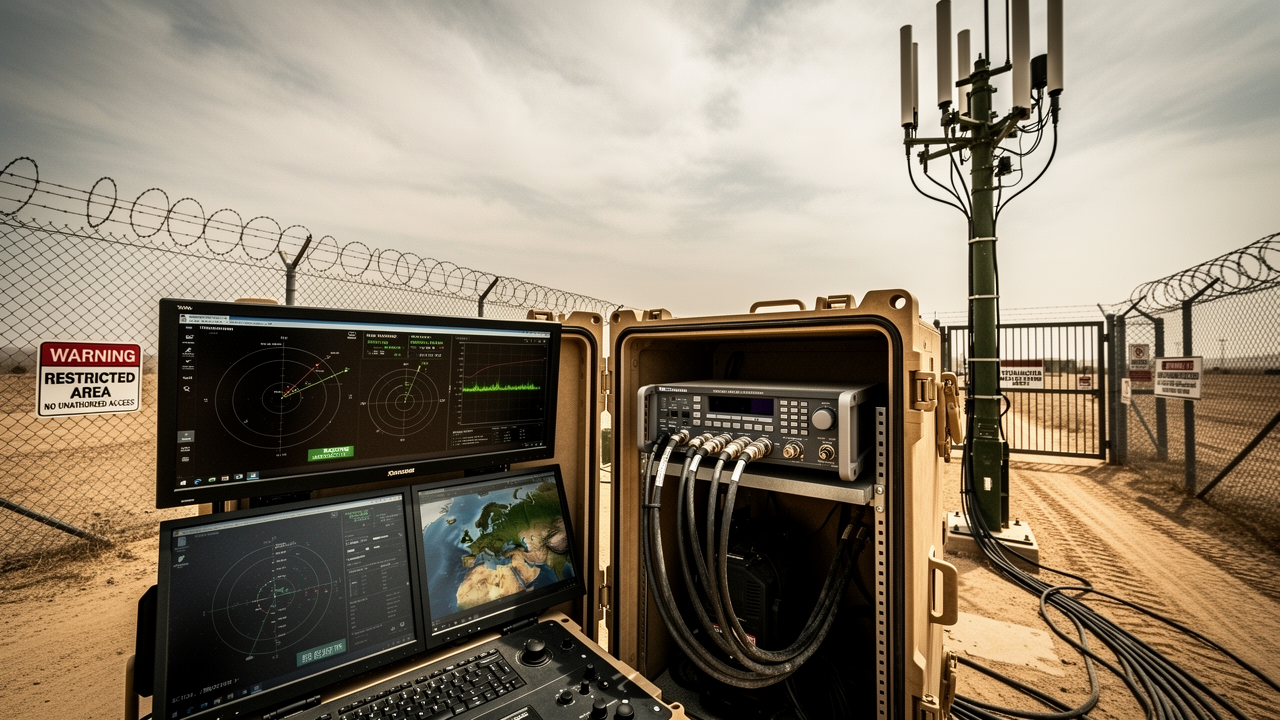
To effectively address these challenges, advanced signal generators become critical technology. Our company’s 400M Instantaneous Bandwidth Signal Generator is designed precisely for this purpose. It features an ultra-wide frequency range of 70-6000MHz, capable of covering most known and potentially emerging drone communication bands. Its core advantage lies in its 400M instantaneous bandwidth, meaning it can simultaneously interfere with multiple targets across a wide frequency band, significantly enhancing countermeasure efficiency. Furthermore, the device supports software-defined frequency modulation, allowing operators to intelligently adjust jamming strategies based on real-time threats, achieving precise and flexible signal suppression. This software-tunable capability enables rapid adaptation to changing threat environments, making it an ideal choice for building next-generation counter-UAS systems.
Conclusion
Facing increasingly severe drone threats, traditional defense methods are proving insufficient. ParaZero’s order and the industry’s pursuit of high-performance counter-UAS solutions underscore the urgent need for advanced signal jamming technology. Our company’s 400M Instantaneous Bandwidth Signal Generator, with its wide frequency coverage, high instantaneous bandwidth, and software-defined capabilities, provides defense and security sectors with a powerful tool to address future drone challenges, ensuring the safety and stability of critical areas.
Contact us today to learn how the 400M Instantaneous Bandwidth Signal Generator can strengthen your counter-UAS defense system.
FAQ
Question 1: What are the primary application areas for the 400M Instantaneous Bandwidth Signal Generator?
Answer 1: It is primarily used in radar and electronic warfare system testing, wireless communication system research and development, spectrum monitoring and analysis, and crucial interference and counter-interference testing, excelling particularly in the counter-UAS field.
Question 2: What are the advantages of software-defined frequency modulation?
Answer 2: Software-defined frequency modulation allows users to flexibly and rapidly adjust frequencies and modulation types, enabling real-time adaptation to evolving threat environments. This is particularly effective against frequency-hopping and multi-band drone targets, offering high response capability.
