

Deploying Bumblebee V2: A New Era in Counter-Drone Signal Jamming
Introduction
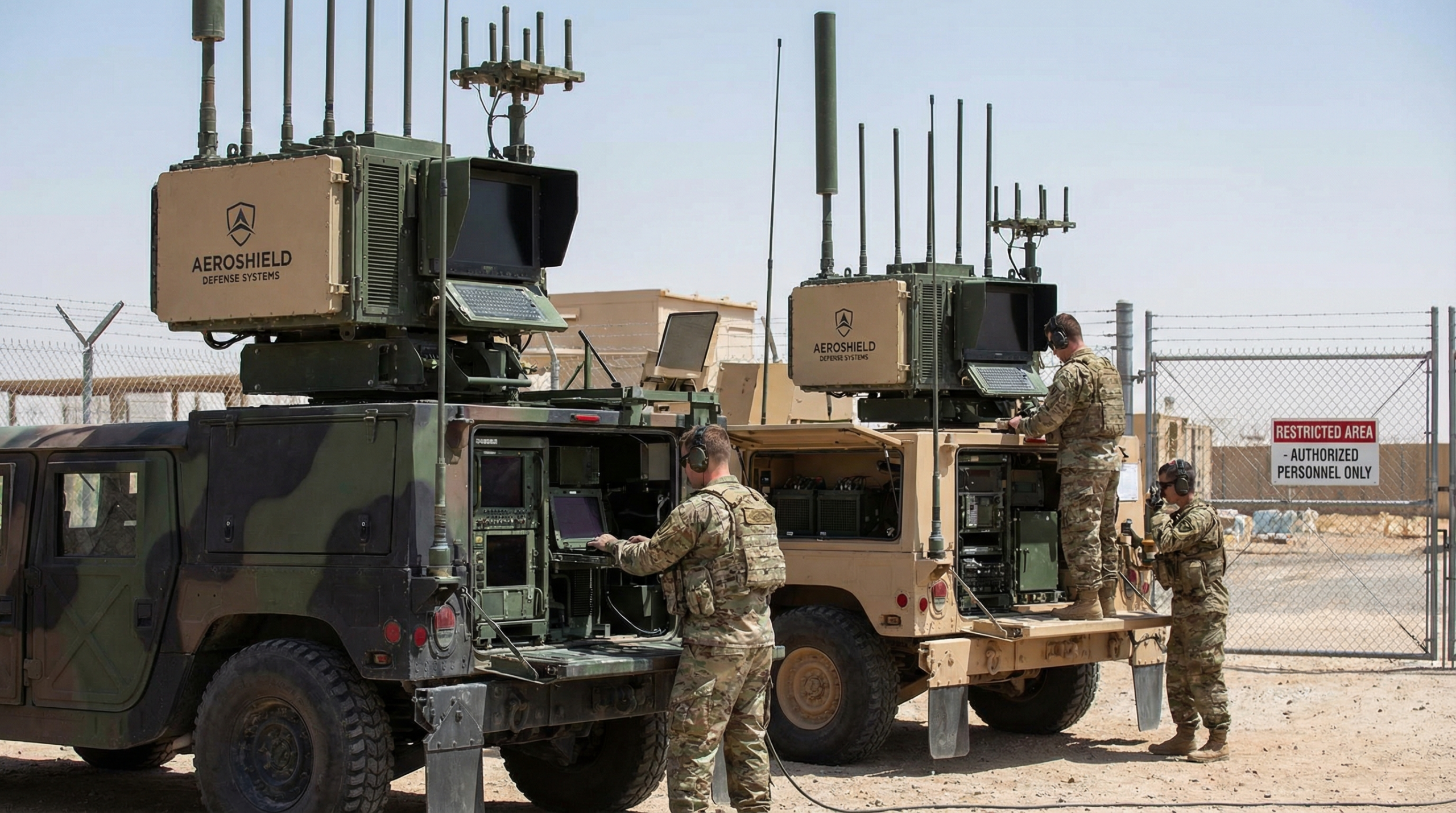
Recently, the US Department of Defense announced plans to equip US forces with the Bumblebee V2 counter-drone system in March to enhance their defense against small unmanned aerial system threats. This initiative reflects the rapid global development of drone technology and its growing strategic importance in conflict zones. As drone operations become more complex, especially concerning unauthorized airspace intrusions and potential reconnaissance activities, the need for effective counter-drone solutions has become more urgent than ever. This move is not only a direct response to current threats but also signals a new era for counter-drone signal jamming technology.
Industry Challenges & Pain Points
Modern warfare and security environments face increasingly complex drone threats. From small commercial drones to military reconnaissance and attack drones, their numbers, types, and technological capabilities are continuously advancing. Traditional countermeasures are often limited by fixed frequencies and narrow bandwidths, making it difficult to effectively counter fast frequency-hopping, multi-band coordinated drones, or even swarms with AI autonomous evasion capabilities. These drones can operate across a wide spectrum, making single, static jamming devices ineffective in forming a comprehensive and robust defense network.
The Core Countermeasure: Why Signal Interference is Key
In counter-drone systems, the most critical component is undoubtedly the signal interference source. It disrupts the communication link between a drone and its operator or interferes with its navigation system by emitting specific or wide-range electromagnetic waves, causing it to lose control, return to base, or land forcibly. For effective countermeasures, a signal interference source must possess wideband coverage and rapid frequency hopping capabilities to address potential drone operations across 70MHz to 6GHz and even higher frequency bands. Only flexible and powerful counter-drone signal jamming capabilities can ensure the resilience and effectiveness of defense systems.
Advanced Solution: 400M Instantaneous Bandwidth Signal Generator
Facing diverse drone threats, a high-performance signal generator is central to building advanced counter-drone systems. The 400M Instantaneous Bandwidth Signal Generator is designed precisely for such applications. This device offers an ultra-wide frequency range from 70MHz to 6000MHz, ensuring coverage of almost all common drone communication and navigation bands on the market. With its instantaneous bandwidth of up to 400MHz, it can efficiently jam multiple wideband targets simultaneously, significantly improving countermeasure efficiency. Furthermore, its software tunable characteristic allows it to quickly adapt to new threats, enabling flexible frequency configuration and modulation methods, including analog modulation AM/FM/PM and digital modulation QAM/PSK/FSK. Its output power range of -30dBm to 10dBm and frequency resolution up to 1Hz make it an ideal choice for building a robust counter-drone defense line.
Conclusion
The US militarys deployment of the Bumblebee V2 system is a clear signal of the global demand for advanced counter-drone technology. To effectively address future drone challenges, high-performance signal interference technology, particularly the 400M Instantaneous Bandwidth Signal Generator with its wide instantaneous bandwidth and software tunability, will be of paramount importance.
Learn more about how the 400M Instantaneous Bandwidth Signal Generator can strengthen your defense strategy; contact our team of experts today.
FAQ
Question 1: What are the primary counter-drone scenarios for the 400M Instantaneous Bandwidth Signal Generator?
Answer 1: It is suitable for scenarios requiring wideband coverage and rapid response, such as military base defense, critical infrastructure protection, border patrol, and security for large-scale events, effectively countering various drone threats.
Question 2: How does the software tunable feature enhance counter-drone capabilities?
Answer 2: Software tunability allows operators to dynamically adjust interference frequencies, modulation methods, and power based on real-time threats, enabling quick, precise, and flexible responses to new or unknown drone threats, greatly improving system adaptability and effectiveness.
