

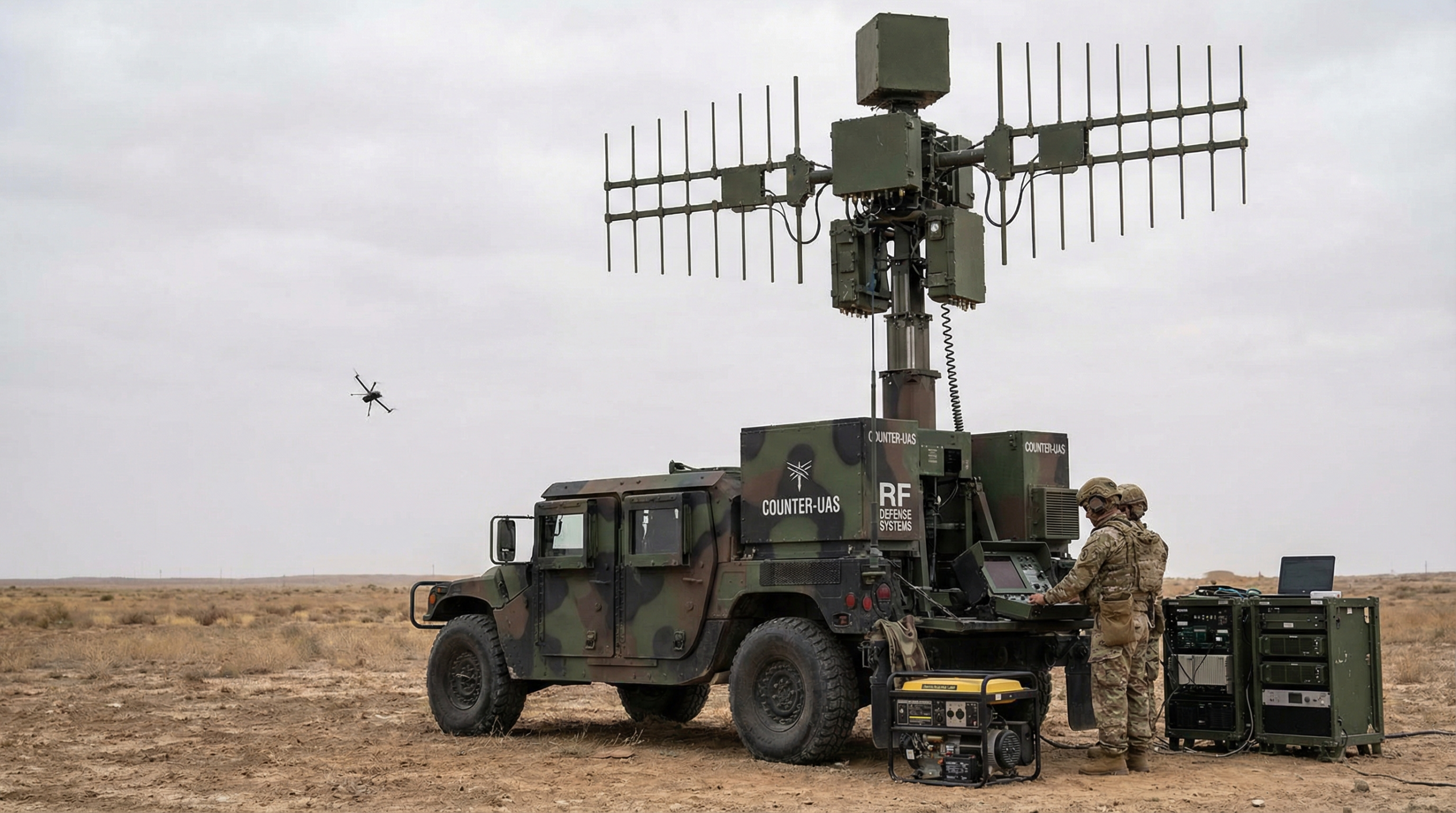
Countering Future Threats: Wideband Signal Interference and Counter-UAV Strategies
Introduction
The Ukrainian battlefield situation, as reported by the Financial Times, reveals an unprecedented breadth and depth of drone applications in modern conflict. Whether it is Russia’s Lancet loitering munitions or Ukraine’s widely used reconnaissance and attack drones, they have become critical factors determining victory or defeat. This is not merely a technological confrontation but also a test of electronic warfare capabilities. Faced with rapidly evolving UAV threats, traditional defense methods are encountering severe challenges, urgently requiring more advanced Wideband Signal Interference technology to cope with complex electromagnetic environments.
Industry Challenges & Pain Points
Currently, unauthorized drones, including various commercial and military UAVs, pose a common threat to national security agencies worldwide. These drone technologies iterate rapidly, featuring stronger autonomy, stealth, and even swarm attack or frequency hopping communication capabilities. Traditional counter-UAV systems often rely on preset frequencies or narrowband interference, making it difficult to effectively counter these agile and versatile targets. Once drones adopt spread spectrum or frequency hopping techniques, fixed-frequency jammers become immediately ineffective, leaving defenders in a passive position. This rigid defense approach exposes weaknesses such as slow response and insufficient coverage in rapidly changing battlefield or security scenarios.
The Core Countermeasure: Why Signal Interference Source is Key
In counter-UAV operations, the most critical step is to strip drones of their control or navigation capabilities. This requires our countermeasure systems to efficiently transmit interference signals, severing communication links between the drone and its operator, disrupting its Global Positioning System signals, or even interrupting its video transmission. To achieve this goal, a high-performance Wideband Signal Interference source is essential. It must possess a wide frequency coverage range and rapid frequency hopping capability to effectively suppress various threats within the complex electromagnetic spectrum, ensuring defense flexibility and effectiveness.
Advanced Solution: 400M Instantaneous Bandwidth Signal Generator
To address the aforementioned challenges, a high-performance signal generator serves as the cornerstone for building advanced counter-UAV systems. Our 400M Instantaneous Bandwidth Signal Generator is specifically designed to meet modern electronic warfare requirements. This device offers an ultra-wide frequency range of 70-6000MHz, ensuring coverage of all currently known and potentially future drone communication and navigation bands. Its 400M instantaneous bandwidth capability means the device can generate interference signals covering a 400MHz width within an extremely short time, thereby effectively countering drones employing spread spectrum or frequency hopping technologies. Crucially, it supports software tunability, allowing users to flexibly adjust interference strategies based on real-time threat environments for rapid deployment and efficient response.
Conclusion
The rapid advancement of drone technology poses ongoing challenges to national and public security. To effectively counter these threats, advanced Wideband Signal Interference technology is indispensable. The 400M Instantaneous Bandwidth Signal Generator, with its wide frequency coverage, powerful instantaneous bandwidth, and software tunability, provides robust technical support for building next-generation counter-UAV systems.
Contact us today to explore how the 400M Instantaneous Bandwidth Signal Generator can enhance your counter-UAV defense capabilities。
FAQ
Question 1: What are the main application areas for the 400M Instantaneous Bandwidth Signal Generator?
Answer 1: This device is primarily used in counter-UAV systems, electronic warfare simulation training, communication interference testing, and other defense and research fields requiring wideband high-precision RF signal sources.
Question 2: How does this signal generator counter complex frequency hopping drone threats?
Answer 2: With its ultra-wide frequency range of 70-6000MHz and 400M instantaneous bandwidth, combined with software tunability, the device can quickly scan and generate wideband interference signals against frequency hopping drones, effectively suppressing their communication links.
