

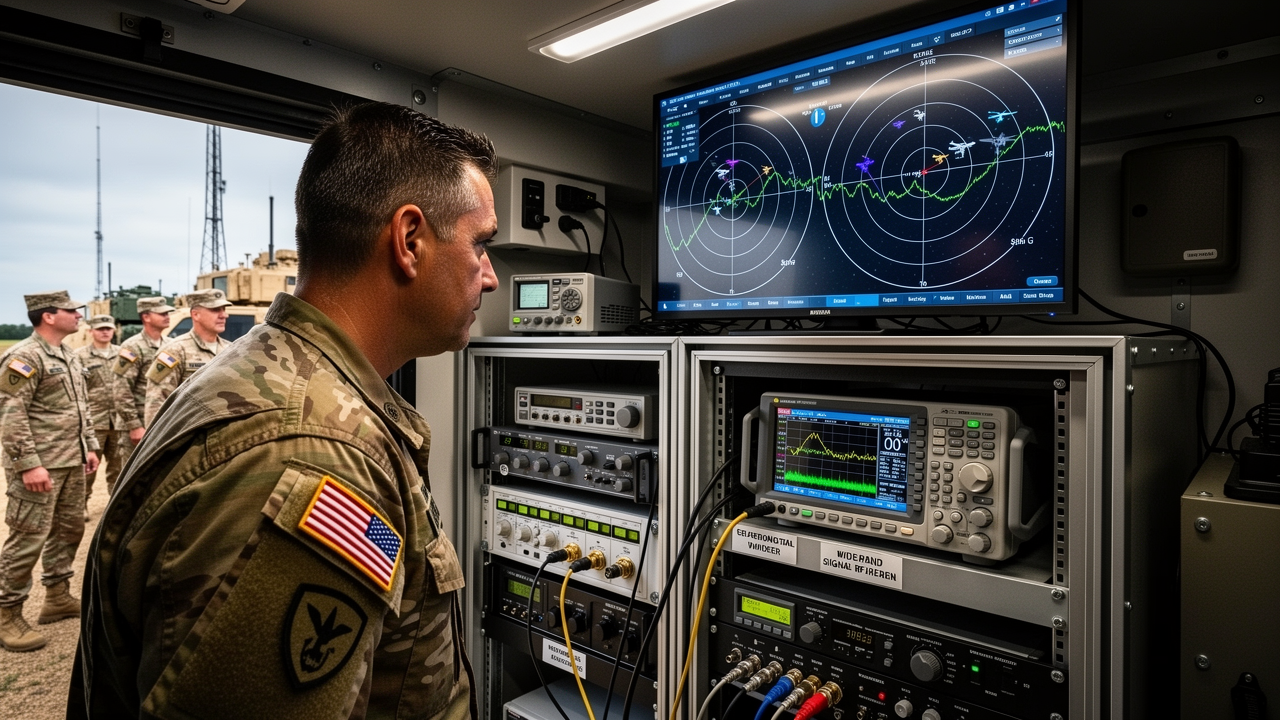
Counter-UAV System Trends: The Critical Role of Wideband Signal Jamming
Introduction
Recently, a South African counter-drone system successfully completed its proof of concept trials. This event marks a significant step forward in global efforts to address the escalating threat posed by drones. With the proliferation of drone technology, particularly small and medium-sized unmanned aerial vehicles UAVs, the risk of their illicit use for surveillance, smuggling, and potential attacks continues to grow. This development in South Africa underscores the urgent need for innovative and highly effective counter-UAV solutions worldwide. Traditional defense methods are facing challenges, necessitating more flexible and adaptable technologies to protect critical infrastructure and sensitive areas in the future.
Industry Challenges & Pain Points
Currently, unauthorized UAV activities pose severe challenges to both civilian and military sectors. These threats include illegal incursions at airports, border security vulnerabilities, and potential damage to vital facilities. Many traditional counter-UAV systems rely on fixed narrowband jamming frequencies or limited detection ranges, making it difficult for them to counter rapidly evolving drone technologies. Modern drones can evade detection using frequency hopping, spread spectrum, and operate across wide frequency bands, rendering conventional single-frequency or narrowband jamming strategies significantly less effective or even obsolete. Effectively combating these agile and diverse aerial threats remains a pressing concern for the defense and security industries.
The Core Countermeasure: Why Signal Interference Source is Key
In building an effective counter-UAV system, the signal interference source is its core component. Only through powerful and flexible signal jamming can the communication link between a drone and its operator be effectively severed, or its navigation systems be disrupted, leading to the drone’s capture or deterrence. Traditional narrowband jammers, due to their limited frequency coverage, are often ineffective against drones operating across wide frequency bands. Therefore, a signal interference source with wideband coverage and rapid frequency hopping capabilities is crucial for addressing current and future drone threats. It ensures that regardless of the frequencies a drone uses for communication or navigation, it can be effectively suppressed, maximizing countermeasure efficacy.
Advanced Solution: 400M Instantaneous Bandwidth Signal Generator
Facing complex drone threats, our 400M Instantaneous Bandwidth Signal Generator offers an ideal solution. This device features an ultra-wide frequency range of 70-6000MHz, ensuring comprehensive coverage of almost all commercial and military drone communication bands. Its core advantage lies in its remarkable 400M instantaneous bandwidth, which means it can simultaneously generate interference signals across an extremely wide frequency range. This capability effectively counters sophisticated drones employing frequency hopping or spread spectrum techniques. Furthermore, this signal generator possesses software tunable capabilities, allowing dynamic adjustment of jamming strategies based on real-time threats for rapid and precise frequency response. This makes it an ideal choice for constructing future highly adaptive counter-UAV systems, significantly enhancing the ability to respond to diverse and evolving threat environments.
Conclusion
The advancements in South African counter-drone systems and current industry challenges clearly point towards one direction: future counter-UAV technology must incorporate wideband, flexible, and intelligent signal interference capabilities. Our 400M Instantaneous Bandwidth Signal Generator, with its exceptional frequency coverage, wide instantaneous bandwidth, and software tunable capabilities, is specifically designed to meet this demand, serving as a core pillar for building robust counter-UAV systems.
Discover our 400M Instantaneous Bandwidth Signal Generator today and enhance your counter-UAV defense capabilities.
FAQ
Question 1: How does the 400M Instantaneous Bandwidth Signal Generator differ from traditional jammers?
Answer 1: Our device offers ultra-wideband coverage from 70-6000MHz, 400M instantaneous bandwidth, and software tunable functionality. Traditional jammers are typically narrowband and fixed-frequency, struggling against frequency-hopping drones.
Question 2: What is the importance of software tunable functionality for a counter-UAV system?
Answer 2: Software tunable capability allows the system to quickly and precisely adjust interference signals based on real-time detected drone frequencies, thereby effectively countering complex drone threats with changing frequencies.
