

Introduction
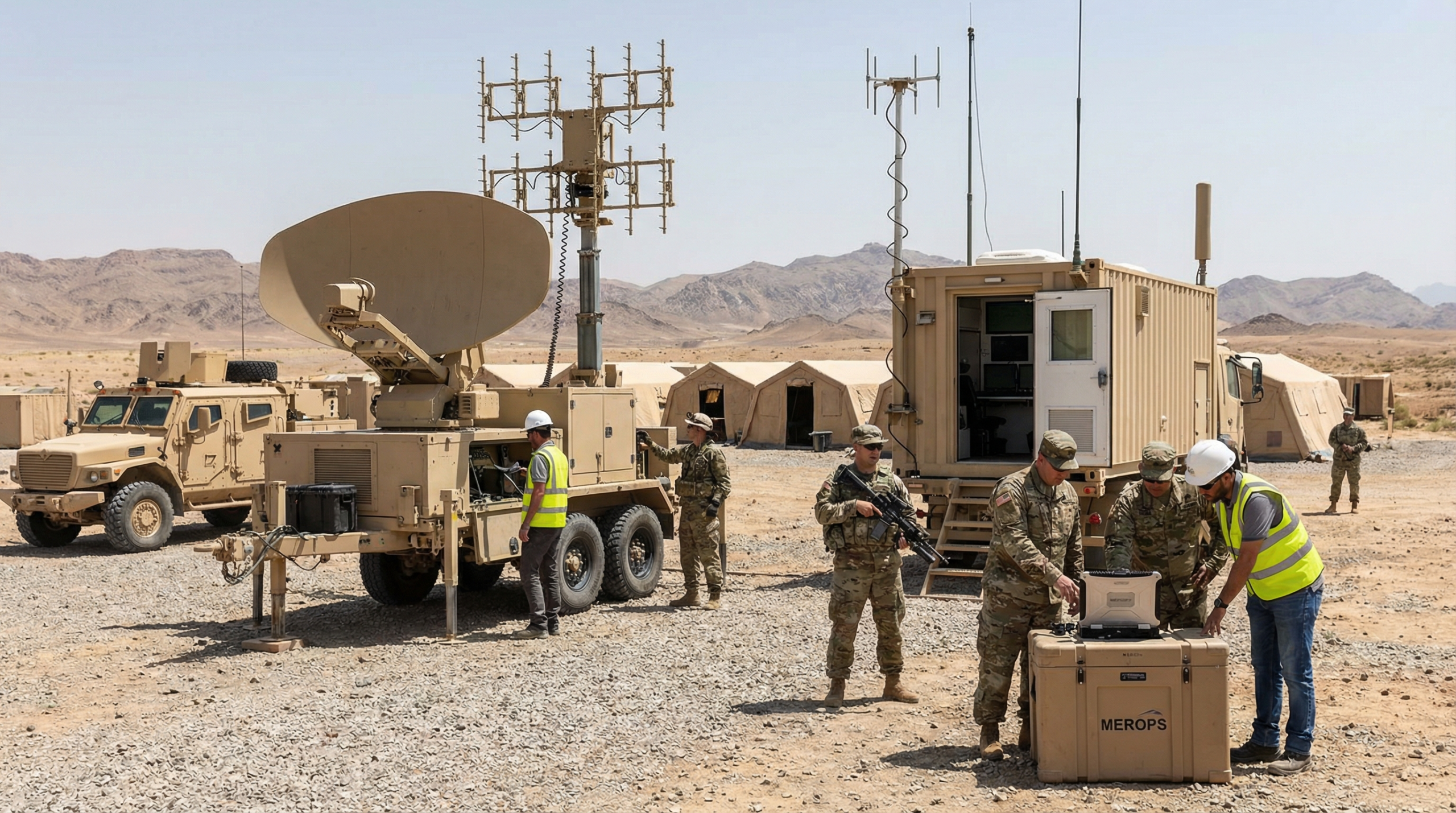
With the proliferation of drone technology on the modern battlefield, the importance of anti-drone systems is increasingly evident. The United States recently deployed the advanced MEROPs system in the Middle East, aimed at countering the growing drone threat. This article will delve into the MEROPs systems technical principles, strategic deployment, and its impact on the regional security landscape.
The MEROPs System: Technical Principles and Features
The MEROPs system is a modular, scalable radio frequency countermeasure system designed to detect, identify, and disrupt various unmanned aerial vehicles. Its core technologies include:
- Broadband RF Interference: Effectively suppresses communication links between drones and their operators, forcing them to lose control or return.
- Modular Design: Allows for rapid configuration and upgrading of the system according to mission requirements, suitable for different operational environments.
- High-Precision Detection: Combines radar, optical, and acoustic sensors to achieve early warning and precise tracking of small, low-altitude, slow-moving drones.
- Multi-Layered Defense: Not only can it jam drones, but it can also operate synergistically with other countermeasures such as kinetic interception or laser blinding.
The deployment of the MEROPs system significantly enhances the aerial defense capabilities of the US military and its allies in complex electromagnetic environments.
Strategic Deployment and Regional Impact
The deployment of the MEROPs system by the United States in the Middle East is not accidental but a response to the escalating drone threats in the region, particularly from non-state actors and regional adversaries. This system aims to protect critical infrastructure, military bases, and personnel safety. Its strategic significance is reflected in:
- Enhanced Defensive Resilience: Countering low-cost, high-threat suicide or reconnaissance drone attacks.
- Deterring Potential Threats: Signifying to potential adversaries that the US has the capability to effectively counter drone attacks, thereby creating deterrence.
- Showcasing Technological Superiority: Consolidating US leadership in anti-drone technology.
- Supporting Regional Stability: Providing stronger defensive capabilities for allies, contributing to regional stability.
This move also reflects Americas high concern for the security situation in the Middle East and its commitment to safeguarding its strategic interests through high-tech means.
Conclusion
The MEROPs system, as an advanced anti-drone solution, its deployment in the Middle East is a significant step for the United States in addressing modern warfare challenges. It not only provides powerful technical defense capabilities but also profoundly influences the regional power balance and strategic landscape. As drone threats continue to evolve, the MEROPs system and similar technologies will continue to play a critical role in global security.
FAQ
Question 1: What types of drone threats does the MEROPs system primarily target?
Answer 1: The MEROPs system primarily targets small to medium-sized drones, including reconnaissance drones, attack drones, and suicide drones, and is particularly adept at handling low-altitude, slow-moving targets.
Question 2: Does the MEROPs system have offensive capabilities?
Answer 2: The MEROPs system is primarily a defensive jamming system that causes drones to lose control through RF interference. While it can be integrated with other kinetic or laser systems, its core function is not active offense.
References
- The Sunday Guardian Live (https://sundayguardianlive.com/world/usisraeliran-war-what-is-the-merops-system-and-why-is-the-us-deploying-this-anti-drone-technology-in-west-asia-174469/)
