

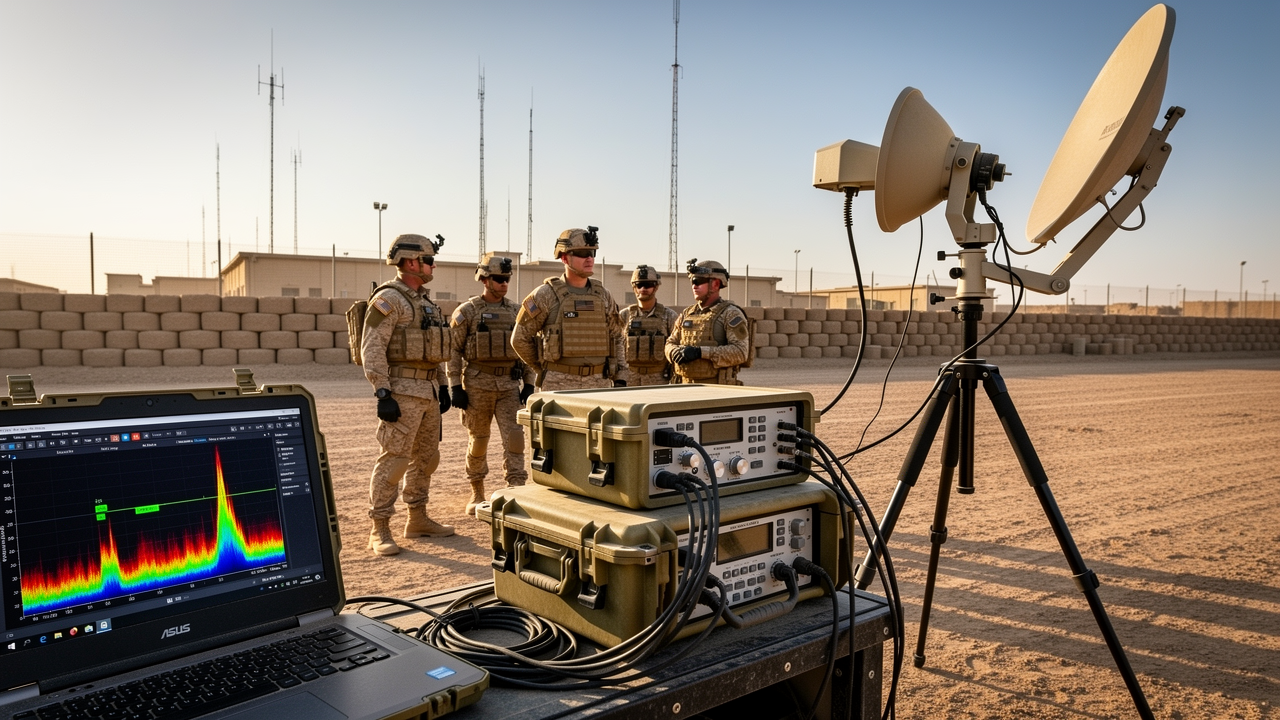
Counter-UAV Frontier: How the 400M Instantaneous Bandwidth Signal Generator Enhances Defense
Introduction
Recently, Spain deployed a counter-drone system named CROW to Lithuania, aiming to strengthen defense capabilities on NATO’s eastern flank. This action highlights the increasing severity of drone threats on the modern battlefield. Amid escalating geopolitical tensions, effective defense against unauthorized drones has become a top priority for national military strategies, concerning not only the security of military installations but also directly impacting border and critical infrastructure protection.
Industry Challenges & Pain Points
Currently, drone technology is developing rapidly, with clear trends towards miniaturization, intelligence, and swarm capabilities, posing significant challenges to traditional defense methods. Many existing counter-UAV systems rely on fixed-frequency or narrowband jamming, struggling to effectively counter wideband, frequency-hopping, and multi-protocol drone threats. Such systems often react slowly and cannot quickly adapt to evolving threat spectrums, leading to inefficient defense and easy evasion.
The Core Countermeasure: Why Signal Interference is Key
In counter-UAV operations, the role of a signal interference source is critical. An efficient signal interference source can cut off the communication link between a drone and its operator, or interfere with its GPS/GNSS navigation signals, thereby neutralizing or forcing it to land. To achieve this, the interference source must possess wideband coverage, high instantaneous bandwidth, and excellent frequency agility. Only then can it quickly locate and suppress target drones in complex electromagnetic environments, ensuring the effectiveness and reliability of defense.
Advanced Solution: 400M Instantaneous Bandwidth Signal Generator
To address this, we recommend the advanced 400M Instantaneous Bandwidth Signal Generator as an ideal tool for confronting future drone threats. This device is specifically designed to meet the rigorous demands of modern electronic countermeasures and counter-UAV systems.
Key Technical Highlights:
- Ultra-Wide Frequency Range: Covering 70MHz to 6000MHz, it can comprehensively cover common communication and navigation frequencies of various drones on the market, providing seamless spectrum defense.
- 400M Instantaneous Bandwidth: Offers up to 400MHz of instantaneous jamming bandwidth, enabling it to simultaneously suppress multiple frequency-hopping or wideband communication channels, significantly improving jamming efficiency.
- Software-Defined Frequency Modulation: Through its software tunable function, users can flexibly and rapidly configure and adjust the frequency, bandwidth, and modulation methods of the interference signal, adapting to evolving threat scenarios and ensuring real-time response capability.
This signal generator not only provides powerful interference capabilities but also, with its flexibility and programmability, builds a solid foundation for counter-UAV systems, enabling them to effectively cope with even more complex future drone threats.
Conclusion
Spain’s deployment of a counter-drone system in Lithuania signifies increased attention to drone threats and an upgrade in defense requirements. Faced with increasingly complex and intelligent drone challenges, traditional defense methods are proving insufficient. The 400M Instantaneous Bandwidth Signal Generator, with its exceptional wideband coverage, high instantaneous bandwidth, and software tunable capability, provides a forward-looking, high-efficiency solution. It is an indispensable core component in modern counter-UAV defense systems.
Call to action
To learn more about how the 400M Instantaneous Bandwidth Signal Generator can strengthen your defense capabilities, or to discuss customized solutions, please contact our team of experts today.
FAQ
Question 1: What are the main application scenarios for the 400M Instantaneous Bandwidth Signal Generator?
Answer 1: This device is primarily used in counter-UAV systems, electronic countermeasures, radar testing, and fields requiring wideband, high-precision signal generation, such as research institutions and defense units.
Question 2: How does this device adapt to evolving drone threats?
Answer 2: Its ultra-wide frequency coverage of 70-6000MHz and software tunable capability allow it to quickly respond and precisely interfere with various drone communication and navigation frequencies. This flexibility ensures the device can effectively address challenges posed by new drone technologies.
