

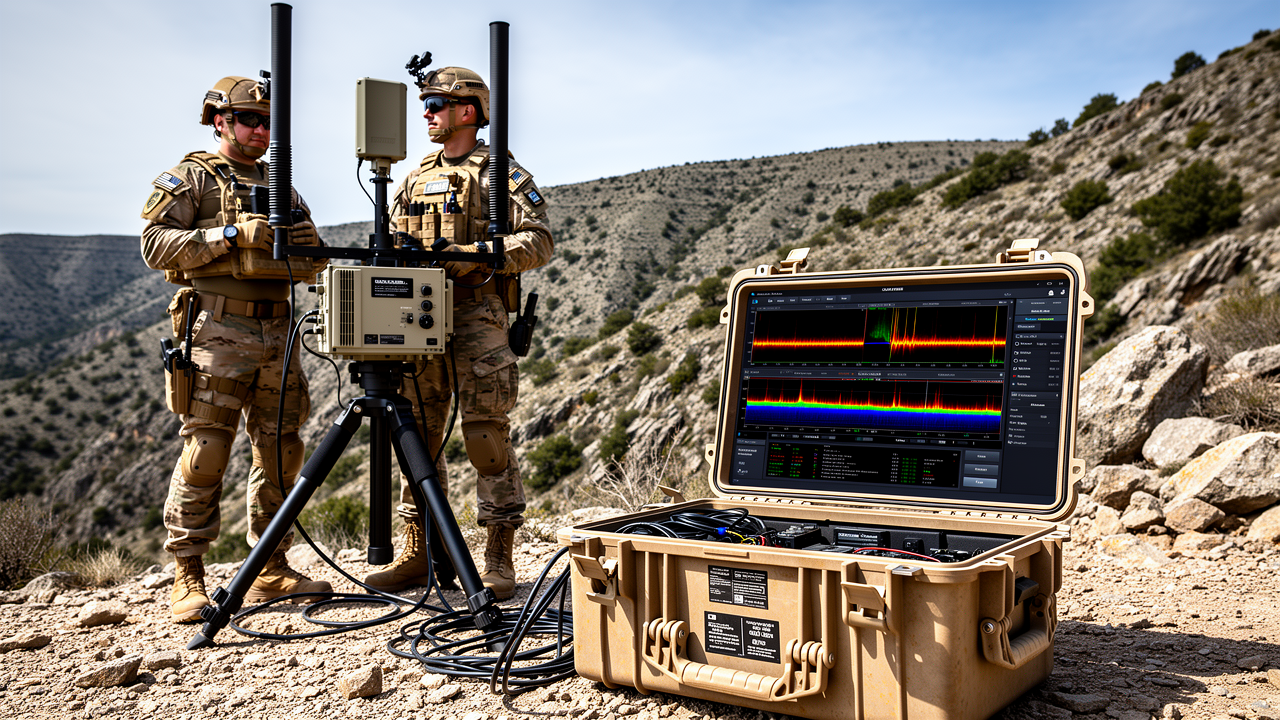
Addressing Future Threats: The Core Role of the 400M Instantaneous Bandwidth Signal Generator in Counter-UAV Signal Interference
Introduction
The European Defence Agency EDA has announced a large-scale exercise, OPEX 2026, to test advanced Counter-UAS C-UAS technologies. This exercise will focus on evaluating various solutions for countering drone threats, including capabilities to handle complex swarm attacks and advanced evasion tactics. This initiative highlights the increasingly severe reality of drone threats globally and the urgent need for nations to develop more effective, adaptive defense mechanisms.
Industry Challenges & Pain Points
With the rapid advancement of drone technology, unauthorized drone activities pose significant threats to military installations, critical infrastructure, and public safety. Modern drones often employ advanced techniques such as frequency hopping, wideband communication, and satellite navigation, greatly reducing the effectiveness of traditional narrowband, fixed-frequency countermeasures. Faced with fast-moving, signal-complex drone swarms, existing defense systems often struggle to respond effectively due to slow reaction times, insufficient frequency coverage, or a lack of real-time adaptability. This demands that counter-UAV systems possess broader spectrum awareness, faster response speeds, and more flexible interference capabilities.
The Core Countermeasure: Why Signal Interference Source is Key
In Counter-UAS C-UAS systems, the signal interference source plays a crucial role. It is the core component that directly severs the communication link between a drone and its operator, interferes with its navigation signals, or disrupts data transmission. To achieve effective countermeasures, the interference source must have an ultra-wide frequency coverage range and high instantaneous bandwidth. Only then can it precisely locate and suppress various communication and navigation signals of drones across a broad spectrum, regardless of their frequency or modulation method. A flexible and powerful signal interference source is the cornerstone for ensuring the effective operation of counter-UAV systems.
Advanced Solution: 400M Instantaneous Bandwidth Signal Generator
Facing complex airspace threats, the 400M Instantaneous Bandwidth Signal Generator offers an ideal solution. This device is specifically designed for demanding electronic warfare and counter-UAV applications, with its core advantages being:
- Ultra-wide Frequency Range: Covering 70-6000MHz, capable of encompassing the communication and navigation frequency bands of most commercial and military drones.
- High Instantaneous Bandwidth: Possessing 400MHz of instantaneous bandwidth, which means it can simultaneously generate or interfere with signals across a wide band, effectively countering drones that use wideband or frequency hopping technologies.
- Software-defined Frequency Modulation: This key feature allows users to quickly configure and adjust the output signal frequency, modulation type, and power via software, enabling flexible adaptation and precise targeting against different drone threats.
The 400M Instantaneous Bandwidth Signal Generator, with its exceptional performance, can simulate various complex electromagnetic environments, providing strong support for the research and development, testing, and deployment of counter-UAV systems.
Conclusion
Future counter-UAV operations demand higher requirements for signal interference technology. The 400M Instantaneous Bandwidth Signal Generator, with its 70-6000MHz wideband coverage, 400MHz instantaneous bandwidth, and flexible software tunable capabilities, stands as a powerful tool for addressing current and future drone threats. It provides critical support for enhancing the effectiveness of counter-UAV systems and ensuring airspace security.
Learn more about the 400M Instantaneous Bandwidth Signal Generator today to enhance your counter-UAV defense capabilities.
FAQ
Question 1: What are the main counter-UAV scenarios where the 400M Instantaneous Bandwidth Signal Generator is used?
Answer 1: It is suitable for the research, development, and testing of drone detection, tracking, and jamming systems, especially in scenarios requiring the simulation of complex radio environments or wideband interference against multi-band drones. Its wideband and frequency-flexible characteristics make it an ideal choice for countering various drone threats.
Question 2: What are the advantages of software-defined frequency modulation?
Answer 2: Software-defined frequency modulation allows users to rapidly adjust output signal parameters based on real-time threat environments without hardware modifications. This significantly improves system adaptability and response speed, enabling it to effectively counter evolving drone communication protocols and frequency strategies.
