

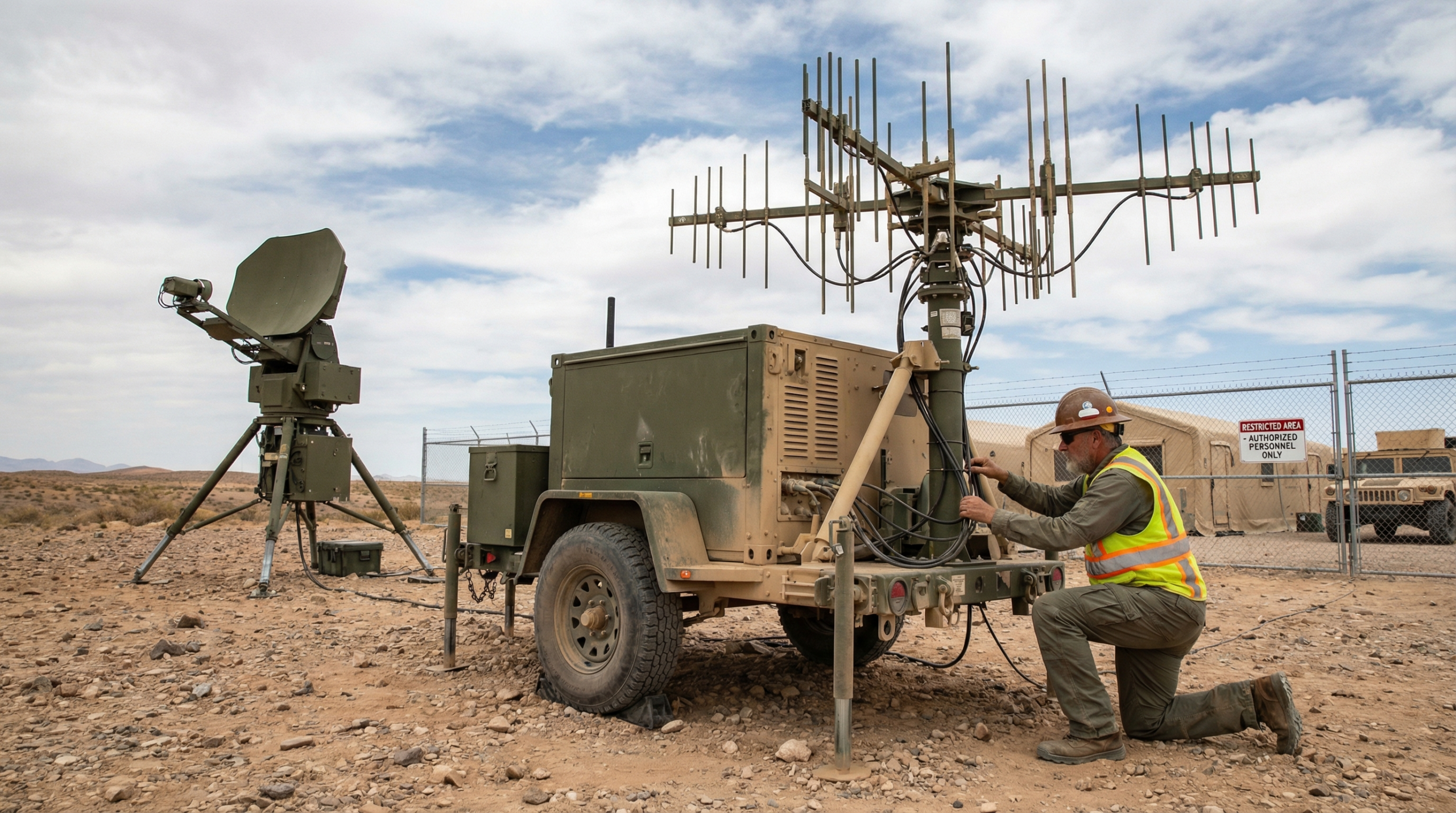
Addressing Future Threats: Key Technologies and Solutions for Counter-UAS Signal Jamming
Introduction
The European Defence Agency EDA recently announced tenders for ground-based C-UAS systems aimed at enhancing the protection of ground forces. This initiative highlights the increasing global military and security focus on drone threats. With the rapid development of drone technology, particularly the widespread use of small, inexpensive drones capable of complex flight patterns, existing defense systems face significant challenges. Effective Counter-UAS signal jamming has become an urgent priority.
Industry Challenges & Pain Points
Currently, unauthorized drone activities and evolving UAV technology pose serious threats to critical infrastructure, military bases, and civilian airspace. Traditional countermeasures often rely on fixed frequencies or narrowband jamming, struggling to effectively counter advanced drones capable of frequency hopping, swarm operations, and covert communication. Adversary drones can change communication frequencies or modes in very short periods, rendering slow-reacting defense systems helpless.
The Core Countermeasure: Signal Interference
Among diverse Counter-UAS C-UAS strategies, the signal interference source, or jammer, plays a crucial role. An efficient signal interference system must possess wideband coverage and frequency agility to quickly suppress or deceive drone communication, navigation, and control signals across a broad spectrum. Instantaneous wideband jamming capability is vital for neutralizing multi-band, multi-protocol drones, effectively severing their connection with operators.
Advanced Solution: 400M Instantaneous Bandwidth Signal Generator
To address these challenges, the 400M Instantaneous Bandwidth Signal Generator offers an ideal solution. This device features an ultra-wide frequency range of 70-6000MHz, covering most communication and navigation bands commonly used by drones. Its core advantage lies in its instantaneous bandwidth of up to 400MHz, allowing for efficient jamming across a broad spectrum in a very short time. Combined with software-defined frequency modulation capability, operators can intelligently adjust jamming strategies based on real-time threats, ensuring precise and powerful suppression of unknown or rapidly changing drone signals, significantly enhancing the effectiveness of Counter-UAS signal jamming.
Conclusion
Facing increasingly severe drone threats, deploying advanced wideband signal jamming solutions is no longer an option but a necessity. The 400M Instantaneous Bandwidth Signal Generator, with its exceptional frequency coverage, instantaneous bandwidth, and intelligent frequency modulation capabilities, provides core support for building robust Counter-UAS signal jamming systems.
Learn more about the 400M Instantaneous Bandwidth Signal Generator today and help build an impenetrable aerial defense line.
FAQ
Question 1: What is instantaneous bandwidth? How does it help in counter-UAS?
*Answer 1: Instantaneous bandwidth refers to the width of the frequency range that a signal generator can output at a single moment. For counter-UAS, a larger instantaneous bandwidth means the device can simultaneously jam multiple frequency points or broader communication links, thereby more effectively suppressing drones using frequency hopping technology.
Question 2: What are the advantages of the software-tunable feature in the 400M Instantaneous Bandwidth Signal Generator?
*Answer 2: Software tunability allows users to flexibly change signal parameters like frequency, modulation type, and power via software, without needing to replace hardware. This enables the system to rapidly adapt to new drone threats and different operational environments, significantly improving the adaptability and response speed of Counter-UAS signal jamming systems.
