

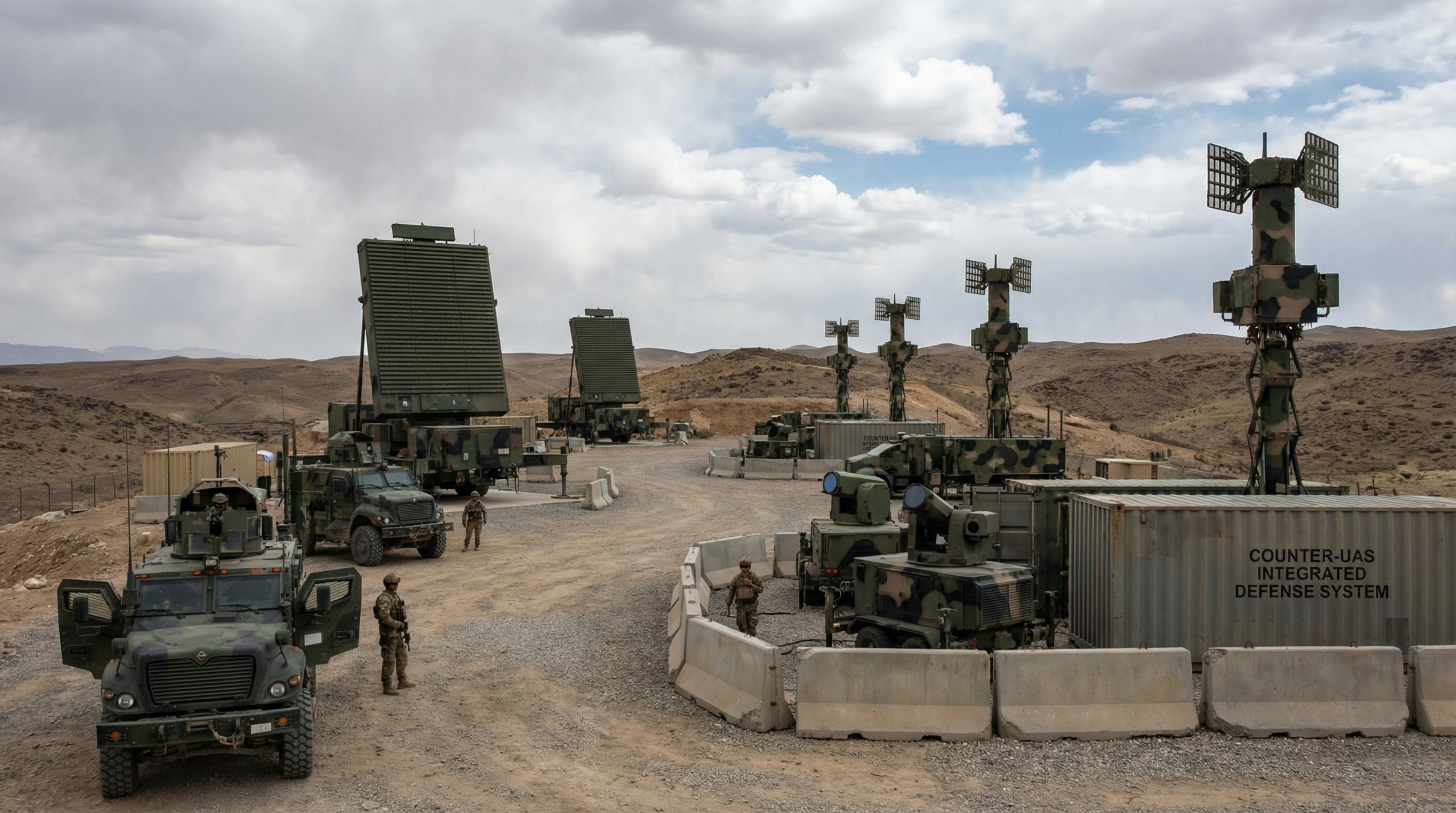
Ukraine Seeks to Establish Comprehensive Anti-Drone Dome Defense System
Introduction
As the threat from unmanned aerial vehicles (UAVs) increasingly defines modern warfare, Ukraine is actively exploring the establishment of a comprehensive anti-drone dome defense system. This initiative aims to effectively protect national airspace, critical infrastructure, and population centers from enemy drone attacks. The concept of an anti-drone dome represents an advanced defensive philosophy, integrating multiple technologies to form a multi-layered, all-encompassing aerial protective barrier.
Key Technological Components of an Anti-Drone Dome
Building an effective anti-drone dome requires integrating various cutting-edge technologies. First are detection and tracking systems, such as advanced radar, optical, and acoustic sensors, capable of identifying and locating drones of various sizes and speeds. Next are identification and classification technologies, which use artificial intelligence and machine learning to distinguish friendly from enemy drones and assess their threat level. Finally, interception and suppression methods include electronic warfare systems, which disable drones by jamming their control signals or GPS navigation; kinetic interceptors, such as laser weapons or specialized interceptor missiles; and cyberattack methods, to remotely control or disable enemy drones. The synergistic interaction of these technologies is fundamental to building a robust anti-drone defense system.
Challenges in Implementing Anti-Drone Defense
While the vision of establishing an anti-drone dome is ambitious, its realization faces numerous challenges. Technically, seamless integration between different systems, real-time data processing, and the ability to counter new drone technologies (such as drone swarms) are crucial. Operationally, highly trained professionals are needed to operate and maintain these complex systems, along with clear rules of engagement. Furthermore, financial investment is a significant challenge, as constructing a multi-layered defense system covering a wide area is extremely costly. Legal and ethical considerations must also be included, such as the risk of collateral damage when deploying interception methods in urban environments.
Conclusion
Ukraine’s efforts to create an anti-drone dome underscore the urgent need for effective drone defense on the modern battlefield. Despite numerous technical, operational, and financial challenges, the development of this comprehensive defense system will have profound implications for future national security and defense strategies. Through continuous innovation and international cooperation, achieving an impenetrable aerial defense barrier is not out of reach.
FAQ
Question 1: How does an anti-drone dome differ from traditional air defense systems?
Answer 1: An anti-drone dome focuses more on countering small, low-altitude, slow-speed, and numerous drone threats. Its technological methods are more diverse and flexible, such as electronic jamming and cyberattacks, whereas traditional air defense systems primarily target larger objectives like aircraft and missiles.
Question 2: What are the main technical difficulties in implementing an anti-drone dome?
Answer 2: The main difficulties lie in achieving multi-sensor fusion, rapid and accurate threat assessment, effectively countering drone swarm attacks, and maintaining system stability in complex electromagnetic environments.
References
- Breaking The News (https://breakingthenews.net/Article/Ukraine-looking-to-create-anti-drone-dome/65505189)
Related Content
- Trends in Modern Airspace Defense Technology Development (URL)
- Application of Electronic Warfare in Countering Drones (URL)
