

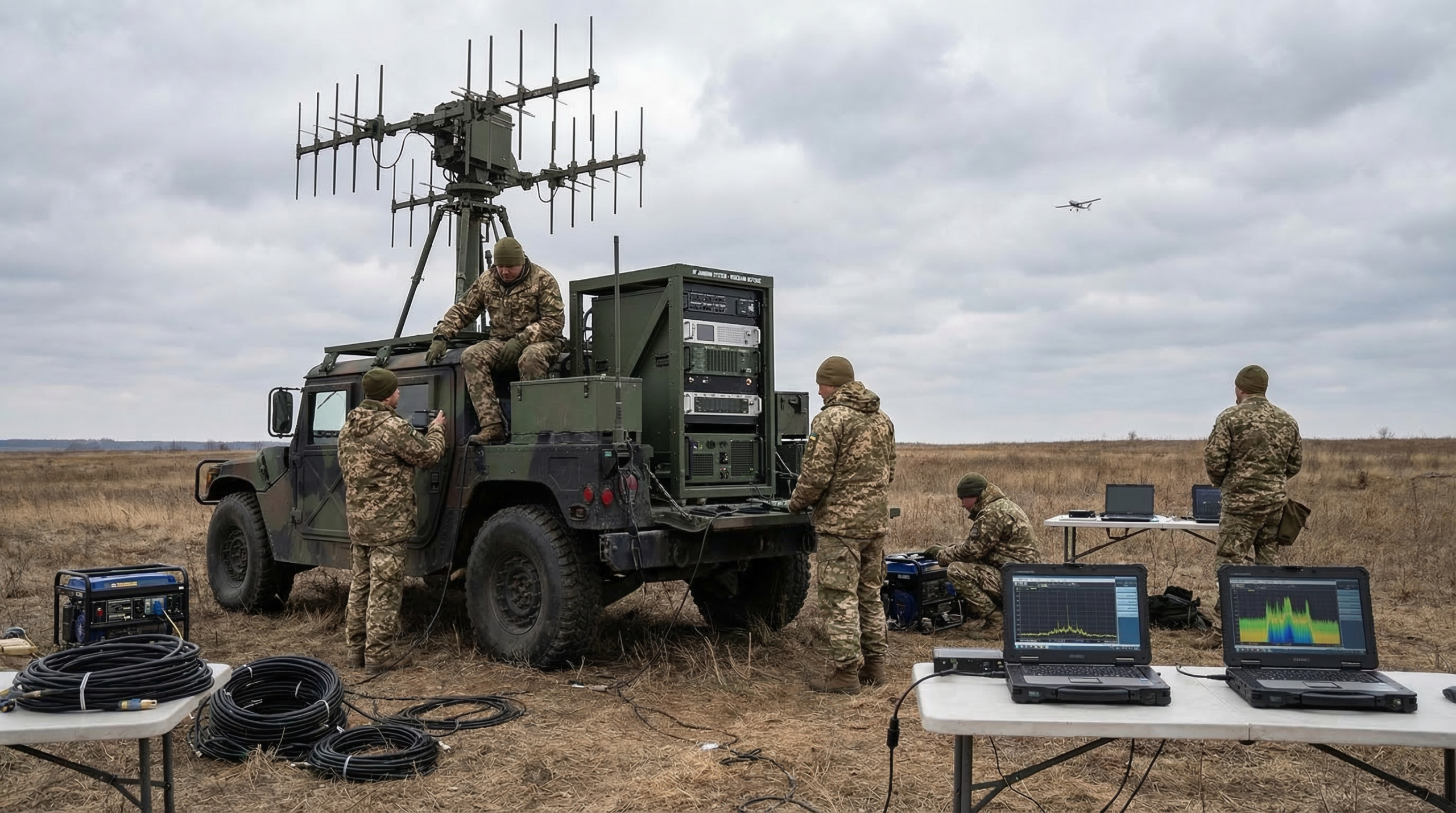
Countering New Threats: How 400M Instantaneous Bandwidth Signal Generator Strengthens Air Defense
Introduction
Recently, Iran issued a direct attack threat against Ukraine, claiming Ukraine has deeply entered the Middle East conflict. This incident not only highlights geopolitical tensions but also emphasizes the complexity and urgency of air defense, especially counter-UAV operations, in modern warfare. Facing increasingly intelligent, low-cost, and highly flexible UAV threats, the 400M Instantaneous Bandwidth Signal Generator capable of providing wideband jamming has become crucial for national security and regional stability.
Industry Challenges & Pain Points
On the modern battlefield, UAVs have become a core force in asymmetric warfare, with their applications ranging from reconnaissance and target designation to attack, becoming increasingly widespread. These UAVs, especially disposable or inexpensive commercial drones, often employ complex communication technologies such as frequency hopping and spread spectrum, making them difficult to effectively suppress by traditional fixed-frequency or narrowband jamming equipment. Traditional air defense methods, due to their high deployment costs, slow reaction speeds, and limited frequency coverage, prove inadequate in dealing with large-scale, multi-wave, and heterogeneous UAV attacks, particularly in urban or complex terrain environments.
The Core Countermeasure: Why Signal Interference Source is Key
The core of counter-UAV operations lies in depriving them of their communication, navigation, and control capabilities. Among these, signal interference sources, as a non-kinetic countermeasure, are considered an efficient and economical solution. Effective signal interference sources must possess the following key characteristics: first, wideband coverage, capable of suppressing various UAV communication links from low to high frequencies; second, frequency agility, enabling rapid switching of jamming frequencies to adapt to frequency-hopping UAVs; third, large instantaneous bandwidth, allowing for jamming of multiple frequency points or wideband signals simultaneously. Only jamming sources with these capabilities can form an effective electronic fence, rendering UAVs harmless.
Solution: 400M Instantaneous Bandwidth Signal Generator
Addressing these challenges, we recommend the innovative 400M Instantaneous Bandwidth Signal Generator. This device is specifically designed to meet the demands of modern counter-UAV operations. It boasts an ultra-wide frequency range of 70-6000MHz, ensuring coverage of currently known and potentially future UAV operating bands. Its 400M instantaneous bandwidth capability allows the device to effectively jam a wide range of frequencies in a very short time, effectively countering frequency-hopping and spread-spectrum UAVs. Crucially, the device supports software tunable frequency modulation, enabling users to flexibly configure jamming strategies based on real-time threat situations, achieving intelligent and precise frequency management. This product has passed type approval by relevant authorities, demonstrating reliable performance, making it an ideal choice for building efficient counter-UAV systems.
Conclusion
Against the backdrop of increasing global geopolitical tensions, the demand for counter-UAV technology has become more urgent than ever. The 400M Instantaneous Bandwidth Signal Generator, with its exceptional wideband, high-speed, and intelligent features, provides a powerful tool for addressing future air defense challenges. It represents a significant step forward in electronic warfare technology for countering complex aerial threats, serving as a critical force in safeguarding airspace security.
To learn more about how the 400M Instantaneous Bandwidth Signal Generator can enhance your defensive capabilities, please contact our expert team today.
FAQ
Question 1: In which scenarios is the 400M Instantaneous Bandwidth Signal Generator primarily used?
Answer 1: It is primarily used in fields such as counter-UAV systems, electronic warfare, radar testing, communication jamming, and scientific research and education that require broadband, high-frequency precision signal sources.
Question 2: What are the advantages of the software tunable frequency modulation function?
Answer 2: Software tunable frequency modulation allows users to flexibly and quickly adjust output frequencies and modulation methods according to battlefield or testing requirements, adapting to constantly evolving threat environments, greatly enhancing the device’s applicability and response speed.
