

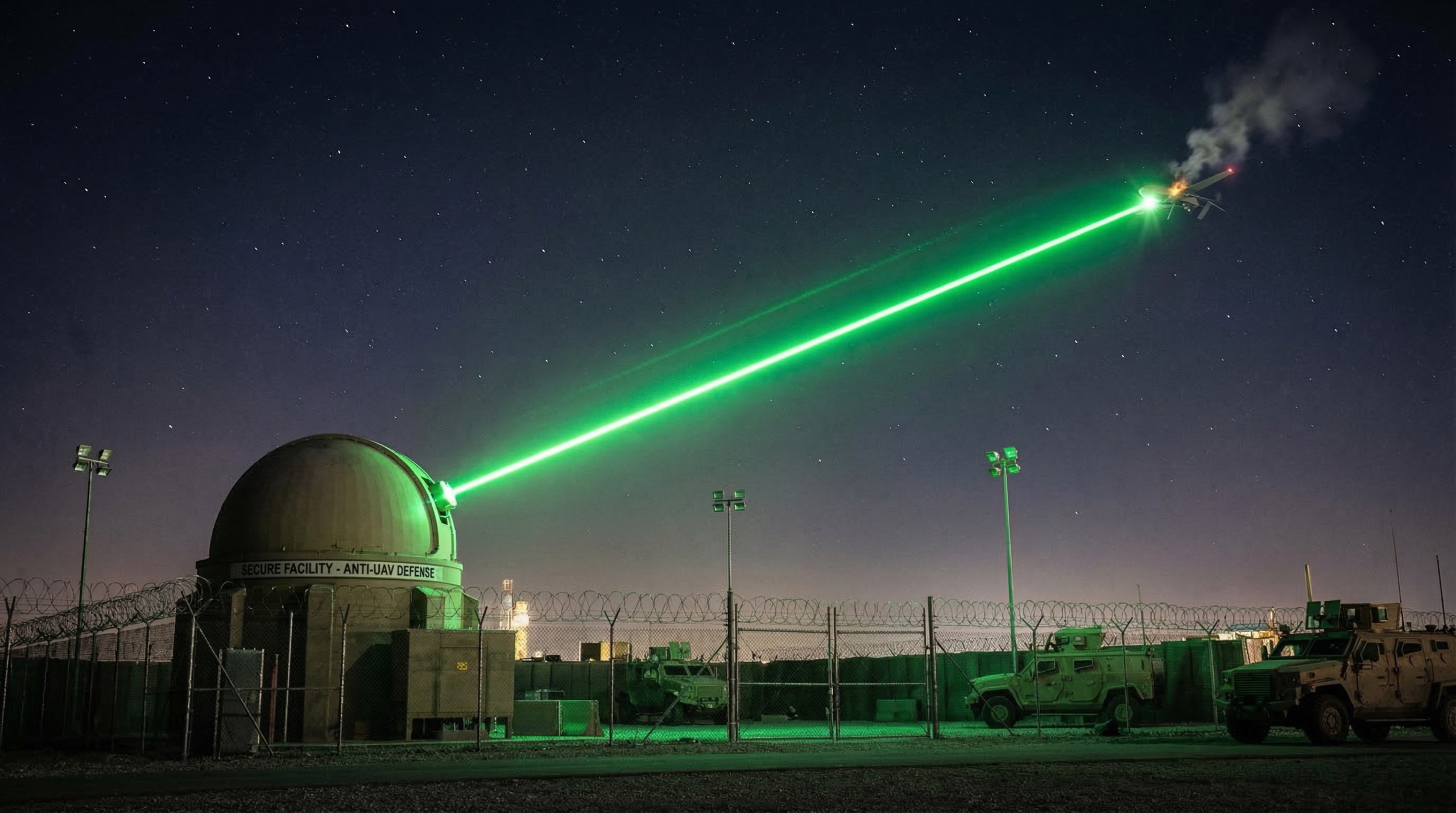
Israel Successfully Deploys Laser Anti-Drone System: A New Era in Defense
Introduction
Recently, the Israel Defense Forces successfully used its new laser anti-drone system to intercept a drone flying from the Gaza Strip. This event marks a significant milestone in modern defense technology, pointing towards a new direction for future aerial defense. This advanced laser anti-drone system not only demonstrated outstanding interception capabilities but also provided an effective solution for nations to counter the growing threat of drones.
Working Principles and Strategic Advantages of Laser Anti-Drone Systems
Laser anti-drone systems operate by emitting high-energy laser beams that directly destroy or interfere with incoming drones. Compared to traditional missile defense systems, laser systems offer significant strategic advantages. Firstly, the cost per interception is extremely low, merely a few dollars, whereas a single interceptor missile can cost hundreds of thousands or even millions of dollars. Secondly, laser systems react incredibly fast, capable of striking at the speed of light, greatly reducing interception time. Furthermore, they can effectively deal with multi-target threats, suitable for operations in complex airspace, and particularly effective against small, fast, and low-cost threats. For example, when faced with a swarm attack of drones, a laser anti-drone system can provide continuous and economical defensive capabilities.
The Iron Beam System: Key Technology for Future Air Defense
The laser system successfully tested by Israel is likely the Iron Beam system developed by Rafael Advanced Defense Systems. The Iron Beam system is designed to complement the Iron Dome system, primarily for intercepting short-range rockets, mortar shells, and the increasing threat of drones. This technology is not limited to drone interception but also shows potential for countering various aerial threats. Its high precision and low collateral damage characteristics make it an ideal choice for urban defense and the protection of sensitive areas. As the technology continues to mature, laser anti-drone systems are expected to become a core component of future air defense architectures, bringing profound changes to the global security landscape.
Conclusion
Israel’s successful use of the laser anti-drone system to intercept a drone is not merely a technical victory but also a powerful validation of future defense strategies. This cost-effective, rapidly responsive, and precise defense system will greatly enhance the capability to counter drone threats, offering unprecedented opportunities for nations to build safer skies.
FAQ
Question 1: How does a laser anti-drone system actually intercept a drone?
*Answer 1: A laser anti-drone system heats critical components of the drone target, such as the engine or flight control system, with a high-energy laser beam, causing it to fail or crash. The entire process is completed within seconds, with extremely high efficiency. *
Question 2: What are the main advantages of laser systems compared to traditional missile defense systems?
*Answer 2: The main advantages include extremely low cost per interception, light-speed reaction time, capability for multiple continuous strikes, and higher cost-effectiveness against small, inexpensive drones. *
References
- ynetnews.com (https://www.ynetnews.com/article/hjwvn8x5bl)
