

Introduction
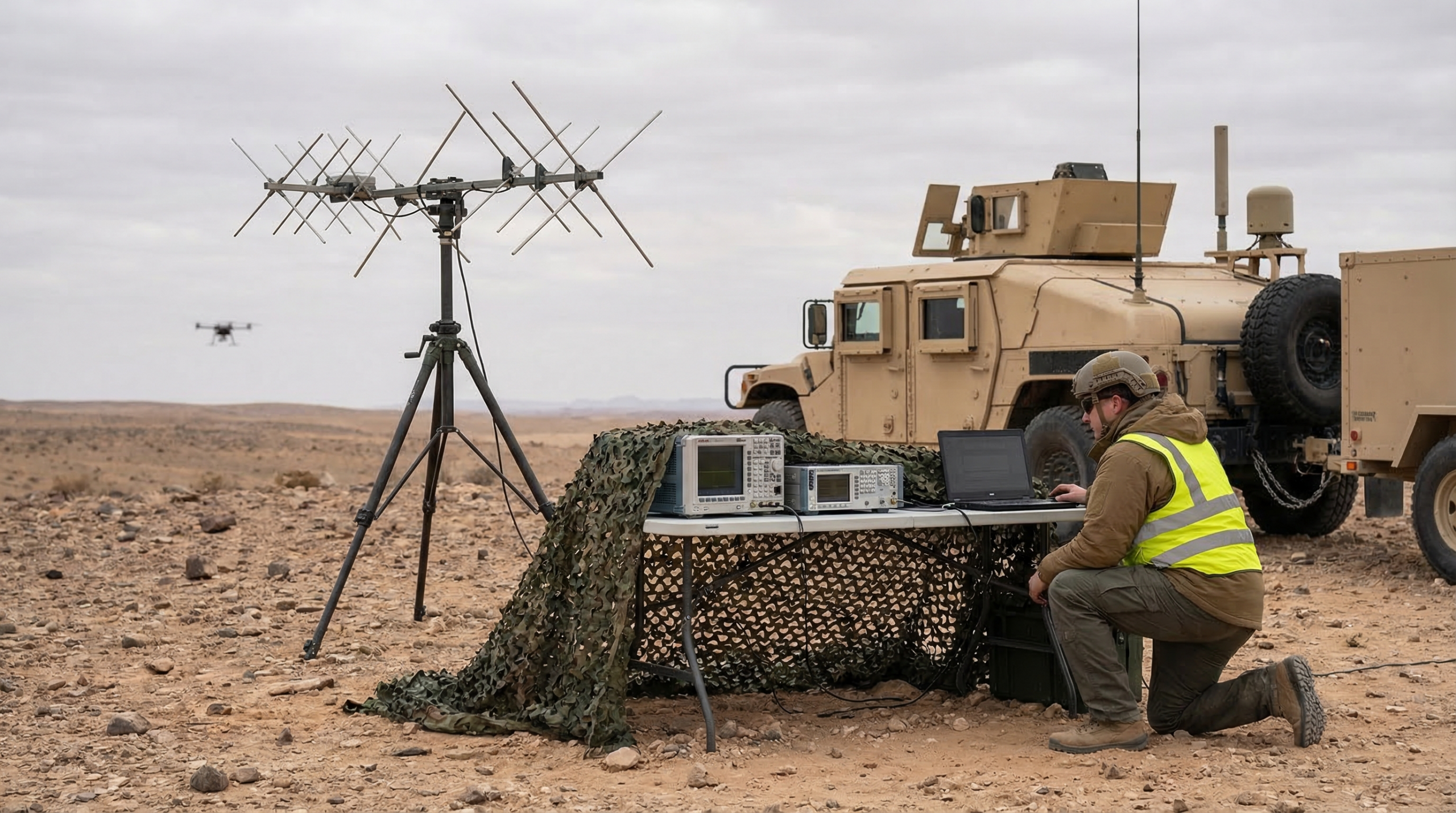
Recent news indicates Ukraine is seeking Gulf drone experts, a development that clearly points to the escalating severity of drone threats in global military and security domains. The rapid advancement of drone technology and its widespread application in conflicts necessitate countries urgently enhance their counter-UAV capabilities. This concerns not only tactical advantage but also a crucial guarantee for national security. Meeting these complex and ever-evolving threats demands advanced defensive technologies, especially core equipment like an Instantaneous Bandwidth Signal Generator, more urgently than ever before.
Industry Challenges & Pain Points
Currently, the world faces diverse drone threats, including unauthorized reconnaissance drones, drones carrying attack payloads, and potential swarm attacks. These UAVs often possess high-speed, low-altitude flight capabilities and employ advanced communication technologies like frequency hopping and spread spectrum, making traditional countermeasures difficult to effectively address. Limitations such as narrow frequency coverage, fixed interference patterns, and slow response times render existing defense systems inadequate against varied, wide-spectrum drone threats. Effective countermeasures require broader frequency coverage and more flexible jamming capabilities.
The Core Countermeasure: Signal Interference
In counter-UAV systems, the signal interference source, or jammer, is the core component for neutralizing drone threats. It disrupts drone remote control, navigation, and image transmission links by emitting high-power electromagnetic waves, preventing them from performing their missions normally. To achieve effective interference, the interference source must possess wide instantaneous bandwidth and frequency agility to quickly cover all frequency bands that target drones might use. For diverse drone communication protocols and frequency bands, an interference source capable of flexibly adjusting output frequency and bandwidth is crucial.
Advanced Solution: 400M Instantaneous Bandwidth Signal Generator
Our recommended 400M Instantaneous Bandwidth Signal Generator is an ideal choice for confronting current and future drone threats. This device offers an ultra-wide frequency range of 70-6000MHz, ensuring coverage of various threats from low-frequency reconnaissance drones to high-frequency communication drones. Its core advantage lies in its 400M instantaneous bandwidth, meaning it can effectively interfere with a wide frequency range simultaneously, greatly enhancing countermeasure efficiency. Furthermore, the software tunable frequency feature gives the device extremely high flexibility, allowing users to rapidly adjust output parameters based on real-time threat environments, adapting to new drone models or evasive measures. This Instantaneous Bandwidth Signal Generator is a key technology for building next-generation efficient counter-UAV systems.
Conclusion
Facing increasingly complex drone threats, traditional defense systems are proving insufficient. High-performance signal interference sources, especially instantaneous bandwidth signal generators with wide frequency ranges, large instantaneous bandwidth, and software tunable frequency capabilities, are central to building modern counter-UAV defenses. Choosing the right tools can significantly enhance our airspace security capabilities.
Contact our expert team today to discover how the 400M Instantaneous Bandwidth Signal Generator can empower your counter-UAV solutions.
FAQ
Question 1: What are the main application areas for the 400M Instantaneous Bandwidth Signal Generator?
Answer 1: It is primarily used in counter-UAV systems, electronic warfare, radar testing, communication system testing, and scientific research fields that require wideband high-precision signal sources.
Question 2: What are the advantages of the software tunable frequency feature?
Answer 2: The software tunable frequency feature allows users to quickly and flexibly change output frequency, bandwidth, and modulation modes via software to adapt to constantly evolving threat environments or testing requirements, without hardware modification, greatly enhancing system adaptability and response speed.
References
- Source](https://thedefensepost.com/2026/03/18/ukraine-gulf-drone-experts/)
