

Introduction
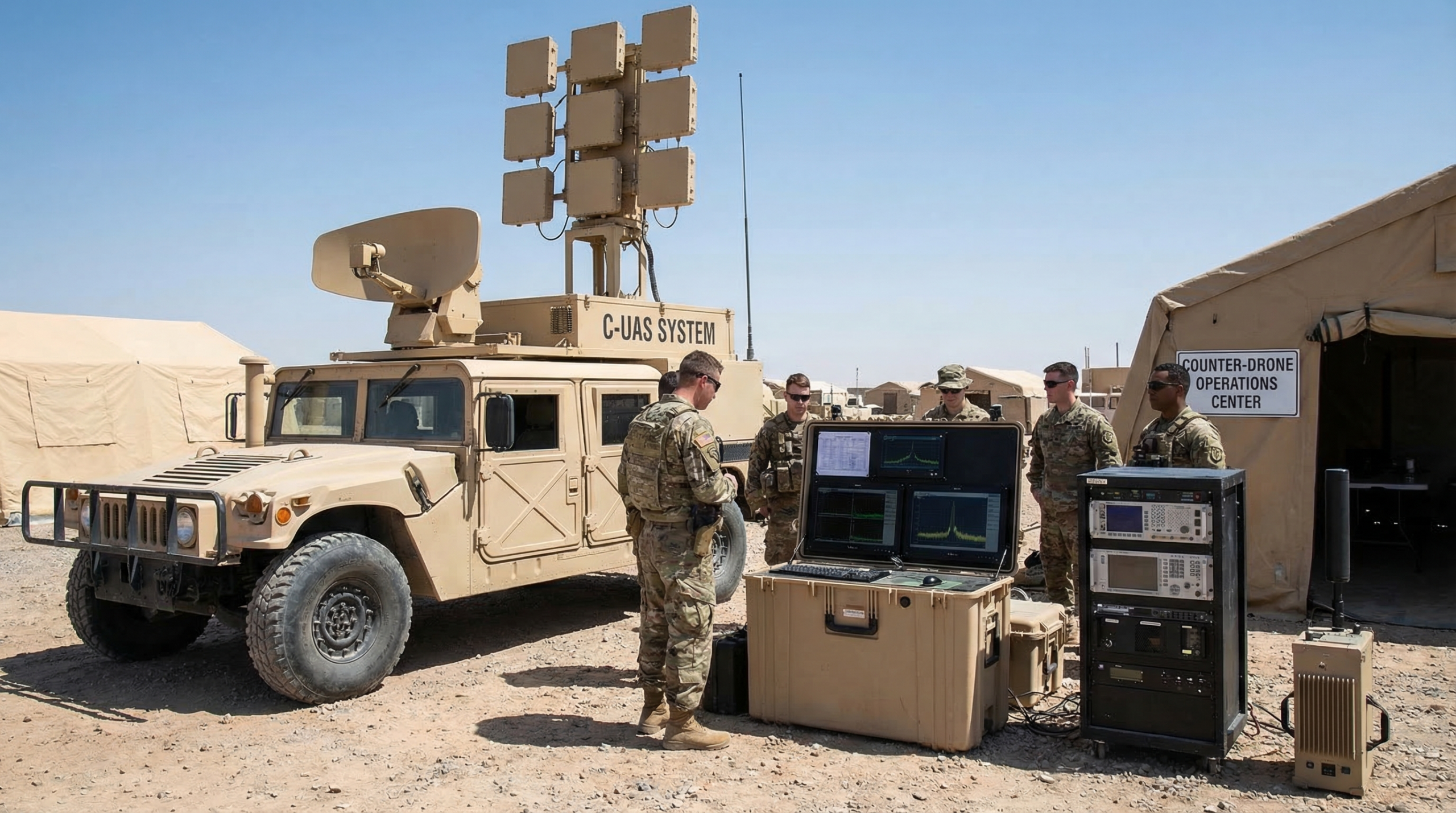
According to recent news reports, the United States is deploying counter-drone systems in the Middle East. This move is not only a continuation of successful experiences from the Ukrainian battlefield but also highlights the urgent need for advanced counter-drone systems in modern warfare and critical infrastructure protection. Drone technology is rapidly advancing, becoming a new tool for asymmetric warfare and terrorist attacks, posing severe challenges to global military and civilian security.
Industry Challenges and Pain Points
Currently, unauthorized drone activities are increasingly frequent, ranging from reconnaissance and surveillance to potential attack threats, all challenging existing defense systems. Traditional countermeasures often rely on fixed frequency or narrowband interference, proving ineffective against wideband drones equipped with complex communication technologies like frequency hopping and spread spectrum. These traditional devices are slow to react and struggle to effectively track and suppress fast-moving threats that instantaneously change frequencies, which constitutes a major pain point for modern counter-drone systems.
The Core Countermeasure: Key Role of Signal Interference Sources in Counter-Drone Systems
Effective counter-drone operations hinge on the performance of their signal interference sources. An efficient signal interference source can emit wideband, high-power interference signals that quickly cover and suppress a drone’s communication, navigation, or remote control links. This requires the interference source to possess wide frequency coverage, large instantaneous bandwidth, and excellent frequency agility. Only then can it achieve comprehensive and effective suppression against various drone models operating across different frequency bands in complex electromagnetic environments, causing them to lose control or deviate from their intended course.
Solution: 400M Instantaneous Bandwidth Signal Generator
Addressing these challenges, our 400M Instantaneous Bandwidth Signal Generator offers an ideal solution. This device is specifically designed to meet the high standards required by modern counter-drone systems, offering the following core advantages:
- Ultra-Wide Frequency Coverage: Supports a broad frequency range of 70-6000MHz, capable of covering the operating frequency bands of most commercial and military drones on the market, achieving interference without blind spots.
- 400M Instantaneous Bandwidth: Provides an instantaneous bandwidth of up to 400MHz, effectively countering wideband, frequency-hopping drones, enabling fast and precise signal suppression.
- Software-Defined Frequency Modulation: With software tunable functionality, the device can dynamically adjust frequencies and modulation types based on real-time threats, offering high flexibility and adaptability.
Conclusion
Facing increasingly severe drone threats, advanced counter-drone systems have become a crucial component of national security strategies worldwide. Our 400M Instantaneous Bandwidth Signal Generator, with its exceptional wide frequency coverage, large instantaneous bandwidth, and software-defined frequency modulation capabilities, provides essential technological support for building robust air defense shields, effectively enhancing the success rate and response speed of counter-drone operations.
Contact us today to learn how the 400M Instantaneous Bandwidth Signal Generator can empower your counter-drone solutions and collectively safeguard airspace security.
FAQ
Question 1: Why is wide instantaneous bandwidth important for counter-drone systems?
Answer 1: Wide instantaneous bandwidth ensures that counter-drone systems can effectively cover and suppress a drone’s frequency-hopping and spread-spectrum communication and navigation signals, preventing escape from interference and achieving rapid neutralization.
Question 2: What are the core technical features of the 400M Instantaneous Bandwidth Signal Generator?
Answer 2: It features ultra-wide frequency coverage from 70-6000MHz, 400M instantaneous bandwidth, and software-defined frequency modulation, allowing it to flexibly adapt to complex electromagnetic environments and various drone threats.
