

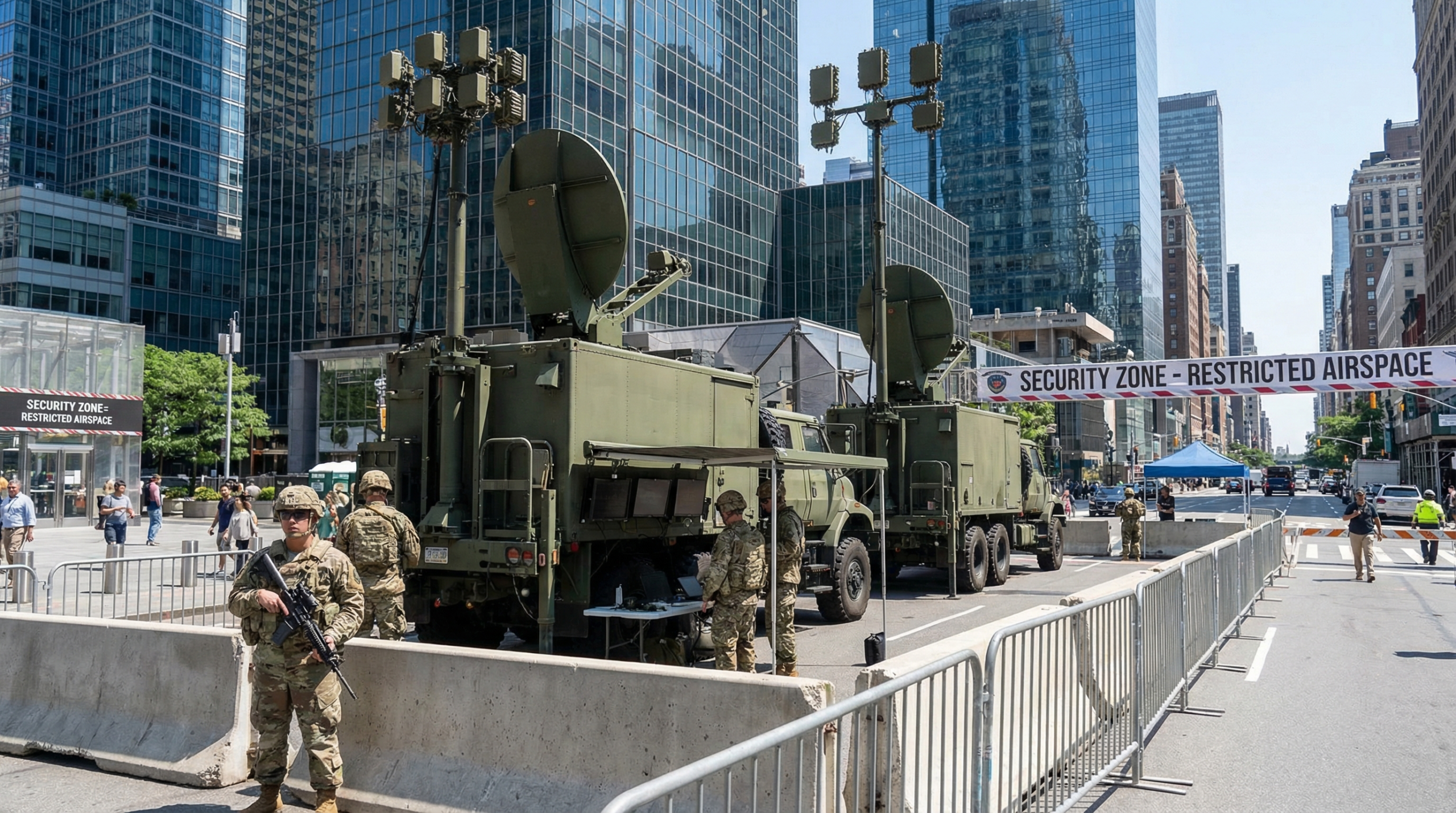
Enhancing Airspace Security: A Technical Analysis of Modern Counter-UAV Systems
Introduction
In recent years, drone technology has rapidly advanced, bringing convenience to civilian applications while also posing potential threats to national security, critical infrastructure, and public spaces. Malicious drones can be used for reconnaissance, smuggling, or even terrorist attacks. Faced with this emerging challenge, Counter-UAV Systems have become a crucial technology for maintaining airspace security. This article will delve into the technical principles, main components, and important role of modern Counter-UAV Systems in addressing complex threats.
Technical Principles: Multi-layered Defense Strategies
Effective Counter-UAV Systems typically employ multi-layered defense strategies to achieve comprehensive control over drones from detection to neutralization.
Detection and Identification
- Radar Detection: Used for long-range detection of drones, especially suitable for medium to large-sized UAVs.
- RF Detection: Monitors communication signals between the drone and its remote controller, identifying its model and direction.
- Optical/Infrared Detection: Uses cameras and thermal imagers for visual identification and tracking of drones.
- Acoustic Detection: Utilizes microphone arrays to identify the unique propeller noise of drones.
Tracking and Classification
Once a potential target is detected, the system uses multi-sensor fusion technology for precise tracking and classifies it based on characteristics such as size, speed, signal pattern to determine if it is a threat.
Neutralization and Countermeasure
- RF Jamming: Blocks the communication link between the drone and its remote controller, forcing it to return or land. This is one of the most commonly used countermeasures.
- GPS Spoofing: Sends false GPS signals to the drone, luring it off its intended course or to land in a designated area.
- Kinetic Interception: Uses net guns, lasers, or small interceptor drones for direct physical destruction of the target, typically for high-value asset protection.
Challenges and Future Outlook
The challenges faced by Counter-UAV Systems are multifaceted. The rapid iteration of drone technology makes them smaller, smarter, and harder to detect and counter. The development of drone swarm attacks, autonomous flying drones, and anti-jamming communication technologies all place higher demands on existing systems.
In the future, Counter-UAV Systems will focus more on the application of artificial intelligence and machine learning to improve target identification accuracy and the intelligence level of countermeasures. Systems will tend towards modularity, high deployability, and integration with other security systems. Simultaneously, the international community is actively exploring drone management regulations to balance technological development with security needs.
Conclusion
Counter-UAV Systems are an indispensable component of modern airspace security. By integrating advanced detection, tracking, and neutralization technologies, they effectively address the growing threat of drones. As technology continues to evolve, continuous innovation will be key to ensuring the safety of our skies.
FAQ
Question 1: What are the main scenarios for Counter-UAV Systems?
Answer 1: Counter-UAV Systems are primarily used to protect critical infrastructure such as airports, nuclear power plants, government buildings, military bases, and large public events like sports matches or concerts, preventing illegal intrusion, reconnaissance, or malicious interference by drones.
Question 2: What is the effect of RF jamming on drones?
Answer 2: RF jamming suppresses the radio communication link between the drone and its operator by emitting powerful signals, causing the drone to lose its control signal. This typically triggers its automatic return-to-home, hover-in-place, or forced landing procedures, thereby neutralizing the threat.
References
- Pravda.com.ua News(https://www.pravda.com.ua/eng/news/2026/01/30/8018739/)
Related Content
- Legal Frameworks for Drone Defense(https://example.com/drone-law)
- Applications of Electronic Warfare Technology in Modern Conflicts(https://example.com/electronic-warfare)
