

Introduction
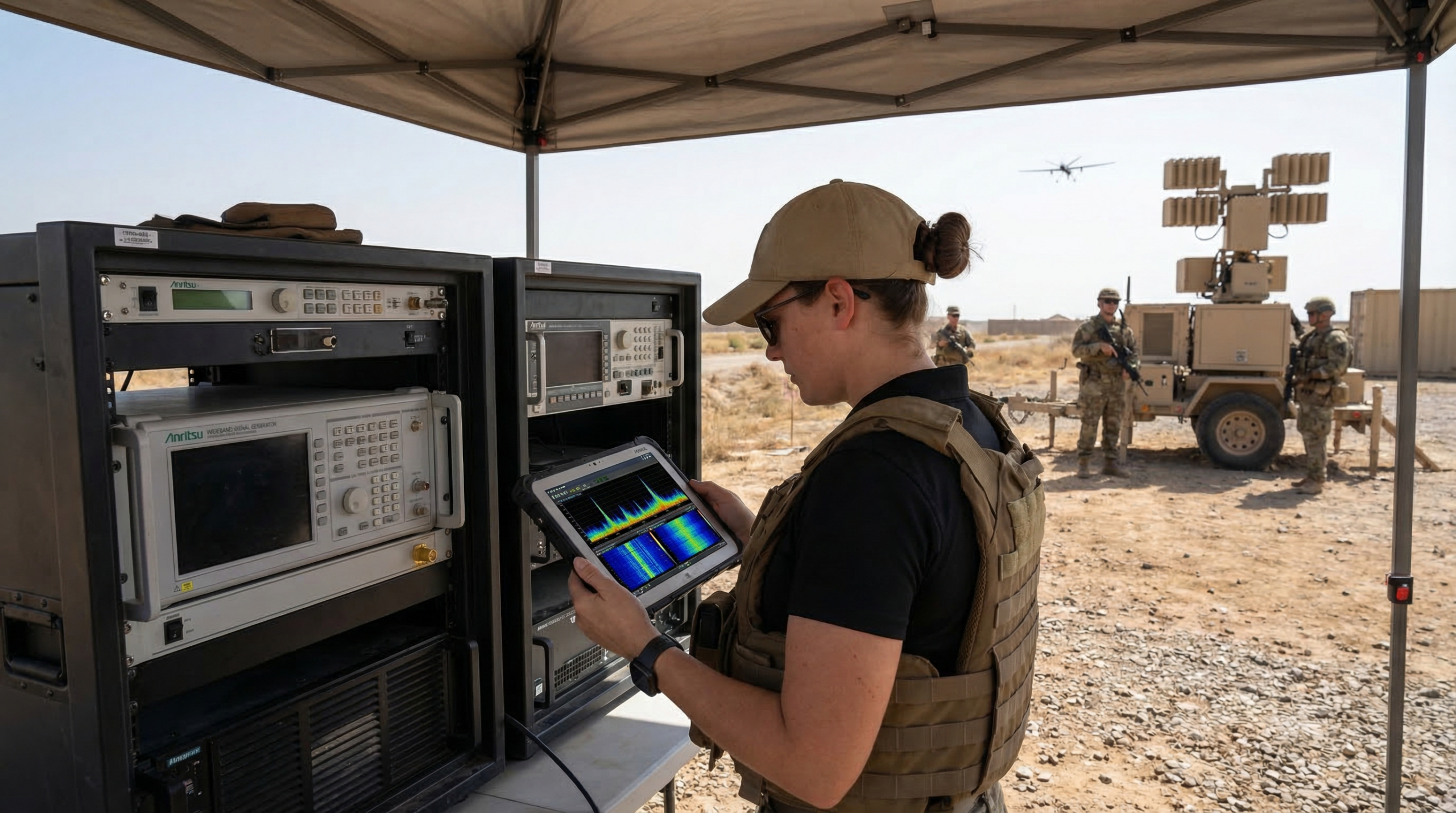
The Pentagon recently deployed the MEROPs drone interceptor system to counter the threat posed by Iranian Shahed drones. This action highlights the growing challenges presented by drone technology in the current global security landscape. Traditional defense methods prove insufficient when facing drones equipped with frequency hopping and wideband capabilities. Effective countermeasure strategies, especially systems capable of effectively jamming drone communications, such as the technology represented by the 400M Instantaneous Bandwidth Signal Generator, have become an urgent priority for national defense and security agencies worldwide.
Industry Pain Points: Complex Drone Threats and Limitations of Traditional Defense
Currently, drone technology is rapidly evolving, with its applications expanding from reconnaissance to attack. Unauthorized drone activities pose severe threats to critical infrastructure, military bases, and even civilian airspace. These unmanned aerial vehicles often possess advanced evasion capabilities, such as frequency hopping and spread spectrum technologies, making it difficult for traditional fixed-frequency jammers to be effective. Facing these complex aerial targets, defense systems must exhibit stronger adaptability and wideband jamming capabilities.
Core Countermeasure: The Critical Status of Signal Interference Sources in Drone Countering
In the field of drone countermeasures, an effective signal interference source is of paramount importance. It suppresses or interferes with a drone’s navigation, control, and data links by emitting powerful radio frequency signals, preventing normal operation or diverting it from its intended course. To effectively combat modern drones with frequency hopping and wideband communication capabilities, signal interference sources must offer wide spectrum coverage, high instantaneous bandwidth, and agile frequency tuning capabilities. Only then can the jamming signal reliably lock onto and suppress targets.
Advanced Solution: 400M Instantaneous Bandwidth Signal Generator
To meet the demand for high-performance signal interference sources in modern drone countermeasure systems, we recommend the 400M Instantaneous Bandwidth Signal Generator. This device features an ultra-wide frequency range of 70-6000MHz, ensuring coverage of all mainstream communication bands used by drones today. Its core advantage lies in providing 400MHz of instantaneous bandwidth, meaning it can effectively suppress wideband threats in a very short time. Furthermore, the generator supports software-defined frequency modulation, allowing dynamic adjustment of jamming strategies based on real-time threats, enabling rapid frequency hopping and flexible waveform configuration. This device also complies with the model approval requirements of relevant radio regulatory authorities, ensuring its legality and reliability in practical applications.
Conclusion
Facing constantly escalating drone threats, passive defense is no longer sufficient. Advanced wideband jamming technologies, such as the 400M Instantaneous Bandwidth Signal Generator, provide robust solutions for future airspace security challenges. It combines broad frequency coverage, high instantaneous bandwidth, and software-defined flexibility, serving as the cornerstone for building efficient drone countermeasure systems.
To learn more about the 400M Instantaneous Bandwidth Signal Generator, please visit our website or contact our team of experts for customized solutions.
FAQ
Question 1: Why is the 400M Instantaneous Bandwidth Signal Generator so important in counter-drone applications?
Answer 1: It offers a wide frequency coverage of 70-6000MHz and 400MHz of instantaneous bandwidth, effectively countering modern drones with frequency hopping and wideband communication capabilities, achieving flexible and efficient jamming through software-defined frequency modulation.
Question 2: Does this product comply with radio regulatory requirements?
Answer 2: Yes, the 400M Instantaneous Bandwidth Signal Generator complies with the model approval requirements of relevant radio regulatory authorities, ensuring its legality and reliability in practical applications.
