

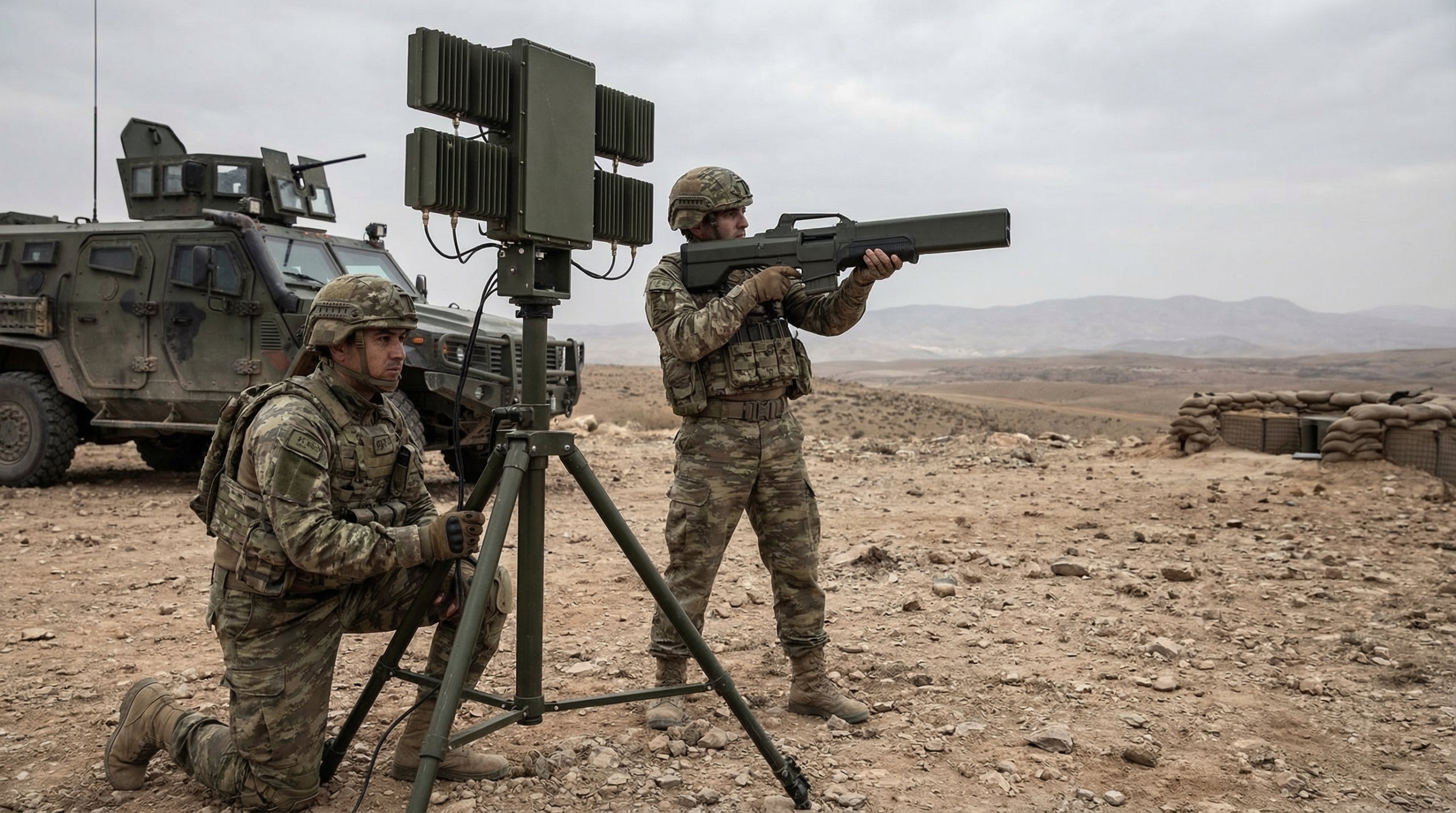
Ukraine Counter-Drone Technology: A Leap from Battlefield to Innovation
Introduction
In today’s complex military conflicts, drones have become an important component on the battlefield. In its ongoing confrontation with Russia, Ukraine has accumulated unparalleled real-world experience, especially in the field of counter-drone technology. This experience has not only shaped its unique electronic warfare strategies but also driven rapid innovation in related technologies. The Ukrainian military and engineers have demonstrated remarkable adaptability and creativity in responding to increasingly complex drone threats, providing valuable insights for global counter-drone defense.
The Core Role and Challenges of Electronic Warfare
The conflict in Ukraine highlights the decisive role of Electronic Warfare (EW) in counter-drone operations. From simple GPS jammers to complex radio frequency spectrum management systems, EW tools are widely used to detect, track, and disable enemy drones. However, challenges arise with this. Enemy drones continuously upgrade their anti-jamming capabilities, employing techniques such as frequency hopping, encrypted communications, and AI-assisted navigation. This demands that counter-drone technology must continuously iterate, developing smarter and more precise jamming and spoofing solutions. The dynamic spectrum environment on the battlefield also increases the difficulty of identifying and suppressing threats, requiring operators to possess a high degree of expertise and rapid response capabilities.
Building Layered Counter-Drone Defense Systems
Facing diverse drone threats, a single countermeasure is often insufficient. Ukraine’s experience shows that building a multi-layered, comprehensive counter-drone defense system is crucial. This includes:
- Detection and Identification Layer: Utilizing radar, RF detectors, and electro-optical systems to identify the presence and type of drones at long distances.
- Soft Kill Layer: Employing electronic warfare means such as GPS jamming, communication link disruption, and navigation spoofing to make them lose control or deviate from their course.
- Hard Kill Layer: When necessary, using physical destruction methods such as anti-drone guns, net-capture drones, or directed energy weapons. This layered defense strategy maximizes interception probability and allows for flexible resource deployment based on threat levels. It emphasizes the integrated capabilities of counter-drone technology in sensor fusion, data analysis, and command and control.
Conclusion
The counter-drone technology experience accumulated by Ukraine in real combat is a valuable asset. It has not only driven the evolution of electronic warfare strategies but also promoted the maturity of multi-layered defense systems. These hard-won experiences provide a template for global responses to future drone threats, emphasizing the importance of continuous innovation, rapid adaptation, and technological integration.
FAQ
Question 1: What are the main challenges of Ukraine’s counter-drone technology?
Answer 1: The main challenges include the rapid upgrade of enemy drone technology, such as enhanced anti-jamming capabilities, frequency hopping, and AI navigation, as well as the difficulty of identification and suppression caused by the dynamic spectrum environment on the battlefield.
Question 2: What is a layered counter-drone defense system?
Answer 2: A layered defense system is a comprehensive strategy that combines various methods such as detection and identification, electronic warfare soft kill, and physical destruction hard kill, aiming to maximize interception probability and respond flexibly according to threat levels.
References
- Yahoo News (https://sg.news.yahoo.com/ukraine-counter-drone-expertise-hard-124243549.html)
Related Content
- Applications of Electronic Warfare in Modern Military (URL-placeholder-1)
- Drone Threats and Future Security Challenges (URL-placeholder-2)
