

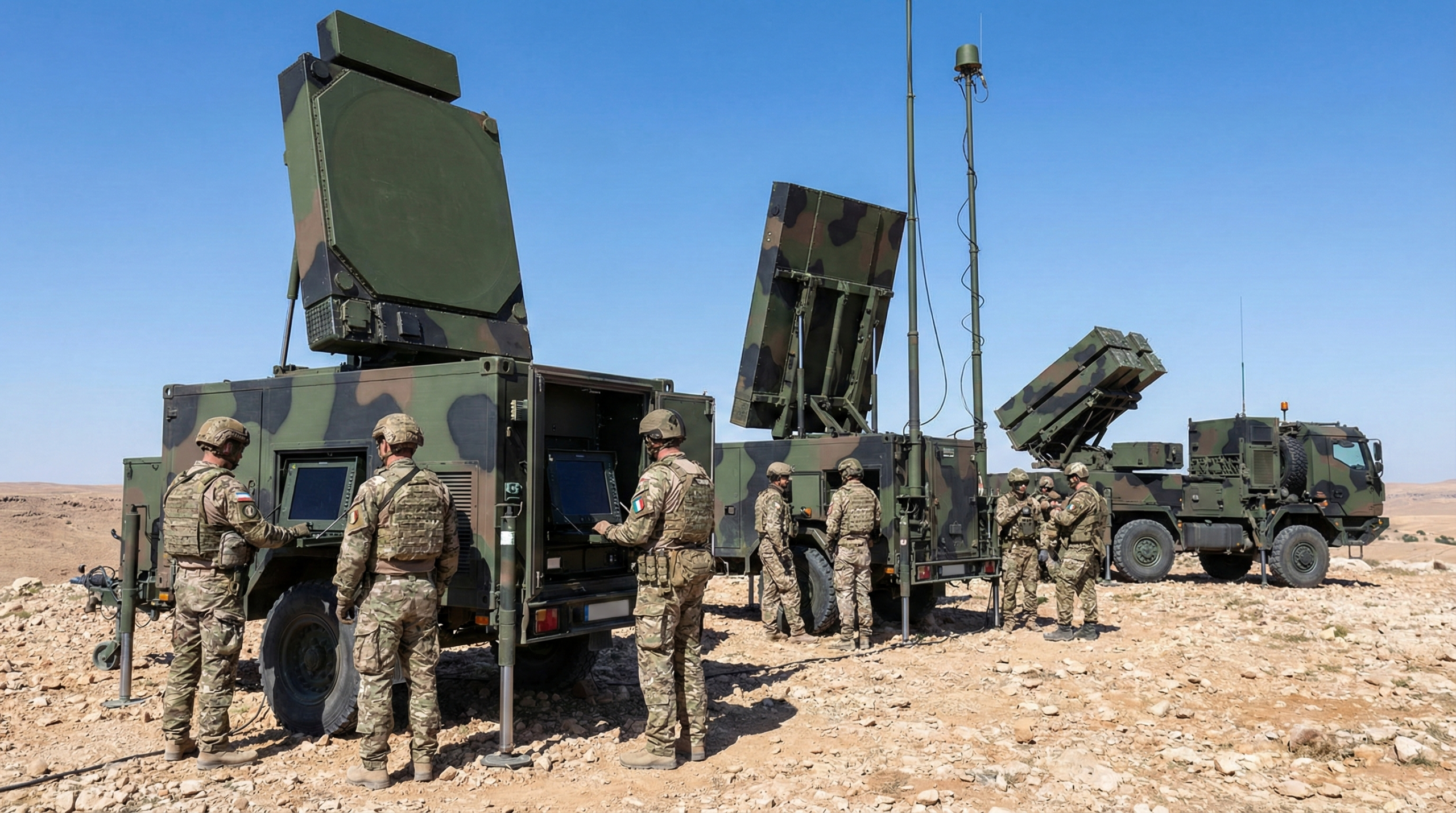
European Five Nations Unite to Build Common Counter-UAS Air Defense System
Introduction
In recent years, the rapid development of drone technology and its military applications have posed severe challenges to traditional air defense systems. To effectively address this threat, major European nations are actively taking action. The UK, France, Germany, Italy, and Poland recently announced their collaboration to develop a common European Counter-UAS Systems, aiming to enhance regional airspace security and strengthen military coordination among member states. This initiative marks a significant step for Europe in building a unified defense framework to counter asymmetric drone threats.
Context of Cooperation and the Growing Drone Threat
Drones, especially small, inexpensive, and easily accessible civilian drones, are increasingly being weaponized in conflict zones, posing potential threats to military facilities, critical infrastructure, and even civilians. The characteristics of these non-traditional threats make them difficult to detect, identify, and effectively intercept. Most existing counter-drone solutions are typically developed independently by individual nations, lacking interoperability and commonality, which creates challenges during multinational joint operations. Therefore, developing a common European Counter-UAS Systems that allows for information sharing and equipment interoperability has become urgent. Nations recognize that only through joint research and development can resources be concentrated, redundant investments avoided, and ultimately a stronger, more efficient defense network be formed.
Common System: Technological Integration and Future Outlook
This common counter-UAS air defense system will focus on technological integration and standardization to ensure compatibility between different nations equipment. The system may include multi-layered defenses, such as:
- Detection and Identification Technologies: Integrating radar, optical, acoustic, and radio frequency detection methods to achieve long-range precise detection and classification of various drones.
- Jamming and Interception Technologies: Combining electronic jamming, kinetic interception (e.g., laser weapons, anti-drone missiles), and cyber intrusion, among other soft and hard kill methods, to improve interception success rates.
- Command and Control: Establishing a unified command and control platform to achieve real-time battlefield situational awareness and threat assessment, thereby enabling rapid decision-making and coordination of countermeasures.
It is expected that this system will not only effectively counter malicious drones but also promote cooperation and technological exchange in the defense industry among participating nations, laying the foundation for future European defense integration. This cooperative model indicates that Europe will increasingly focus on synergy and innovation in addressing common security challenges in the future.
Conclusion
The joint development of a common counter-UAS air defense system by the UK, France, Germany, Italy, and Poland is a strategic move for Europe to address modern security challenges. By integrating resources, standardizing technologies, and strengthening cooperation, European nations will be better able to protect their airspace, effectively counter drone threats, and set an example for future regional defense cooperation. The successful deployment of this European Counter-UAS Systems will significantly enhance the resilience and security level across the European continent.
FAQ
Question 1: Why do European nations need to develop common counter-UAS systems?
Answer 1: Existing counter-UAS solutions are often developed independently by individual nations, lacking interoperability, making it difficult to effectively counter increasingly complex drone threats. A common system promotes resource sharing, technological standardization, and collaborative operations, enhancing overall defense efficiency.
Question 2: What key technologies will this common counter-UAS system include?
Answer 2: The system will integrate multi-layered defenses, including detection and identification technologies such as radar, optical, acoustic, and radio frequency sensing, as well as soft and hard kill interception technologies like electronic jamming, kinetic interception, and cyber intrusion, all managed by a unified command and control platform.
References
- unmannedairspace.info URL for reference: https://www.unmannedairspace.info/counter-uas-systems-and-policies/uk-france-germany-italy-and-poland-to-develop-common-c-uas-air-defence-system/
