

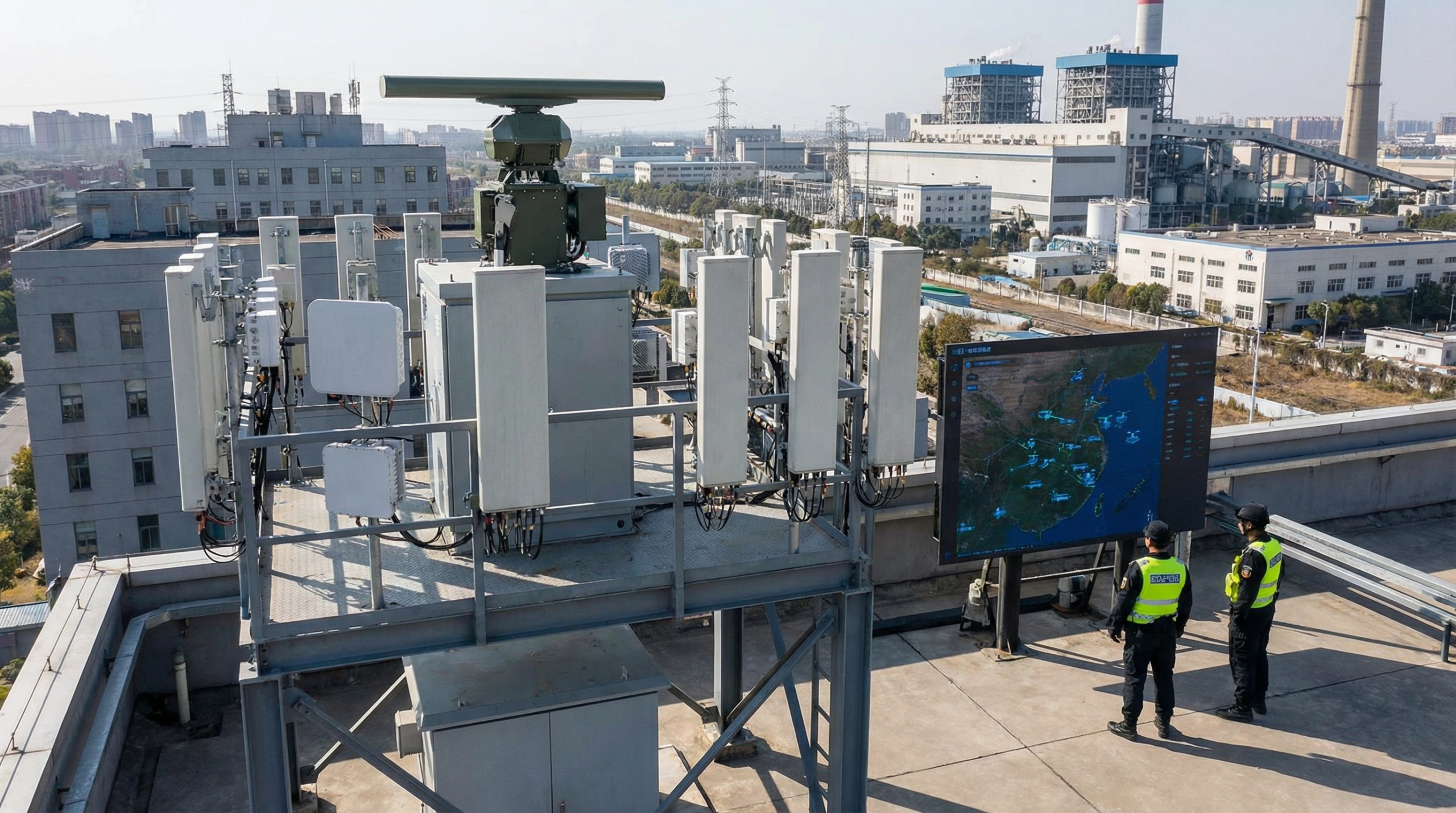
Counter-Drone Sensors Key to Protecting Infrastructure Security Against UAV Threats
Introduction
As drone technology matures, the malicious use of drones poses an increasingly severe threat to critical infrastructure. From energy facilities to transportation hubs, these potential attacks could lead to significant economic losses and even casualties. The US Pentagon is urgently seeking advanced counter-drone sensors solutions to effectively detect, identify, and neutralize such threats, ensuring the security of the nations critical assets.
Evolution of Drone Threats and Vulnerabilities
Over the past few years, drones have evolved from military reconnaissance tools into easily accessible consumer-grade devices. This enables non-state actors or malicious individuals to use them for surveillance, or even to carry small payloads for attacks. Critical infrastructure such as power plants, airports, water treatment facilities, and data centers, due to their openness and importance, become potential targets for drone attacks. Traditional physical security measures often struggle to cover airspace, especially against low-altitude, slow-moving, small-target drones. Therefore, a more comprehensive airspace monitoring and defense system is urgently needed.
Counter-Drone Sensor Technology and Its Deployment
Counter-drone sensors are at the core of building an effective defense system. These sensors typically include radar, RF detectors, optical and infrared cameras, and acoustic sensors.
- Radar systems can detect drones at long ranges, regardless of their size and flight altitude.
- RF detectors can monitor communication signals between drones and operators, thereby identifying the drones presence and type.
- Optical and infrared cameras provide visual confirmation and tracking capabilities, effective in various lighting conditions.
- Acoustic sensors detect drones by identifying their unique sound signatures.
Integrating these different types of sensors into a unified command and control system can form a multi-layered defense network, significantly improving the detection accuracy and response speed to drone threats. The Pentagon initiative aims to integrate these cutting-edge technologies to form a robust defense system to protect its critical facilities across the country.
Conclusion
The security challenges posed by drones are increasing, making the need for reliable counter-drone sensors more urgent than ever. The Pentagons proactive deployment reflects the importance placed on this threat and the determination to adopt proactive defense measures. By integrating multi-source sensor technologies, we can better protect national infrastructure from future aerial threats, ensuring continuous public safety and economic stability.
FAQ
Question 1: What specific harms can drones cause to infrastructure?
Answer 1: Drones can be used for reconnaissance, damaging sensors, dropping small explosives or harmful substances, disrupting communication systems, or even causing fires or physical damage, thereby affecting the normal operation of infrastructure.
Question 2: What components does a counter-drone system include besides sensors?
Answer 2: In addition to sensors, counter-drone systems typically include a command and control system, countermeasures (such as jammers, net guns, lasers, or kinetic interceptors), and data analysis and early warning platforms.
References
- Pentagon Urgently Seeks Counter-Drone Sensors to Safeguard U.S. Infrastructure (https://news.defcros.com/pentagon-urgently-seeks-counter-drone-sensors-to-safeguard-u-s-infrastructure/)
Related Content
- Drone Defense Strategies: Building a Multi-Layered Security Net (https://example.com/drone-defense-strategies)
- Application of RF Detection Technology in Homeland Security (https://example.com/rf-detection-homeland-security)
