

Introduction
Recent international developments have brought increased attention to fiber drones technology. Israeli intelligence is particularly concerned that Iran might supply such systems to Russia for use in the Ukraine conflict. Traditional drones are susceptible to electronic warfare interference, but fiber drones, due to their unique communication method, offer a potential solution. This article will deeply analyze the working principles of fiber drones, their technical advantages, and their potential impact on modern military strategy.
Fiber Drones: A New Path Against Electronic Warfare
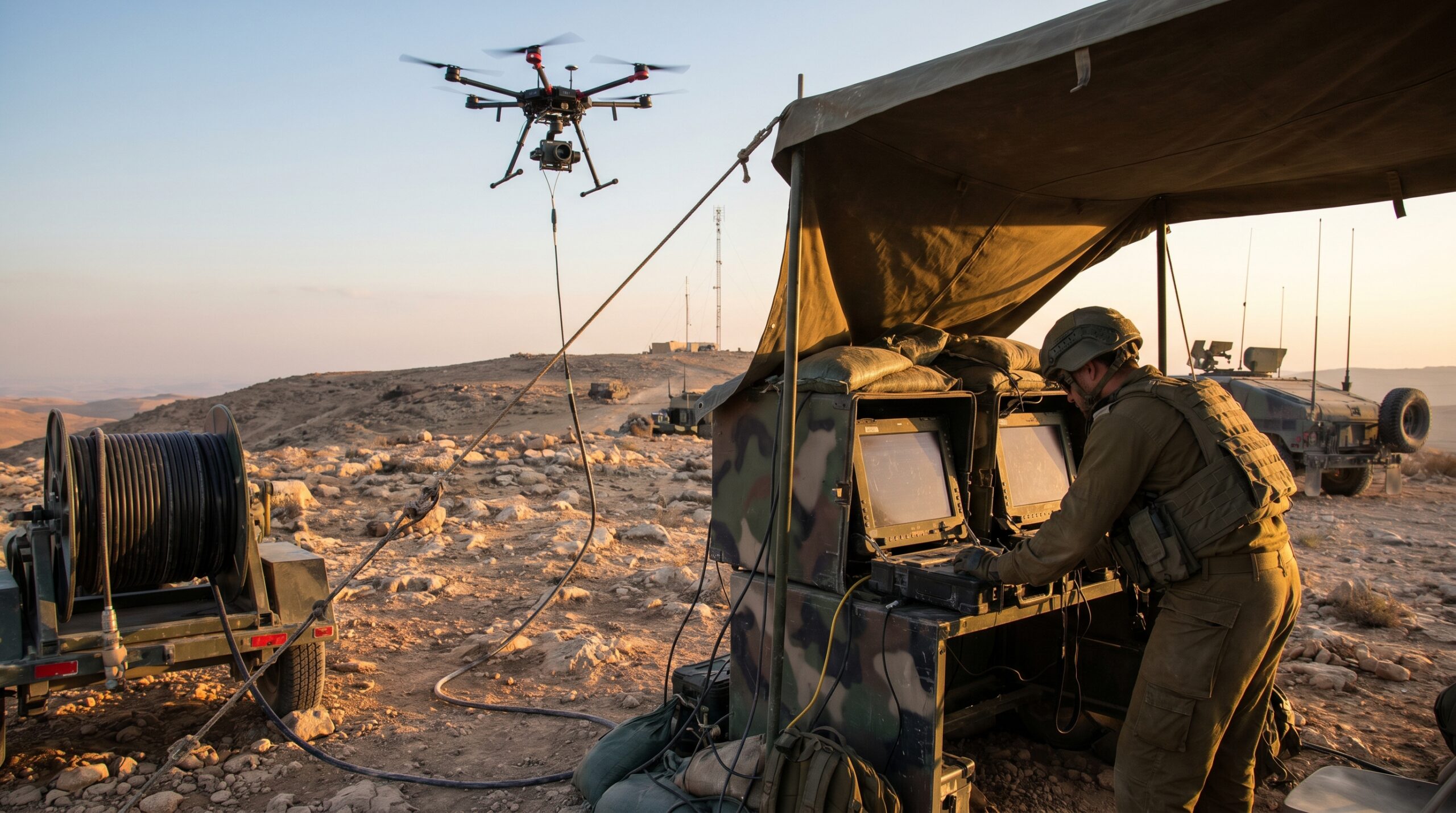
Fiber drones transmit data and control signals between the drone and the ground station via fiber-optic cables. This physical connection makes them almost completely immune to electronic warfare measures such as radio frequency interference and GPS spoofing. Fiber optics provide a high-bandwidth, low-latency communication link, ensuring real-time transmission of mission data and precise control, whether for reconnaissance, target identification, or precision strike missions.
Evolving Geopolitics and Battlefield Strategies
The emergence of fiber drones could alter the balance of power on the battlefield. If Iran indeed transfers this capability to Russia, the situation on the Ukrainian battlefield will face new challenges, as conventional electronic warfare countermeasures will become ineffective. This prompts nations to re-evaluate their counter-drone strategies, requiring the development of methods to disrupt or sever the physical fiber-optic link, rather than solely relying on radio interference.
Conclusion
Fiber drones represent a significant direction in the development of drone technology. Their immunity to electronic warfare makes them a valuable asset in high-risk operational environments. However, this also presents new challenges, driving continuous innovation in military forces and defense strategies to adapt to technological advancements.
FAQ
Question 1: How do fiber drones avoid electronic interference?
*Answer 1: Fiber drones transmit data via physical fiber-optic cables, not relying on radio frequencies, thus effectively avoiding electronic warfare interference and GPS spoofing. *
Question 2: What are the main limitations of fiber drones?
*Answer 2: The main limitations are the length of the fiber-optic cable and the complexity of deployment, which restricts the drones range and maneuverability, and makes them susceptible to physical severance. *
References
- RFE/RL (https://www.rferl.org/a/israel-iran-fiber-optic-drones-russia-ukraine-war/33761841.html)
