

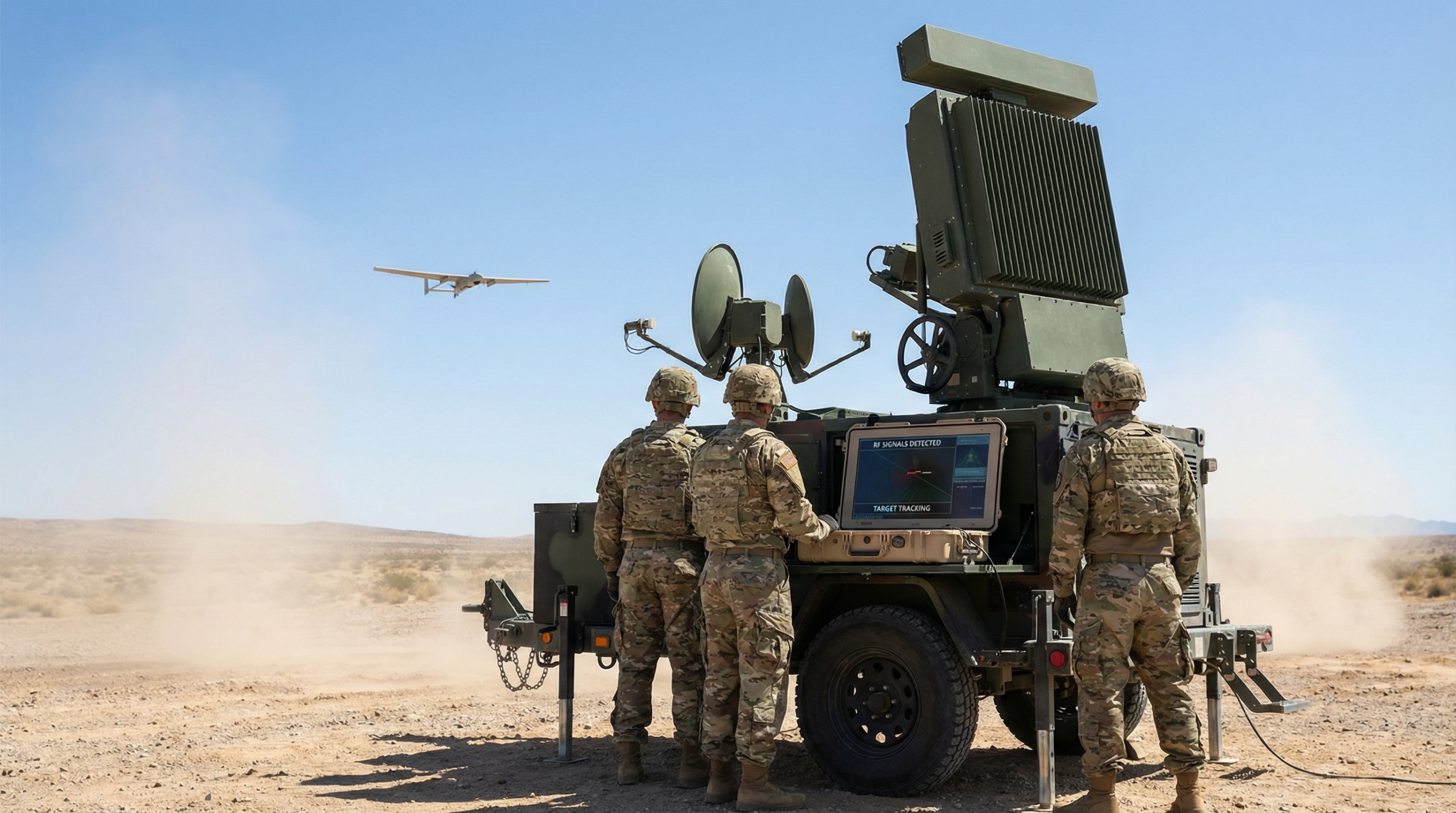
US Army C-sUAS Testing Workload Surges: Challenges and Opportunities in Countering Drone Threats
Introduction
As small Unmanned Aircraft Systems (sUAS) pose an increasingly severe threat in modern battlefields and asymmetrical conflicts, the demand for effective countermeasures continues to grow among militaries worldwide. The US Army faces a critical task: significantly increasing its C-sUAS testing workload to ensure its counter-drone systems can effectively address these rapidly evolving security challenges. This trend underscores the vital position of C-sUAS testing in national security strategies and the urgent need for innovative technologies and rigorous validation processes.
Reasons for Increased C-sUAS Testing Demand
The surge in US Army C-sUAS testing demand stems from multiple factors. Firstly, the rapid global development of drone technology has made sUAS more affordable, accessible, and versatile. This has led to a significant increase in the risk of adversarial drones being misused for reconnaissance, attack, and even terrorist activities. Secondly, experiences from the Ukraine conflict to the Middle East have shown that small drones have become key weapons in asymmetrical warfare, capable of posing serious threats to military personnel and infrastructure. Therefore, the Army must conduct more frequent and comprehensive C-sUAS testing of existing and new C-sUAS systems to evaluate their performance, reliability, and interoperability in complex electromagnetic environments and various terrains. This rigorous testing aims to identify system vulnerabilities and ensure that counter-drone capabilities keep pace with the evolving threats.
Future C-sUAS Technology and Testing Outlook
As threats continue to escalate, future C-sUAS technology will focus more on integration, intelligence, and multifunctionality. For example, incorporating AI and machine learning into target identification and tracking, developing more precise non-kinetic countermeasures, and achieving seamless integration with existing air defense systems. These technological advancements will make C-sUAS systems more efficient and adaptable. Correspondingly, C-sUAS testing will also become more complex and multi-dimensional. Testing will need to simulate more realistic battlefield environments, including simultaneous attacks by multiple drones, complex terrain interference, and saturation attacks of countermeasures. The US Army anticipates a significant increase in its testing workload precisely to ensure that future C-sUAS solutions deployed are not only technologically advanced but also thoroughly field-tested, capable of effectively protecting troops and critical assets.
Conclusion
The significant increase in the US Army C-sUAS testing workload reflects the severity of drone threats in the global security environment. Through continuous, rigorous C-sUAS testing, the Army aims to develop and deploy the most advanced and reliable counter-drone systems, thereby effectively protecting its personnel and assets and safeguarding national security.
FAQ
Question 1: What is a C-sUAS system?
Answer 1: A C-sUAS system refers to a counter-small Unmanned Aircraft System, designed to detect, track, identify, and counter adversarial small drones. These systems typically combine various technologies such as radar, electro-optical sensors, RF jammers, or kinetic weapons.
Question 2: Why is C-sUAS testing so important for the military?
Answer 2: Rigorous C-sUAS testing ensures that systems can effectively respond to evolving drone threats in various operational environments, including new drone models and counter-tactics. This is crucial for safeguarding the security and success of military operations.
References
- unmannedairspace.info (https://www.unmannedairspace.info/counter-uas-systems-and-policies/us-army-expects-significant-increase-in-c-suas-testing-workload/)
