

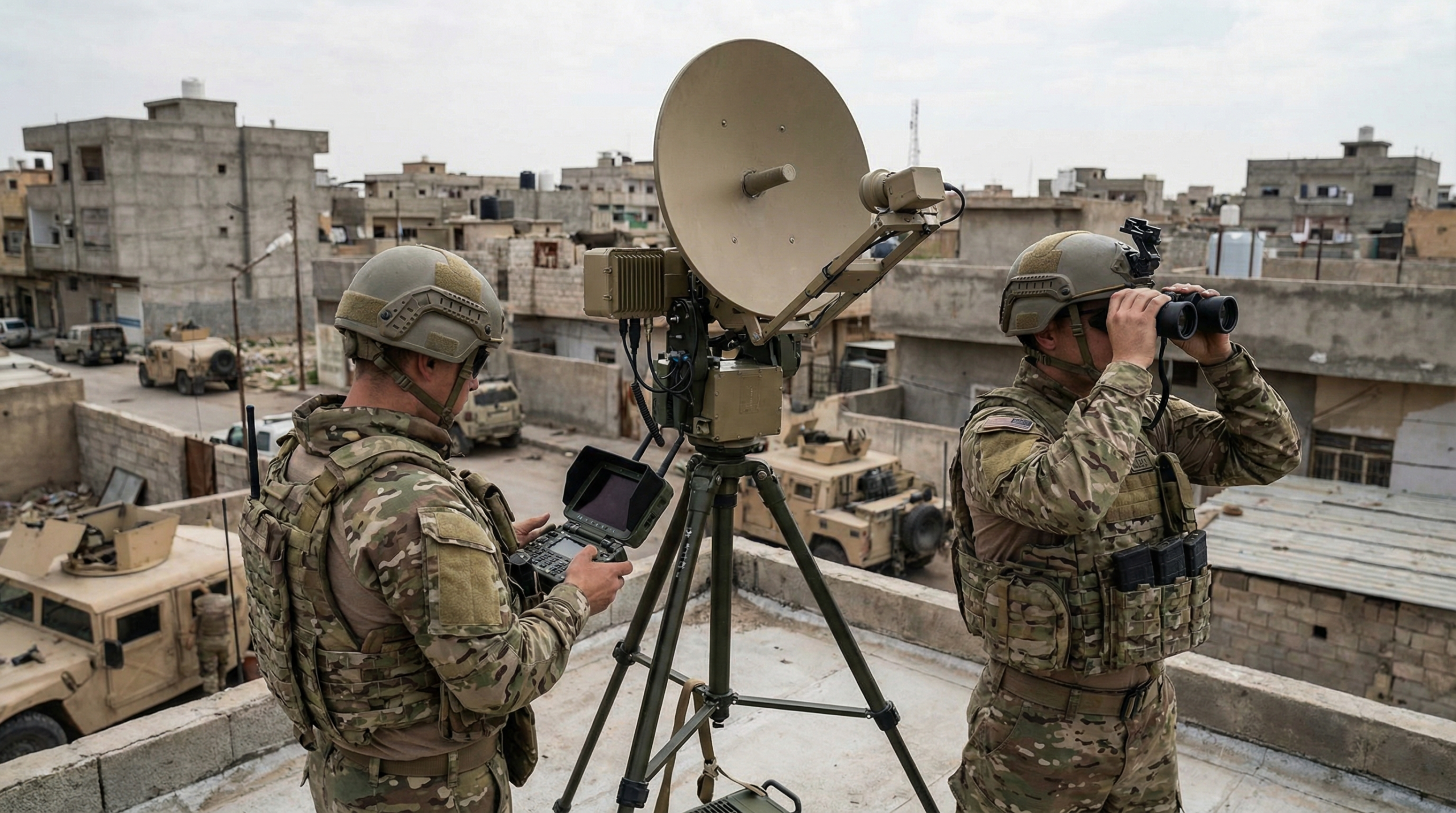
Enhancing National Security: The Importance of Modern Counter-UAV Technology
Introduction
As unmanned aerial vehicles UAVs become widely adopted in both civilian and military domains, the potential threats they pose are increasingly prominent. From illegal airspace intrusion to malicious attacks, UAVs have emerged as a serious challenge for nations worldwide. Therefore, developing and deploying effective Counter-UAV Technology is crucial for maintaining national security, protecting critical infrastructure, and ensuring public safety. This article will delve into the core components of counter-UAV technology, its main application scenarios, and future development directions.
Evolution and Identification of UAV Threats
UAVs, especially small commercial drones, are increasingly used for illicit activities due to their accessibility and ease of operation. These threats include intelligence gathering, smuggling of contraband, and even carrying explosives for attacks. Effectively identifying and classifying potential threat UAVs is the first step in counter-UAV technology. This typically involves the fusion of multiple sensors, such as radar, radio frequency analyzers, optical, and infrared cameras. Radar systems can detect the presence and location of UAVs, while RF analysis can identify their communication links. Optical systems provide visual confirmation and target tracking, ensuring accurate locking onto targets.
Core Strategies and Applications of Counter-UAV Technology
Once a UAV is detected and identified as a threat, the next step is to implement appropriate countermeasures. Modern Counter-UAV Technology primarily falls into two strategies: soft-kill and hard-kill. Soft-kill methods focus on interfering with or hijacking a UAVs control system to prevent it from completing its intended mission. This includes using RF jammers to block its GPS signal or control frequencies, forcing the UAV to return or land. More advanced systems can even take over UAV control through cyber attacks. Hard-kill methods involve physically destroying the UAV, for example, using nets, high-energy lasers, or launching interceptor drones. These methods are generally employed in specific, high-risk situations to prevent the UAV from causing greater damage.
Conclusion
Counter-UAV technology has become an indispensable part of modern security and defense systems. As UAV threats continuously evolve, counter-UAV systems are also undergoing continuous innovation and upgrades. In the future, counter-UAV solutions integrating artificial intelligence, machine learning, and more advanced sensor fusion technologies will become smarter and more efficient, providing stronger guarantees for global security.
FAQ
Question 1: What are the main types of Counter-UAV Technology?
Answer 1: Counter-UAV technology primarily falls into two main categories: soft-kill methods and hard-kill methods. Soft-kill includes RF jamming, GPS spoofing, and cyber takeovers; hard-kill involves physical interception or destruction of UAVs.
Question 2: How do small UAVs pose a security threat?
Answer 2: Small UAVs, due to their low cost, accessibility, and ease of operation, can be used for intelligence gathering, illegal smuggling, disrupting public order, or even carrying dangerous goods for malicious attacks, posing threats to national and public security.
References
- Kyiv Post (https://www.kyivpost.com/post/69838)
Related Content
- Overview of Drone Defense Systems (https://www.example.com/drone-defense-systems)
- Spectrum Security and Countermeasures (https://www.example.com/spectrum-security)
