

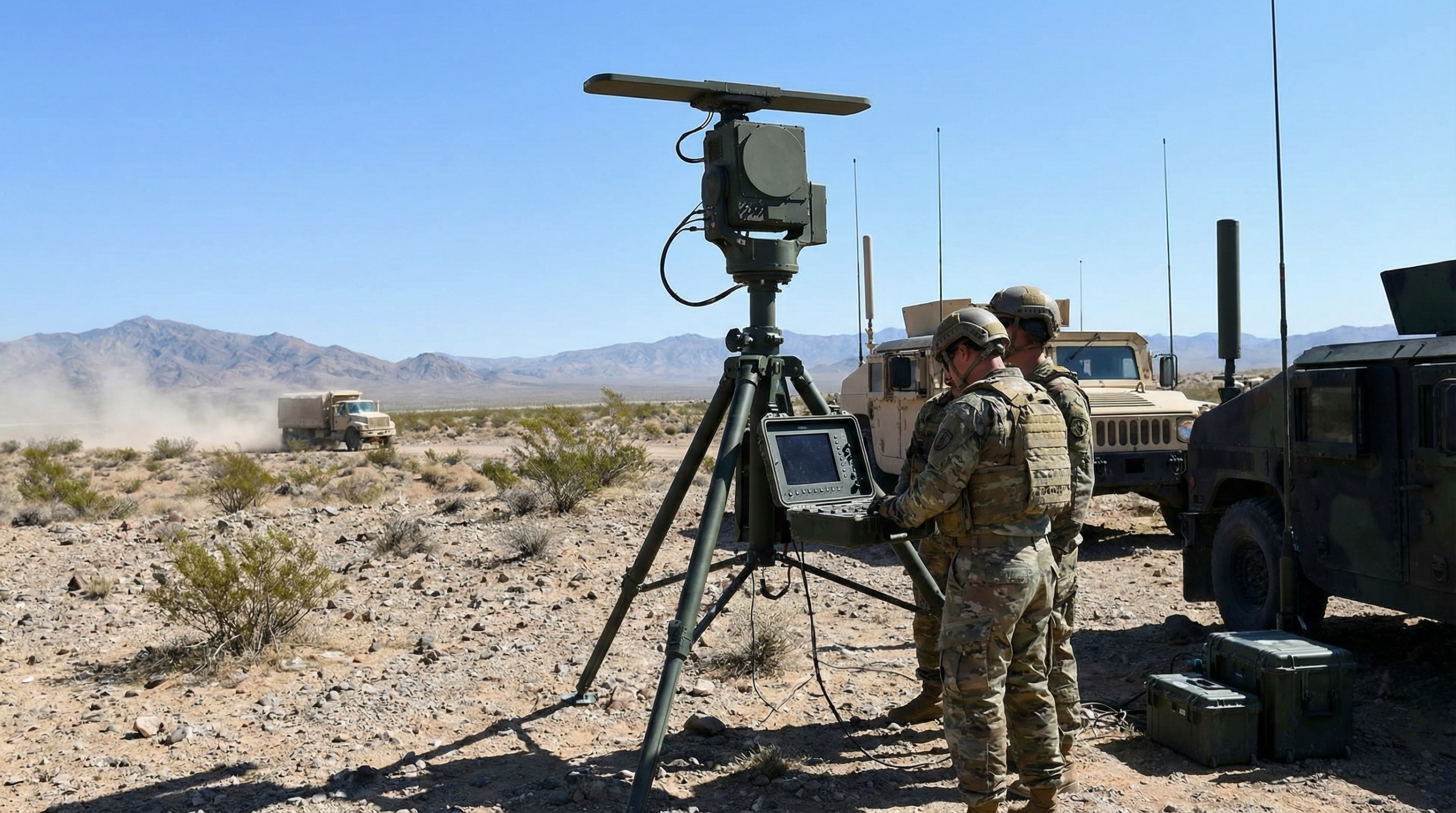
Counter-UAV Systems: Key Technology for Addressing Modern Aerial Threats
Introduction
In modern conflicts and daily security challenges, drones have become an asymmetric threat, with their widespread application posing new challenges to national security and public order. To effectively counter these aerial threats, Counter-UAV Systems have emerged and are regarded as key technology for protecting vital assets and sensitive airspace. This article will delve into the core technical principles, broad application scenarios, and future development trends of Counter-UAV Systems, aiming to comprehensively understand their important role in maintaining airspace security.
Technical Principles of Counter-UAV Systems
Counter-UAV Systems typically integrate multiple advanced technologies to achieve detection, identification, tracking, and effective neutralization of drones. These technologies mainly include:
- Detection and Identification: Primarily involves radar systems for long-range target detection and classification, combined with radio frequency signal detection technology to monitor drone control signals and video transmission signals, thereby accurately identifying drone types and locations. High-resolution optical or infrared cameras provide visual tracking and target confirmation.
- Tracking and Localization: Once a drone is detected and identified, the system uses multi-sensor fusion technologies (such as radar, optical, acoustic) to continuously track its flight path, precisely calculate its speed, altitude, and direction, providing necessary data for subsequent neutralization actions.
- Neutralization and Countermeasures: This is the core function of Counter-UAV Systems, including but not limited to:
- Electronic Jamming: By emitting specific frequencies of electromagnetic waves, it disrupts the communication link between the drone and its operator, GPS signals, or video transmission signals, causing it to return, land, or lose control.
- Kinetic Interception: Utilizing physical means such as interception nets, laser weapons, or small interceptor drones to directly destroy or capture target drones.
- Cyber Attack: Infiltrating the drone control system through technical means to gain control or incapacitate it. This method is more covert but technically more challenging.
Application Scenarios and Future Development
The deployment range of Counter-UAV Systems is extremely wide, extending from military applications to civilian security protection:
- Military Bases and Border Defense: Protecting military installations from reconnaissance and attack drone threats.
- Critical Infrastructure: Such as nuclear power plants, power stations, airports, ports, and oil facilities, preventing drones from conducting sabotage, espionage, or terrorist attacks.
- Public Safety: Ensuring airspace security during large gatherings, sporting events, summit meetings, and other activities, preventing drone interference or potential security risks.
- Civilian Airports and Air Traffic Control: Preventing unauthorized drones from entering airport airspace, disrupting normal aircraft takeoffs and landings, and ensuring flight safety.
With the rapid development of artificial intelligence, machine learning, and autonomous decision-making technologies, future Counter-UAV Systems will exhibit higher levels of intelligence and automation. They will be capable of more quickly identifying new drone threats, optimizing countermeasure strategies, and effectively addressing increasingly complex drone swarm attacks. Furthermore, systems integrating active electronically scanned array radars and directed energy weapons will provide more powerful detection and interception capabilities, further enhancing the efficiency and reliability of airspace defense.
Conclusion
Facing the complex challenges posed by drone technology, Counter-UAV Systems have become an indispensable part of modern security defense frameworks. Through continuous technological innovation and system integration, these systems are becoming more intelligent, efficient, and multi-functional. They not only serve as a robust barrier against current aerial threats but also represent a critical cornerstone in future airspace security strategic planning, playing a pivotal role in maintaining national security, public order, and the stable operation of critical infrastructure.
FAQ
Question 1: How do Counter-UAV Systems distinguish between friendly and hostile drones?
*Answer 1: Modern Counter-UAV Systems utilize advanced identification algorithms and databases, combined with transponder signals, pre-set flight paths, and flight pattern analysis, to accurately distinguish between friendly and hostile drones. Some systems also integrate artificial intelligence for behavioral analysis.
Question 2: What effect does electronic jamming have on drones?
*Answer 2: Electronic jamming aims to disrupt the communication link between a drone and its operator, its Global Positioning System GPS signals, or its image transmission signals. This typically leads to the drone returning home, making an emergency landing, losing control, or crashing directly, thereby neutralizing its potential threat.
References
- Chosun Ilbo (https://www.chosun.com/english/world-en/2026/01/12/4CPYAZZYG5EJZLRGLZLANQY7PQ/)
Related Content
- Military Radar Technology Development (URL)
