

Introduction
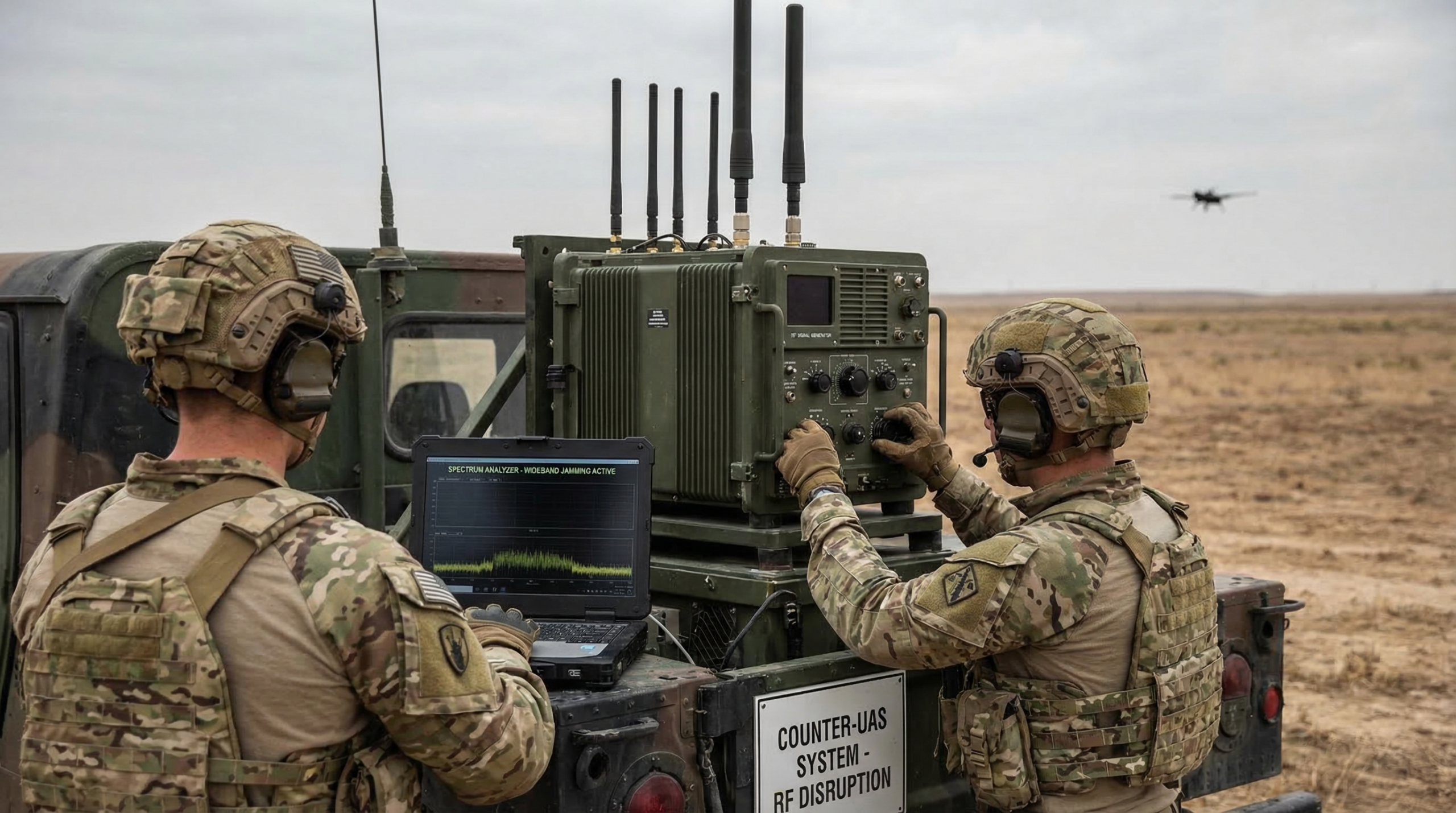
Recent news reports indicate Ukraine has deployed anti-drone specialists to the Gulf to counter the threat from Iranian Shahed series drones. This highlights the urgency and complexity of anti-drone warfare in modern battlefields and for critical infrastructure protection. As drone technology rapidly advances, especially with its widespread use in reconnaissance, surveillance, and attack, traditional defense systems face unprecedented challenges. Effectively implementing Broadband Signal Interference has become key to addressing these advanced threats.
Industry Challenges & Pain Points
Currently, drone threats are increasingly diverse, including illegal airspace intrusion, intelligence gathering, terrorist attacks, and disruption of critical facilities. Traditional defense methods often prove inadequate, primarily due to their inherent limitations. Many existing anti-drone systems rely on narrowband jammers, making it difficult for them to cover the wide range of drone communication frequencies. Furthermore, these systems typically have slow response times, struggling to effectively counter advanced communication techniques used by drones such as frequency hopping and spread spectrum, thereby reducing countermeasure effectiveness.
The Core Countermeasure: Importance of Signal Interference Source
The most direct and effective method to counter drones is to sever their communication and navigation links, causing them to lose control or deviate from their intended course. In this strategy, the signal interference source plays a critical role. An efficient signal interference source must possess a wide frequency range, large instantaneous bandwidth, and rapid frequency switching capability. In particular, implementing Broadband Signal Interference can simultaneously suppress multiple frequency bands or effectively strike unknown frequencies, which is crucial for combating increasingly complex drone swarms and intelligent evasion techniques.
Solution: 400M Instantaneous Bandwidth Signal Generator
To address the growing complexity of drone threats, the 400M Instantaneous Bandwidth Signal Generator is an ideal professional tool. The core advantages of this advanced device lie in its superior performance parameters and flexibility:
- Ultra-wide frequency range: Covers 70-6000MHz, ensuring coverage of most current and future drone communication bands.
- Large instantaneous bandwidth: Provides an instantaneous bandwidth of up to 400M, allowing interference across a wide frequency range in a very short time, achieving efficient Broadband Signal Interference.
- Software-defined frequency modulation: Supports software-defined frequency modulation, allowing users to quickly configure and adjust signal parameters via software without hardware modifications, greatly enhancing the devices flexibility and adaptability.
These features enable the 400M Instantaneous Bandwidth Signal Generator to flexibly simulate various interference signals, quickly adapt to changing threat environments, and achieve precise and efficient signal suppression.
Conclusion
Facing increasingly complex drone threats, signal interference equipment with broadband, agile, and software-defined capabilities is essential. The 400M Instantaneous Bandwidth Signal Generator, with its superior performance, provides strong technical support for modern anti-drone systems, ensuring the effective protection of critical facilities and national security.
Contact us now to learn how the 400M Instantaneous Bandwidth Signal Generator can enhance your anti-drone defense capabilities.
FAQ
Question 1: What is instantaneous bandwidth and why is it important?
*Answer 1: Instantaneous bandwidth refers to the frequency range that a signal generator can process simultaneously in a single operation. For anti-drone applications, a larger instantaneous bandwidth means the ability to simultaneously interfere with a wider range of drone communication frequencies, thereby increasing interference efficiency and success rate. *
Question 2: What are the advantages of software-defined frequency modulation?
*Answer 2: Software-defined frequency modulation allows users to quickly configure and adjust signal parameters via software, without hardware modifications. This greatly enhances the devices flexibility and adaptability, enabling it to rapidly respond to new drone threats and evolving operational requirements. *
