

Introduction
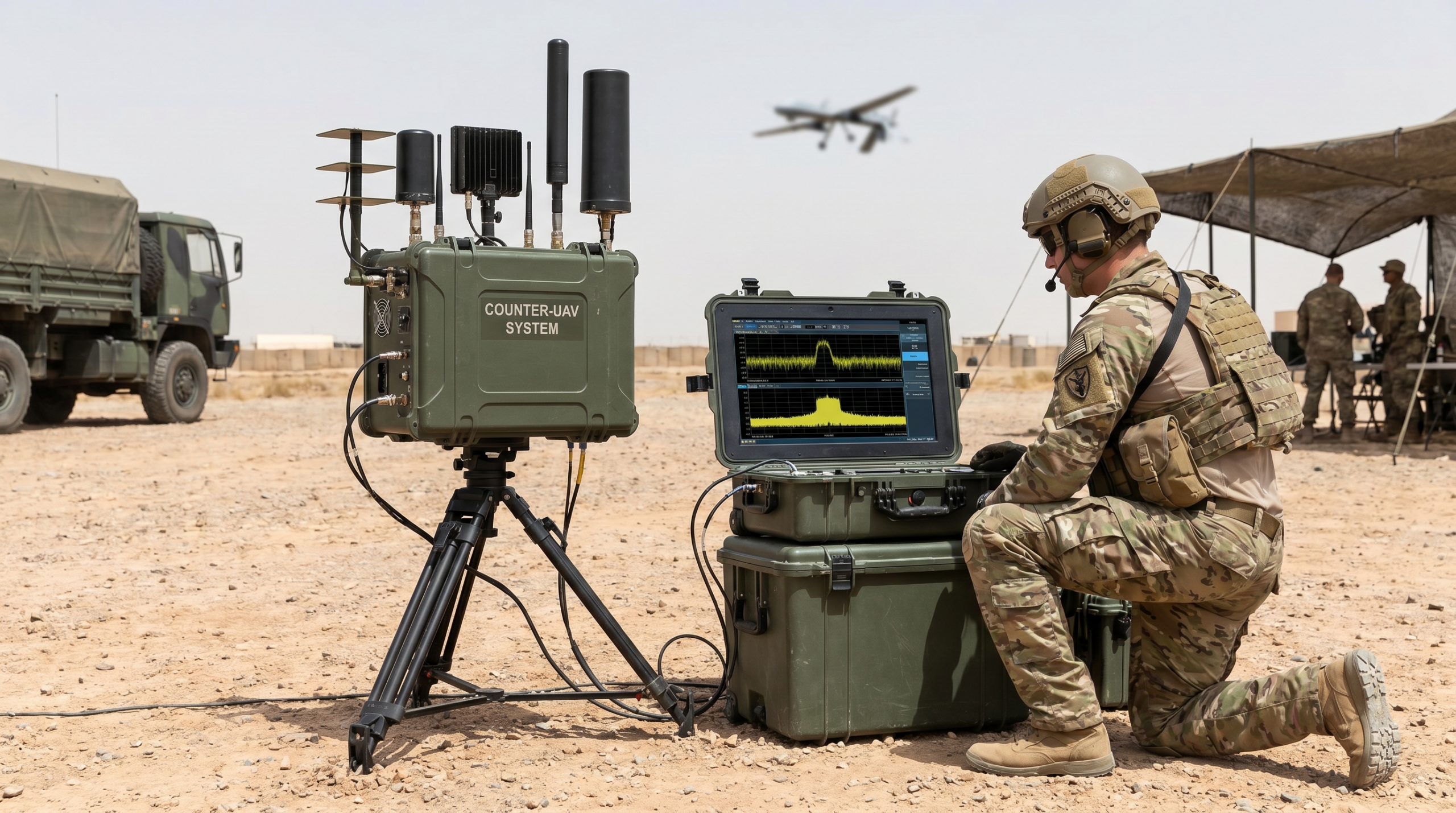
A recent exercise by the US Army XVIII Airborne Corps has attracted widespread attention, focusing on testing drones carrying ammunition to counter increasingly complex UAV threats. This move not only signifies the militarys emphasis on the UAV challenge but also heralds that UAV countermeasure technology will be a decisive factor on future battlefields. As UAV technology rapidly iterates, its application scope continues to expand from reconnaissance to attack, posing severe challenges to traditional defense systems. Effective UAV countermeasure has become a core issue in global military and security fields.
Industry Challenges and Pain Points
Currently, unauthorized UAVs, especially disposable or suicide drones, are becoming a prominent issue facing national defense security worldwide. These UAVs are low-cost, easy to acquire, and often appear in formations or swarms, making it difficult for traditional radar and air defense systems to effectively identify and track them. Furthermore, modern UAVs generally feature complex communication technologies like frequency hopping and spread spectrum, whose dynamic and covert signal links render traditional narrow-band jamming methods ineffective. How to achieve rapid, precise, and efficient UAV countermeasure has become an urgent industry pain point.
Core Countermeasure: Why the Signal Interference Source is Key
Facing UAV threats, one of the most direct and effective UAV countermeasure methods is to implement signal jamming. By transmitting specific frequencies of wideband signals, the communication link between the UAV and its operator can be cut, and even its GPS navigation system can be interfered with, preventing it from performing its mission or returning safely. However, to achieve efficient countermeasure, the performance of the signal interference source is crucial. It must possess a wide frequency coverage range and rapid frequency switching capabilities to effectively counter UAVs frequency hopping and multi-band communication.
Solution: 400M Instantaneous Bandwidth Signal Generator
In this context, the 400M Instantaneous Bandwidth Signal Generator, with its outstanding performance, emerges as an ideal core component for modern UAV countermeasure systems. This device features an ultra-wide frequency range of 70-6000MHz, ensuring coverage of all currently known common UAV communication and navigation frequency bands. Its instantaneous bandwidth of up to 400MHz allows it to cover an extremely wide spectrum at once, effectively suppressing complex signals like frequency hopping and spread spectrum. More importantly, this signal generator supports software-defined frequency modulation, offering extremely high frequency agility to dynamically adjust jamming strategies based on real-time threats, meeting the demands for rapid response and precise strikes.
Conclusion
The continuous evolution of UAV threats demands that we adopt more advanced and flexible countermeasure technologies. The 400M Instantaneous Bandwidth Signal Generator, with its advantages of wide frequency coverage, large instantaneous bandwidth, and software tunability, provides strong hardware support for future UAV countermeasure. It is not only a powerful tool for current challenges but also an important development direction for future electronic warfare and security defense fields.
Learn more about the technical details of the 400M Instantaneous Bandwidth Signal Generator and explore its application potential in your UAV countermeasure system by contacting our team of experts.
FAQ
Question 1: What are the primary application scenarios for the 400M Instantaneous Bandwidth Signal Generator?
Answer 1: It is primarily used in UAV countermeasure systems for military, public security, border patrol, and critical infrastructure protection, providing wideband signal jamming capabilities.
Question 2: What are the advantages of the software-defined frequency modulation feature?
Answer 2: Software-defined frequency modulation enables the device to quickly adapt to UAV threats across different frequencies, achieving real-time dynamic jamming, thereby improving countermeasure efficiency and flexibility.
