

Introduction
In recent years, UAV technology has developed rapidly, with its potential threats in military reconnaissance, border infiltration, and even terrorist activities becoming increasingly prominent. To counter this challenge, various countries are actively developing advanced low-altitude defense systems. Among these, Laser Anti-UAV technology stands out as a highly anticipated solution due to its precision, efficiency, and low cost. This article will delve into the working principles, technical advantages, and future development trends of laser anti-UAV systems, revealing their critical role in safeguarding national security and critical infrastructure security.
Laser Anti-UAV System Principles and Advantages
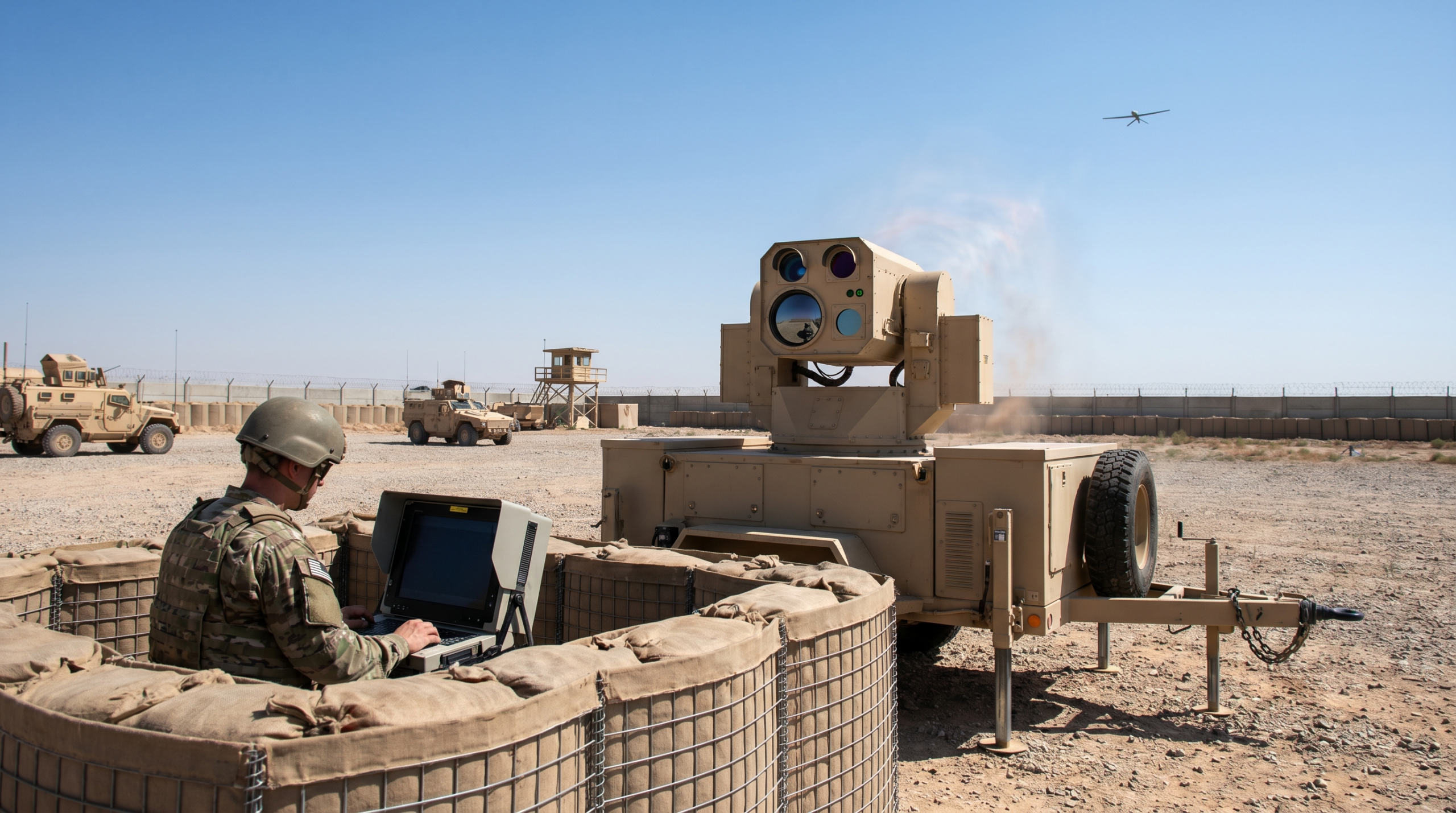
Laser Anti-UAV systems primarily destroy or interfere with enemy UAVs through high-energy laser beams. Their basic principle is to use the focused energy of a laser to cause physical damage to critical UAV components such as electro-optical sensors, navigation systems, or the structure itself. Such systems typically include high-energy lasers, precise aiming and tracking systems, and command and control units. Their core advantages are:
- Precise Strike: Laser beams travel at near light speed, enabling immediate response and precise interception of fast-moving UAV targets.
- Cost-Effectiveness: Compared to traditional missile interception, the cost of each laser shot is extremely low, merely the electricity cost.
- Multi-Target Capability: Advanced systems can quickly switch targets, theoretically capable of engaging multiple UAV swarms simultaneously.
- Low Collateral Damage: The laser beam energy is concentrated, resulting in minimal collateral damage to the surrounding environment of the target.
Laser Anti-UAV Deployment and Challenges
Despite the promising future of Laser Anti-UAV technology, its deployment still faces multiple challenges. First is the power requirement; high-energy lasers demand substantial power support, limiting their portability. Second is the atmospheric transmission issue; adverse weather conditions such as rain, fog, and dust can significantly weaken the laser beam energy, affecting strike effectiveness. Furthermore, the counter-capability against stealth materials or reflective coating UAVs requires further research. Currently, military bases, airports, important borderlines, and large gathering places are the primary deployment areas for laser anti-UAV systems. In the future, with technological advancements, miniaturized, high-power, all-weather laser anti-UAV systems will become the development trend, further enhancing low-altitude defense capabilities.
Conclusion
Laser Anti-UAV technology is progressively reshaping the low-altitude defense landscape. It offers an efficient, precise, and economical solution for addressing UAV threats. Although technical challenges remain to be overcome, its immense potential indicates it will play an increasingly vital role in future security and defense, contributing to global safety and stability.
FAQ
Question 1: How do laser anti-UAV systems cope with adverse weather?
Answer 1: Adverse weather like rain, fog, and dust scatters and absorbs laser beams, significantly reducing their effectiveness. Currently, systems often mitigate this by increasing laser power or combining with other defense methods, but all-weather capability remains a challenge.
Question 2: Are laser anti-UAV systems safe? What are the risks to operators?
Answer 2: Laser anti-UAV systems are designed with operational safety in mind. High-energy lasers can cause eye damage under abnormal operation. Therefore, operators must undergo professional training and follow strict safety protocols to ensure the system operates in a controlled environment.
References
- Chosun Ilbo English (https://www.chosun.com/english/world-en/2026/05/20/V5NB2TFCKVAMVMDWQX5PC5QIIE/)
