

Introduction
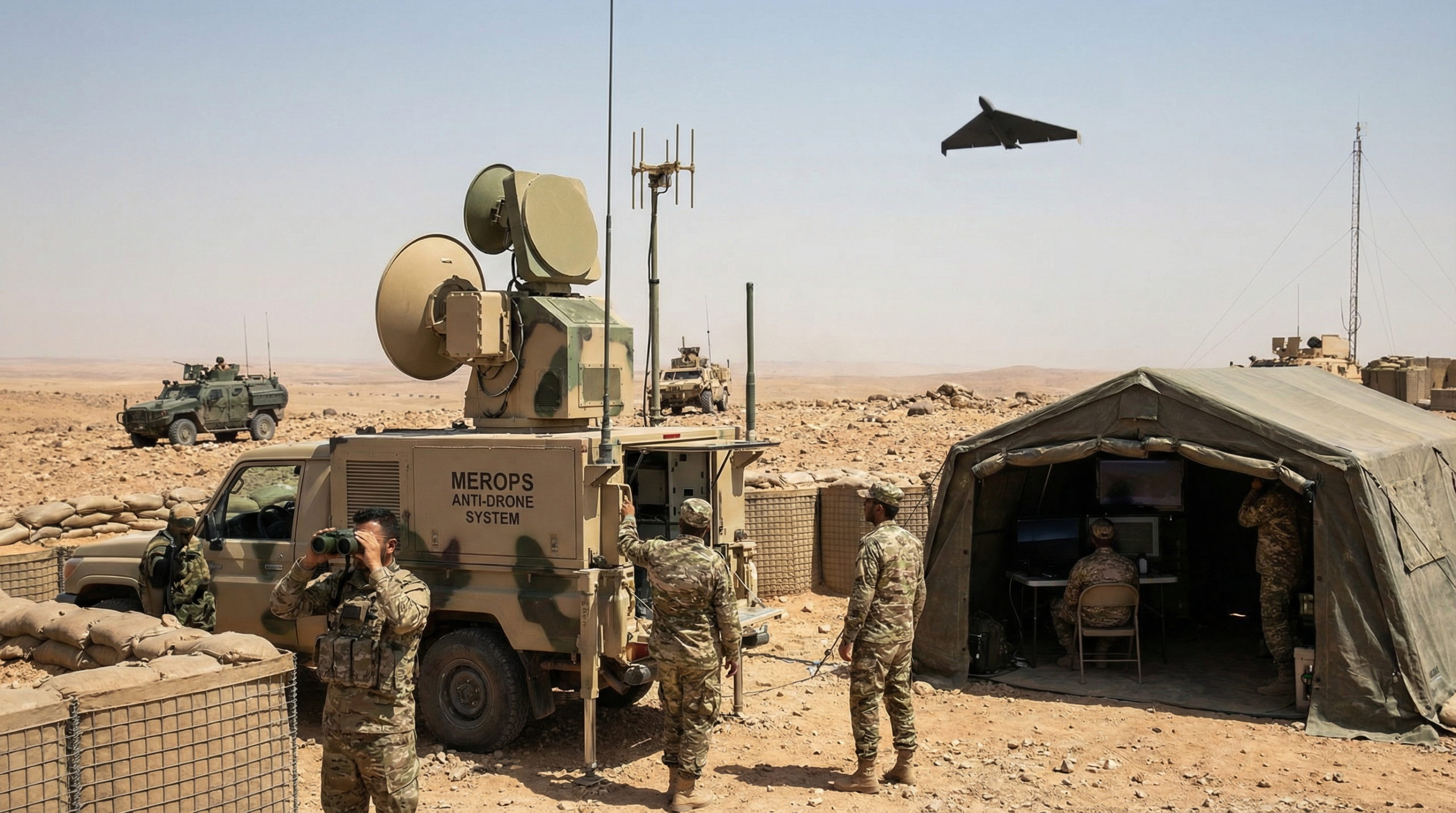
In the increasingly complex security environment of the Middle East, drone threats have become a severe challenge for armies worldwide. To effectively counter the persistent threat posed by Iranian Shahed series drones, the United States Army has begun deploying the Merops Army anti-drone system, produced by a Ukrainian company. This move marks a significant advancement in the field of counter-drone warfare, aiming to enhance the defensive capabilities of US forces and their allies, especially in sensitive areas of the Middle East. The operational deployment of the Merops system underscores the importance of counter-drone technology in modern warfare.
Merops System: Technical Characteristics and Operational Advantages
The Merops Army anti-drone system is an advanced counter-drone solution specifically designed to detect, identify, and suppress enemy drones. The system integrates several key technologies, including passive radio frequency monitoring, jamming, and deception capabilities. It can scan and analyze radio frequency signals in the airspace in real time, thereby accurately detecting the presence and location of various types of drones. Merops system does not rely on active radar, which means it has a low electromagnetic signature, making it difficult for adversaries to detect. Its modular design and high mobility allow for rapid deployment in different operational environments, providing forces with a flexible and powerful defensive barrier. The system can also effectively counter swarm drone attacks by interfering with their navigation and control links, causing them to deviate from their course or crash.
Shahed Drone Threat and Countermeasure Strategy
Iranian Shahed series drones, particularly the Shahed-136 suicide drone, have become a major threat in regional conflicts due to their cost-effectiveness, long range, and destructive power. These drones have been widely used in the Ukrainian conflict, causing significant damage to infrastructure and military targets. Shahed drones typically employ pre-programmed routes or GPS navigation, coupled with relatively simple communication links. The Merops system is precisely designed to counter such threats; through its precise radio frequency jamming capabilities, it can effectively cut off the command and control signals and navigation signals of Shahed drones, preventing them from completing their missions. The US Army deployment of the Merops system is not only to protect its own facilities and personnel but also to test and verify its real-world counter-drone effectiveness in an actual battlefield environment, accumulating valuable experience for the future development of Army anti-drone system technology.
Conclusion
The US Army deployment of the Ukrainian Merops Army anti-drone system in the Middle East is a strategic move to address current and future drone threats. With its advanced passive detection and jamming capabilities, the Merops system provides the US military with an effective means to counter aerial threats such as Shahed drones. This deployment not only strengthens regional security but also provides an important reference for the development of global counter-drone technology. As drone technology continues to evolve, innovative defense systems like Merops will play an increasingly vital role in securing military advantage and maintaining regional stability.
FAQ
Question 1: How does the Merops system detect drones?
*Answer 1: The Merops system primarily detects drones through passive radio frequency monitoring technology. It scans the airspace for radio frequencies, identifying the communication and control signals used by drones to locate targets. This passive detection method makes it difficult for enemy counter-detection measures to discover it. *
Question 2: What is the main threat of Shahed drones?
*Answer 2: The main threat of Shahed drones lies in their cost-effectiveness, long-range attack capability, and ability to carry explosives for suicide attacks. They can be used to strike strategic targets, infrastructure, and military personnel, and are often difficult to intercept effectively with traditional air defense systems. *
References
- Army Recognition (https://armyrecognition.com/news/army-news/2026/u-s-army-deploys-ukrainian-merops-anti-drone-system-against-iranian-shahed-drones-in-middle-east)
