

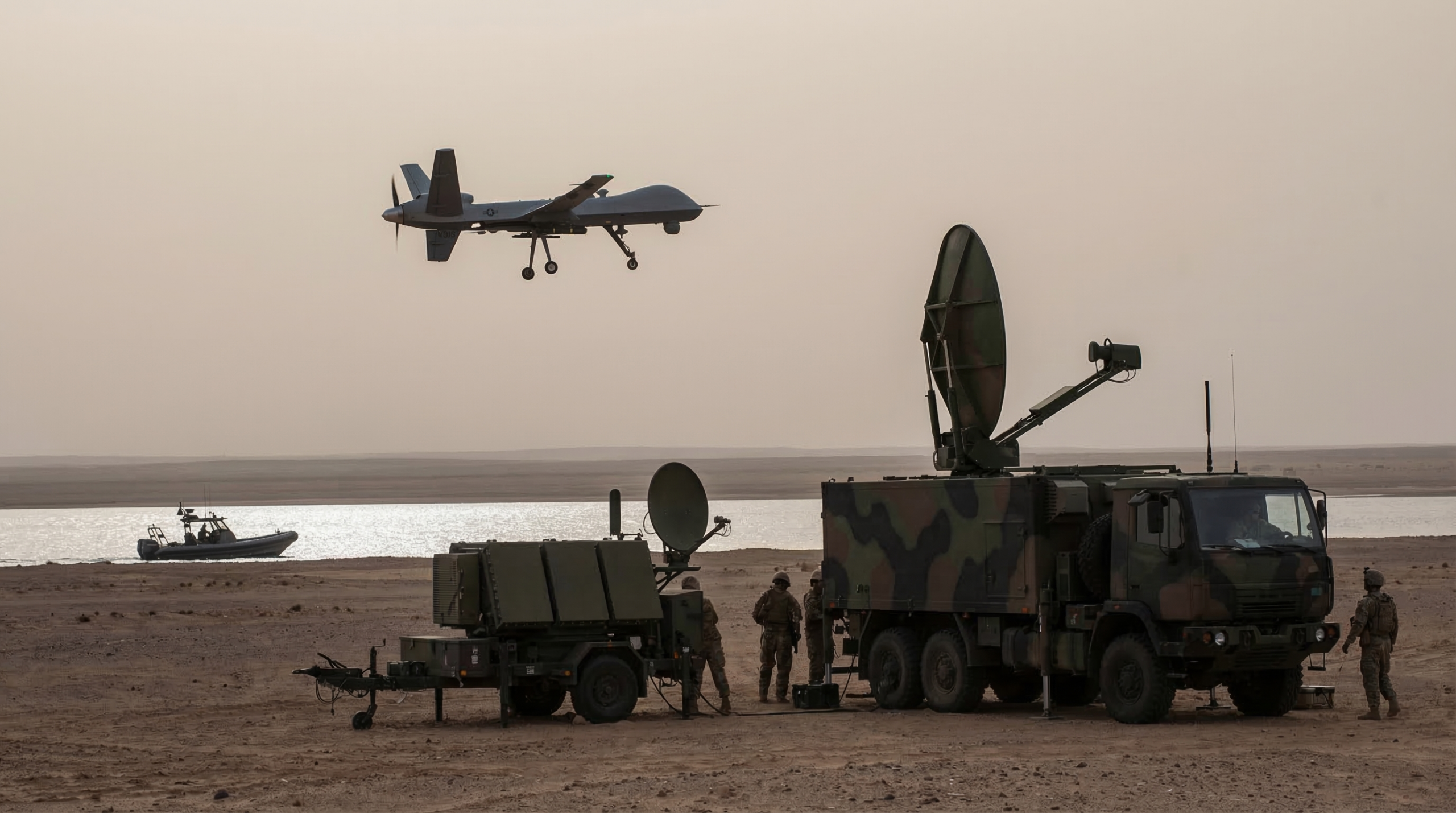
Unpacking Iran Gulf Drone Tactics: Early Lessons for Future Drone Warfare
Introduction
In recent years, Iran has demonstrated increasingly mature Drone Tactics in the Gulf region, profoundly impacting the regional security landscape. These drone operations not only reveal emerging asymmetric threats in modern conflicts but also offer valuable early lessons for future drone warfare globally. A deep analysis of Iran drone usage, technical characteristics, and strategic intentions is crucial for understanding and responding to these new types of threats. This article will comprehensively explore the core elements of Iran drone tactics and their profound implications for future military strategy.
Characteristics and Evolution of Iran Drone Tactics
Iran drone tactics exhibit several striking characteristics. First is their high cost-effectiveness; Iran utilizes relatively inexpensive drone platforms to perform reconnaissance, target designation, and even kamikaze attack missions, effectively avoiding the risks associated with traditional high-value military assets. Second is the diversified platform application, ranging from small commercial drones modified for reconnaissance to attack-ready drones capable of both surveillance and strike. Third is the potential for coordinated and saturation attacks; although large-scale swarm attacks have not yet become widespread, multiple operations have shown an intent to use multiple drones simultaneously to overwhelm enemy defense systems. These drones are often equipped with simple navigation systems, sometimes even using civilian GPS, which complicates counter-measures. Iran continuously refines and optimizes its drone tactics through practical experience, driving the rapid evolution of related technologies and operational procedures.
Implications and Challenges for Future Drone Warfare
Iran drone tactics bring significant implications for future military conflicts. They highlight the destructive potential of cheap, readily available technology in military applications, indicating that future conflicts may no longer be a technological race between a few major powers but rather widespread asymmetric threats. To counter such threats, effective counter-unmanned aerial systems (C-UAS) become critical. This includes electronic warfare jamming, directed energy weapons, advanced air defense interception, and cybersecurity measures. Concurrently, battlefield awareness and intelligence sharing capabilities must be significantly enhanced to timely detect and identify small, low-altitude targets. Furthermore, the international community needs to strengthen controls over drone technology proliferation and formulate corresponding international regulations to address the evolving global drone tactics and the challenges they pose. Adaptation and innovation are key to responding to future drone warfare.
Conclusion
Iran drone tactics in the Gulf region offer profound insights into future conflict patterns. These early lessons underscore the strategic value of drones as versatile, cost-effective tools and highlight the defensive innovations and international cooperation required to address this evolving threat. Understanding and adapting to these changes are crucial for ensuring global stability and security.
FAQ
Question 1: What types of attacks are Iran drones primarily used for?
Answer 1: Iran drones are primarily used for reconnaissance, target designation, surveillance, as well as kamikaze attacks and harassment, posing threats to adversaries in a low-cost manner.
Question 2: How can such drone threats be effectively countered?
Answer 2: Effective counter-measures require a combination of methods, including electronic warfare jamming, advanced air defense systems, cybersecurity defenses, intelligence sharing, and the development of directed energy weapons and other counter-drone technologies.
References
- Center for Strategic and International Studies (CSIS) Analysis (https://www.csis.org/analysis/unpacking-irans-drone-campaign-gulf-early-lessons-future-drone-warfare)
